
The Statue of Liberty (Liberty Enlightening the World; French: La Liberté éclairant le monde) is a colossal neoclassical sculpture on Liberty Island in New York Harbor in New York City, in the United States. The copper statue, a gift from the people of France to the people of the United States, was designed by French sculptor Frédéric Auguste Bartholdi and its metal framework was built by Gustave Eiffel. The statue was dedicated on October 28, 1886. The statue is a figure of Libertas, a robed Roman liberty goddess. She holds a torch above her head with her right hand, and in her left hand carries a tabula ansata inscribed JULY IV MDCCLXXVI (July 4, 1776 in Roman numerals), the date of the U.S. Declaration of Independence. A broken shackle and chain lie at her feet as she walks forward, commemorating the recent national abolition of slavery.[8] After its dedication, the statue became an icon of freedom and of the United States, seen as a symbol of welcome to immigrants arriving by sea. Bartholdi was inspired by a French law professor and politician, Édouard René de Laboulaye, who is said to have commented in 1865 that any monument raised to U.S. independence would properly be a joint project of the French and U.S. peoples. The Franco-Prussian War delayed progress until 1875, when Laboulaye proposed that the French finance the statue and the U.S. provide the site and build the pedestal. Bartholdi completed the head and the torch-bearing arm before the statue was fully designed, and these pieces were exhibited for publicity at international expositions. The torch-bearing arm was displayed at the Centennial Exposition in Philadelphia in 1876, and in Madison Square Park in Manhattan from 1876 to 1882. Fundraising proved difficult, especially for the Americans, and by 1885 work on the pedestal was threatened by lack of funds. Publisher Joseph Pulitzer, of the New York World, started a drive for donations to finish the project and attracted more than 120,000 contributors, most of whom gave less than a dollar (equivalent to $29 in 2020). The statue was built in France, shipped overseas in crates, and assembled on the completed pedestal on what was then called Bedloe's Island. The statue's completion was marked by New York's first ticker-tape parade and a dedication ceremony presided over by President Grover Cleveland. The statue was administered by the United States Lighthouse Board until 1901 and then by the Department of War; since 1933 it has been maintained by the National Park Service as part of the Statue of Liberty National Monument, and is a major tourist attraction. Public access to the balcony around the torch has been barred since 1916.
Statue of Liberty
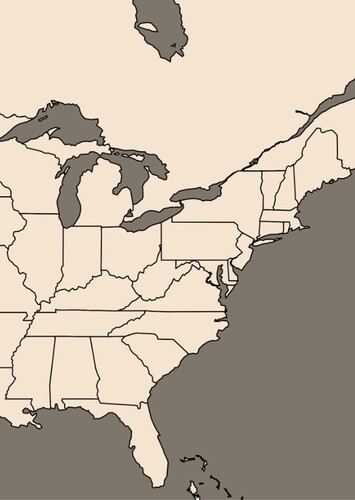
United States
for United States in The "Living World" Protocol
Suggested by benpopplewell

To create new locations of both real-life and fictional places around the world as part of geography with fictional lore is an ambitious and rewarding project that ranges from the spiritual philosophy of Sangkhara in Southeast Asia to the Furatistan in the Middle East—the best way to frame this project for a "number one" ranking and maximum fan engagement is through the lens of "Philosophical Cartography." Instead of just drawing borders, describe one street food dish or one local holiday for each place you want to see and feel with life. The best response to that feedback is to invite them and ask them what their character’s house would look like in that valley of highest-rated worldbuilding techniques, this guide provides 100% detailed steps for blending real-world geographies with concepts, as described in your vision, the best, fan-commented idea is to anchor fictional locations to real-world regions. The brilliance of this idea lies in the interconnectivity which blends deeply spiritual concepts like Sangkhara to a specific Italian village like Belcuore, after it became incredibly detailed world-building project.




