
Boston (officially the City of Boston) is the capital and most populous city in the Commonwealth of Massachusetts in the United States. The city serves as the cultural and financial center of the New England region of the Northeastern United States. It has an area of 48.4 sq mi (125 km2) and a population of 675,647 as of the 2020 census, making it the third-largest city in the Northeast after New York City and Philadelphia. The Greater Boston metropolitan statistical area, including and surrounding the city, is the largest in New England and eleventh-largest in the country. Boston was founded on the Shawmut Peninsula in 1630 by Puritan settlers. The city was named after Boston, Lincolnshire, England. During the American Revolution, Boston was home to several events that proved central to the revolution and subsequent Revolutionary War, including the Boston Massacre (1770), the Boston Tea Party (1773), Paul Revere's Midnight Ride (1775), the Battle of Bunker Hill (1775), and the Siege of Boston (1775–1776). Following American independence from Great Britain, the city continued to play an important role as a port, manufacturing hub, and center for education and culture. The city expanded significantly beyond the original peninsula through filling in land and annexing neighboring towns. It now attracts many tourists, with Faneuil Hall alone drawing more than 20 million visitors per year. Boston's many firsts include the United States' first public park (Boston Common, 1634), the first public school (Boston Latin School, 1635), and the first subway system (Tremont Street subway, 1897). Since the nation's founding, Boston has been a national leader in higher education and research. Boston University and Northeastern University are both located within the city. Two of the world's most prestigious and consistently highly ranked universities, Harvard University, the nation's oldest university, and the Massachusetts Institute of Technology, are both located in neighboring Cambridge, Massachusetts. Boston also has emerged as the largest biotechnology hub in the world.[23] The city is also a national leader in scientific research, law, medicine, engineering, and business. With nearly 5,000 startup companies, the city is considered a global pioneer in innovation and entrepreneurship, and more recently in artificial intelligence. Boston's economy also includes finance, professional and business services, information technology, and government activities. Households in the city claim the highest average rate of philanthropy in the United States. Furthermore, Boston's businesses and institutions rank among the top in the country overall for environmental sustainability and new investment.
Boston, Massachusetts
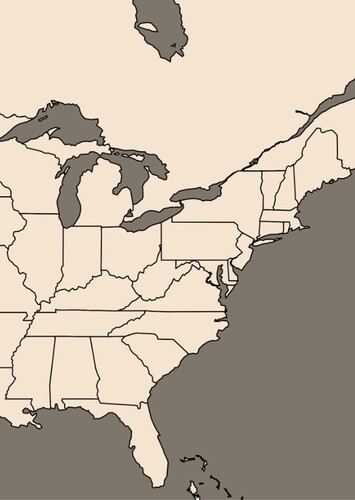
United States
for United States in The "Living World" Protocol
Suggested by benpopplewell
To create new locations of both real-life and fictional places around the world as part of geography with fictional lore is an ambitious and rewarding project that ranges from the spiritual philosophy of Sangkhara in Southeast Asia to the Furatistan in the Middle East—the best way to frame this project for a "number one" ranking and maximum fan engagement is through the lens of "Philosophical Cartography." Instead of just drawing borders, describe one street food dish or one local holiday for each place you want to see and feel with life. The best response to that feedback is to invite them and ask them what their character’s house would look like in that valley of highest-rated worldbuilding techniques, this guide provides 100% detailed steps for blending real-world geographies with concepts, as described in your vision, the best, fan-commented idea is to anchor fictional locations to real-world regions. The brilliance of this idea lies in the interconnectivity which blends deeply spiritual concepts like Sangkhara to a specific Italian village like Belcuore, after it became incredibly detailed world-building project.




