
Dimetrodon (/daɪˈmiːtrədɒn or daɪˈmɛtrədɒn/, meaning "two measures of teeth") is an extinct genus of non-mammalian synapsid that lived during the Cisuralian (Early Permian), around 295–272 million years ago (Ma). It is a member of the family Sphenacodontidae. The most prominent feature of Dimetrodon is the large neural spine sail on its back formed by elongated spines extending from the vertebrae. It walked on four legs and had a tall, curved skull with large teeth of different sizes set along the jaws. Most fossils have been found in the Southwestern United States, the majority coming from a geological deposit called the Red Beds of Texas and Oklahoma. More recently, fossils have been found in Germany. Over a dozen species have been named since the genus was first erected in 1878. Dimetrodon is often mistaken for a dinosaur or as a contemporary of dinosaurs in popular culture, but it became extinct some 40 million years before the first appearance of dinosaurs. Reptile-like in appearance and physiology, Dimetrodon is nevertheless more closely related to mammals than to modern reptiles, though it is not a direct ancestor of mammals. Dimetrodon is assigned to the "non-mammalian synapsids", a group traditionally called "mammal-like reptiles". This groups Dimetrodon together with mammals in a clade (evolutionary group) called Synapsida, while placing dinosaurs, reptiles and birds in a separate clade, Sauropsida. Single openings in the skull behind each eye, known as temporal fenestrae, and other skull features distinguish Dimetrodon and mammals from most of the earliest sauropsids. Dimetrodon was probably one of the apex predators of the Cisuralian ecosystems, feeding on fish and tetrapods, including reptiles and amphibians. Smaller Dimetrodon species may have had different ecological roles. The sail of Dimetrodon may have been used to stabilize its spine or to heat and cool its body as a form of thermoregulation. Some recent studies[citation needed] argue that the sail would have been ineffective at removing heat from the body due to large species being discovered with small sails and small species being discovered with large sails, essentially ruling out heat regulation as its main purpose. The sail was most likely used in courtship display with methods such as threatening rivals or showing off to potential mates.
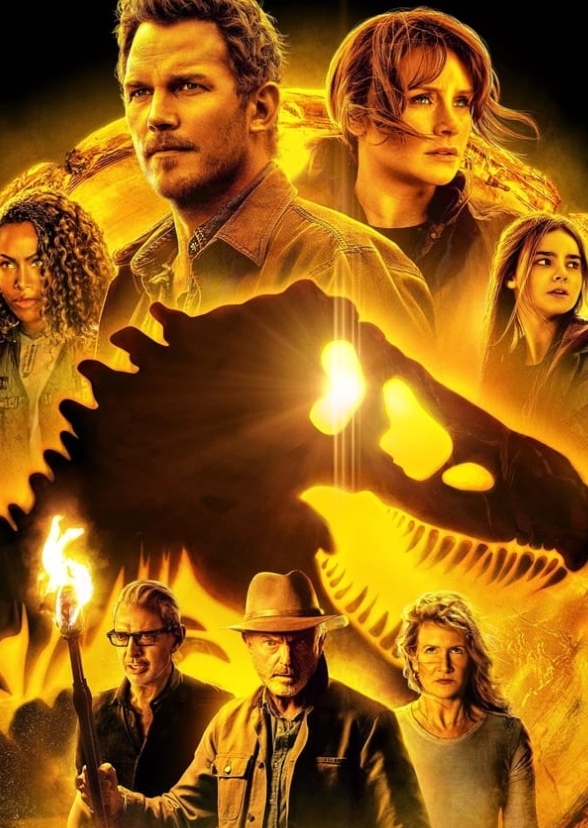
In January 2024, a new installment was revealed to be officially in development. David Koepp will return as screenwriter while Frank Marshall and Patrick Crowley once again serve as producers. Steven Spielberg will serve as executive producer, with the project being seen as a joint-venture production between Amblin Entertainment and Universal. Development of the project had been underway for some time, with several drafts already written by Koepp. The producers had also done some pre-production work, including dinosaur designs, meaning that any creative input from the eventual director would be minimal. The position was reportedly described as being "more shooter than auteur", as the producers sought to have more creative control compared with Dominion. David Leitch was briefly in talks to direct the film during early February 2024, but negotiations broke down after several days, as the project's progress up to that point left little room for his creative input. Soon after Leitch's departure, Gareth Edwards was announced to direct the film, with Scarlett Johansson and Jonathan Bailey in talks for the lead roles. Paleontologist Steve Brusatte will return from the previous film as dinosaur consultant. Filming is scheduled to begin in June 2024, at Sky Studios Elstree in the United Kingdom. Filming will also take place from July to September at the Malta Film Studios in Kalkara, Malta. The untitled film is scheduled for a July 2, 2025 release.




