
Allosaurus (/ˌæləˈsɔːrəs/) is a genus of large carnivorous theropod dinosaur that lived 155 to 145 million years ago during the Late Jurassic epoch (Kimmeridgian to late Tithonian. The name "Allosaurus" means "different lizard" alluding to its unique (at the time of its discovery) concave vertebrae. It is derived from the Greek ἄλλος (allos) ("different, other") and σαῦρος (sauros) ("lizard / generic reptile"). The first fossil remains that could definitively be ascribed to this genus were described in 1877 by paleontologist Othniel Charles Marsh. As one of the first well-known theropod dinosaurs, it has long attracted attention outside of paleontological circles. Allosaurus was a large bipedal predator. Its skull was light, robust and equipped with dozens of sharp, serrated teeth. It averaged 10 meters (33 ft) in length, though fragmentary remains suggest it could have reached over 12 m (39 ft). Relative to the large and powerful hindlimbs, its three-fingered forelimbs were small, and the body was balanced by a long and heavily muscled tail. It is classified as an allosaurid, a type of carnosaurian theropod dinosaur. The genus has a complicated taxonomy, and includes three valid species, the best known of which is A. fragilis. The bulk of Allosaurus remains have come from North America's Morrison Formation, with material also known from Portugal. It was known for over half of the 20th century as Antrodemus, but a study of the copious remains from the Cleveland-Lloyd Dinosaur Quarry brought the name "Allosaurus" back to prominence and established it as one of the best-known dinosaurs. As the most abundant large predator in the Morrison Formation, Allosaurus was at the top of the food chain, probably preying on contemporaneous large herbivorous dinosaurs, and perhaps other predators. Potential prey included ornithopods, stegosaurids, and sauropods. Some paleontologists interpret Allosaurus as having had cooperative social behavior, and hunting in packs, while others believe individuals may have been aggressive toward each other, and that congregations of this genus are the result of lone individuals feeding on the same carcasses.
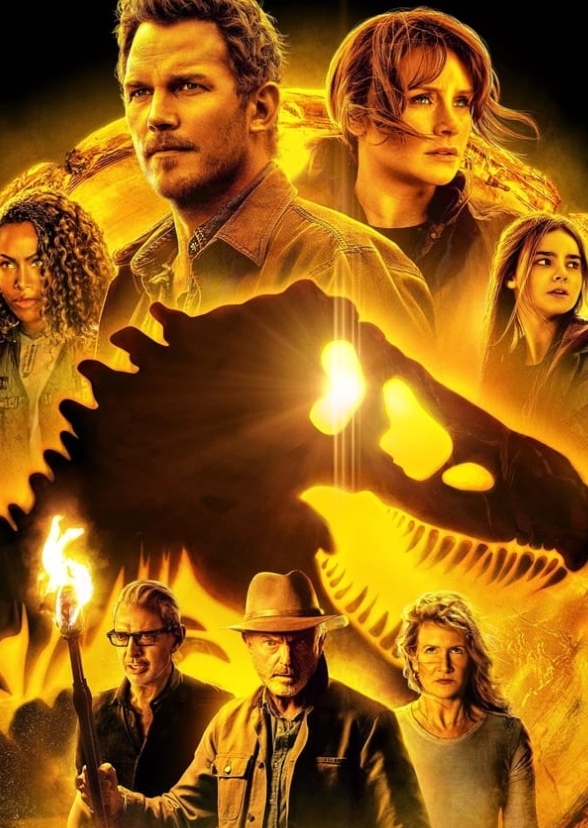
In January 2024, a new installment was revealed to be officially in development. David Koepp will return as screenwriter while Frank Marshall and Patrick Crowley once again serve as producers. Steven Spielberg will serve as executive producer, with the project being seen as a joint-venture production between Amblin Entertainment and Universal. Development of the project had been underway for some time, with several drafts already written by Koepp. The producers had also done some pre-production work, including dinosaur designs, meaning that any creative input from the eventual director would be minimal. The position was reportedly described as being "more shooter than auteur", as the producers sought to have more creative control compared with Dominion. David Leitch was briefly in talks to direct the film during early February 2024, but negotiations broke down after several days, as the project's progress up to that point left little room for his creative input. Soon after Leitch's departure, Gareth Edwards was announced to direct the film, with Scarlett Johansson and Jonathan Bailey in talks for the lead roles. Paleontologist Steve Brusatte will return from the previous film as dinosaur consultant. Filming is scheduled to begin in June 2024, at Sky Studios Elstree in the United Kingdom. Filming will also take place from July to September at the Malta Film Studios in Kalkara, Malta. The untitled film is scheduled for a July 2, 2025 release.




