
Ankylosaurus[nb 1] is a genus of armored dinosaur. Its fossils have been found in geological formations dating to the very end of the Cretaceous Period, about 68–66 million years ago, in western North America, making it among the last of the non-avian dinosaurs. It was named by Barnum Brown in 1908; the only species in the genus is A. magniventris. The genus name means "fused lizard", and the specific name means "great belly". A handful of specimens have been excavated to date, but a complete skeleton has not been discovered. Though other members of Ankylosauria are represented by more extensive fossil material, Ankylosaurus is often considered the archetypal member of its group, despite having some unusual features. Possibly the largest-known ankylosaurid, Ankylosaurus is estimated to have been between 6 and 8 meters (20 and 26 ft) long and to have weighed between 4.8 and 8 metric tons (5.3 and 8.8 short tons). It was quadrupedal, with a broad, robust body. It had a wide, low skull, with two horns pointing backward from the back of the head, and two horns below these that pointed backward and down. Unlike other ankylosaurs, its nostrils faced sideways rather than towards the front. The front part of the jaws was covered in a beak, with rows of small, leaf-shaped teeth farther behind it. It was covered in armor plates, or osteoderms, with bony half-rings covering the neck, and had a large club on the end of its tail. Bones in the skull and other parts of the body were fused, increasing their strength, and this feature is the source of the genus name. Ankylosaurus is a member of the family Ankylosauridae, and its closest relatives appear to be Anodontosaurus and Euoplocephalus. Ankylosaurus is thought to have been a slow-moving animal, able to make quick movements when necessary. Its broad muzzle indicates it was a non-selective browser. Sinuses and nasal chambers in the snout may have been for heat and water balance or may have played a role in vocalization. The tail club is thought to have been used in defense against predators or in intraspecific combat. Ankylosaurus has been found in the Hell Creek, Lance, Scollard, Frenchman, and Ferris formations, but appears to have been rare in its environment. Although it lived alongside a nodosaurid ankylosaur, their ranges and ecological niches do not appear to have overlapped, and Ankylosaurus may have inhabited upland areas. Ankylosaurus also lived alongside dinosaurs such as Tyrannosaurus, Triceratops, and Edmontosaurus.
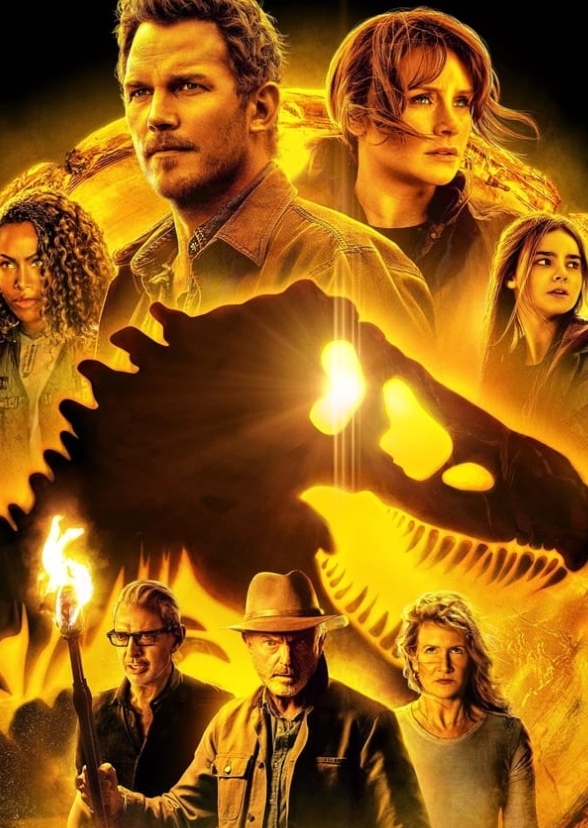
In January 2024, a new installment was revealed to be officially in development. David Koepp will return as screenwriter while Frank Marshall and Patrick Crowley once again serve as producers. Steven Spielberg will serve as executive producer, with the project being seen as a joint-venture production between Amblin Entertainment and Universal. Development of the project had been underway for some time, with several drafts already written by Koepp. The producers had also done some pre-production work, including dinosaur designs, meaning that any creative input from the eventual director would be minimal. The position was reportedly described as being "more shooter than auteur", as the producers sought to have more creative control compared with Dominion. David Leitch was briefly in talks to direct the film during early February 2024, but negotiations broke down after several days, as the project's progress up to that point left little room for his creative input. Soon after Leitch's departure, Gareth Edwards was announced to direct the film, with Scarlett Johansson and Jonathan Bailey in talks for the lead roles. Paleontologist Steve Brusatte will return from the previous film as dinosaur consultant. Filming is scheduled to begin in June 2024, at Sky Studios Elstree in the United Kingdom. Filming will also take place from July to September at the Malta Film Studios in Kalkara, Malta. The untitled film is scheduled for a July 2, 2025 release.




