
Age: 53
male
Neil Patrick Harris (born June 15, 1973) is an American actor, singer, writer, producer, and television host. Primarily known for his comedic television roles and dramatic and musical stage roles, he has received multiple accolades throughout his career, including a Tony Award, five Primetime Emmy Awards, and nominations for a Grammy Award and three Screen Actors Guild Awards. On television, he is known for playing the title character on the ABC series Doogie Howser, M.D. (1989–1993), for which he was nominated for the Golden Globe Award for Best Actor – Television Series Musical or Comedy, as well as Barney Stinson on the CBS series How I Met Your Mother (2005–2014, for which he was nominated for four Emmy Awards), and Count Olaf on the Netflix series A Series of Unfortunate Events (2017–2019). Harris is also known for his role as the title character in Joss Whedon's musical Dr. Horrible's Sing-Along Blog (2008) and a fictional version of himself in the Harold & Kumar film series (2004–2011). His other films include Starship Troopers (1997), Beastly (2011), The Smurfs (2011), The Smurfs 2 (2013), A Million Ways to Die in the West (2014), and Gone Girl (2014). In 2010, Harris won two awards at the 62nd Primetime Emmy Awards, winning for Outstanding Guest Actor in a Comedy Series for his guest appearance on Glee, and Outstanding Special Class Program for hosting the Tony Awards in 2009; he has won the latter award three additional times for hosting the show in 2011, 2012, and 2013. He also hosted the Primetime Emmy Awards in 2009 and 2013, and hosted the 87th Academy Awards in 2015, thus making him the first openly gay man to host the Academy Awards. In 2014, he starred in the title role in Hedwig and the Angry Inch on Broadway, for which he won the 2014 Tony Award for Best Leading Actor in a Musical. Harris was named one of Time magazine's 100 Most Influential People in 2010. He is married to David Burtka. In 2010, they had twins via surrogacy.
Neil Patrick Harris

British captain
for British captain in Canada: A Mysterious Story
Suggested by danicaharper
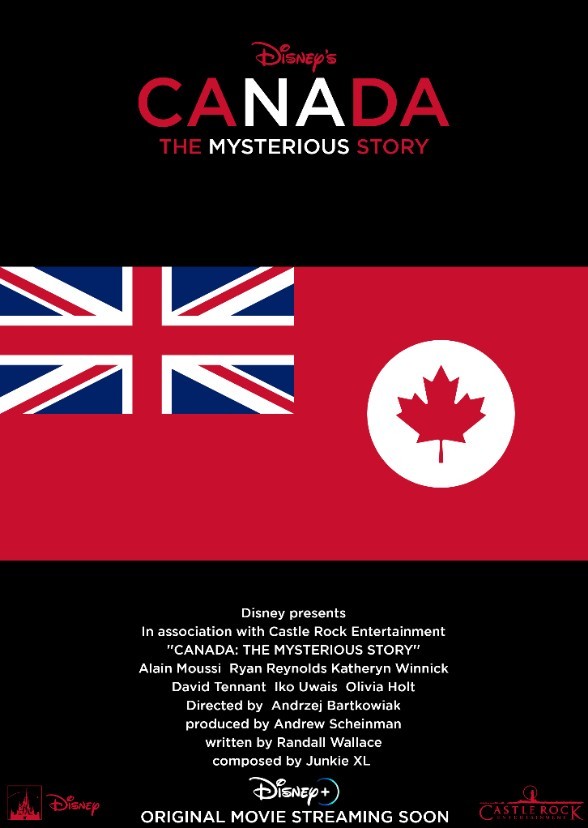
Prior to European colonization, the lands encompassing present-day Canada were inhabited for millennia by Indigenous peoples, with distinct trade networks, spiritual beliefs, and styles of social organization. Some of these older civilizations had long faded by the time of the first European arrivals and have been discovered through archeological investigations. From the late 15th century, French and British expeditions explored, colonized, and fought over various places within North America in what constitutes present-day Canada. The colony of New France was claimed in 1534 with permanent settlements beginning in 1608. France ceded nearly all its North American possessions to the United Kingdom in 1763 at the Treaty of Paris after the Seven Years' War. The now British Province of Quebec was divided into Upper and Lower Canada in 1791. The two provinces were united as the Province of Canada by the Act of Union 1840, which came into force in 1841. In 1867, the Province of Canada was joined with two other British colonies of New Brunswick and Nova Scotia through Confederation, forming a self-governing entity. "Canada" was adopted as the legal name of the new country and the word "Dominion" was conferred as the country's title. Over the next eighty-two years, Canada expanded by incorporating other parts of British North America, finishing with Newfoundland and Labrador in 1949.




