
Age: 63
male
John Christopher Depp II (born June 9, 1963) is an American actor, producer and musician. He is the recipient of various accolades, including a Golden Globe Award and a Screen Actors Guild Award, in addition to nominations for three Academy Awards and two British Academy Film Awards. He made his debut in the horror film A Nightmare on Elm Street (1984), before rising to prominence as a teen idol on the television series 21 Jump Street (1987–1990). In the 1990s, he acted mostly in independent films, often playing eccentric characters. These included What's Eating Gilbert Grape (1993), Benny and Joon (1993), Dead Man (1995), Donnie Brasco (1997) and Fear and Loathing in Las Vegas (1998). He also began collaborating with director Tim Burton, starring in Edward Scissorhands (1990), Ed Wood (1994), and Sleepy Hollow (1999). In the 2000s, he became one of the most commercially successful film stars by playing Captain Jack Sparrow in the swashbuckler film series Pirates of the Caribbean (2003–present). He received critical praise for Finding Neverland (2004), and continued his commercially successful collaboration with Tim Burton with the films Charlie and the Chocolate Factory (2005), Corpse Bride (2005), Sweeney Todd: The Demon Barber of Fleet Street (2007), and Alice in Wonderland (2010). In 2012, he was one of the world's biggest film stars, and was listed by the Guinness World Records as the world's highest-paid actor, with earnings of US$75 million. During the 2010s, Depp began producing films through his company, Infinitum Nihil, and formed the rock supergroup Hollywood Vampires with Alice Cooper and Joe Perry.
Johnny Depp

British captain
for British captain in Canada: A Mysterious Story
Suggested by danicaharper
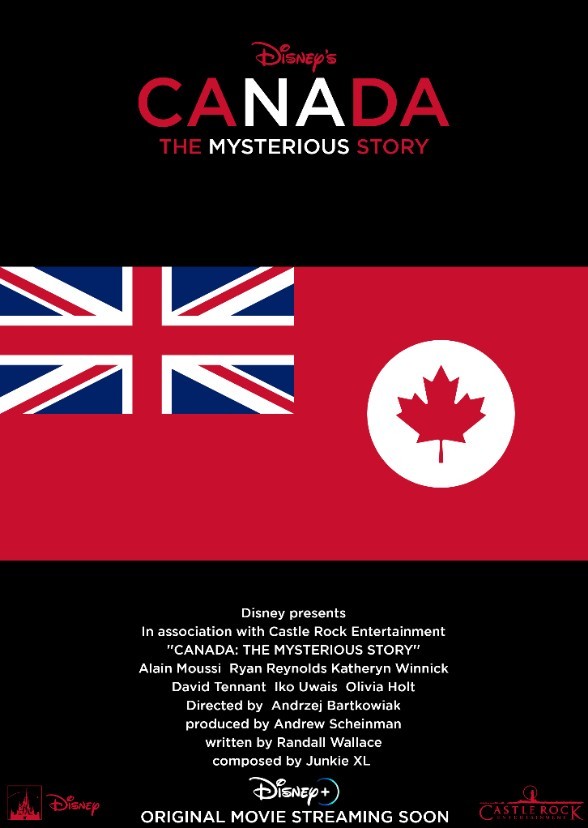
Prior to European colonization, the lands encompassing present-day Canada were inhabited for millennia by Indigenous peoples, with distinct trade networks, spiritual beliefs, and styles of social organization. Some of these older civilizations had long faded by the time of the first European arrivals and have been discovered through archeological investigations. From the late 15th century, French and British expeditions explored, colonized, and fought over various places within North America in what constitutes present-day Canada. The colony of New France was claimed in 1534 with permanent settlements beginning in 1608. France ceded nearly all its North American possessions to the United Kingdom in 1763 at the Treaty of Paris after the Seven Years' War. The now British Province of Quebec was divided into Upper and Lower Canada in 1791. The two provinces were united as the Province of Canada by the Act of Union 1840, which came into force in 1841. In 1867, the Province of Canada was joined with two other British colonies of New Brunswick and Nova Scotia through Confederation, forming a self-governing entity. "Canada" was adopted as the legal name of the new country and the word "Dominion" was conferred as the country's title. Over the next eighty-two years, Canada expanded by incorporating other parts of British North America, finishing with Newfoundland and Labrador in 1949.




