
Venice (/ˈvɛnɪs/ VEH-niss; Italian: Venezia [veˈnɛttsja] (About this soundlisten); Venetian: Venesia or Venexia [veˈnɛsja]) is a city in northeastern Italy and the capital of the Veneto region. It is built on a group of 118 small islands[4] that are separated by canals and linked by over 400 bridges.[4][5] The islands are in the shallow Venetian Lagoon, an enclosed bay lying between the mouths of the Po and the Piave rivers (more exactly between the Brenta and the Sile). In 2020, 258,685 people resided in the Comune di Venezia, of whom around 55,000 live in the historical city of Venice (centro storico). Together with Padua and Treviso, the city is included in the Padua-Treviso-Venice Metropolitan Area (PATREVE), which is considered a statistical metropolitan area, with a total population of 2.6 million.[6] The name is derived from the ancient Veneti people who inhabited the region by the 10th century BC.[7][8] The city was historically the capital of the Republic of Venice for over a millennium, from 697 to 1797. It was a major financial and maritime power during the Middle Ages and Renaissance, and a staging area for the Crusades and the Battle of Lepanto, as well as an important center of commerce—especially silk, grain, and spice, and of art from the 13th century to the end of the 17th. The city-state of Venice is considered to have been the first real international financial center, emerging in the 9th century and reaching its greatest prominence in the 14th century.[9] This made Venice a wealthy city throughout most of its history.[10] After the Napoleonic Wars and the Congress of Vienna, the Republic was annexed by the Austrian Empire, until it became part of the Kingdom of Italy in 1866, following a referendum held as a result of the Third Italian War of Independence. Venice has been known as "La Dominante", "La Serenissima", "Queen of the Adriatic", "City of Water", "City of Masks", "City of Bridges", "The Floating City", and "City of Canals". The lagoon and a part of the city are listed as a UNESCO World Heritage Site. Parts of Venice are renowned for the beauty of their settings, their architecture, and artwork.[4] Venice is known for several important artistic movements—especially during the Renaissance period—and has played an important role in the history of instrumental and operatic music, and is the birthplace of Baroque composers Tomaso Albinoni and Antonio Vivaldi.[11] Although the city is facing some challenges (including an excessive number of tourists and problems caused by pollution, tide peaks and cruise ships sailing too close to buildings),[12][13][14] Venice remains a very popular tourist destination, a major cultural centre, and has been ranked many times the most beautiful city in the world.[15][16] It has been described by the Times Online as one of Europe's most romantic cities[17] and by The New York Times as "undoubtedly the most beautiful city built by man".[18]
Venice

Filming Locations
for Filming Locations in Brilliant Crisis Primitiva
Suggested by GodzillaLover04
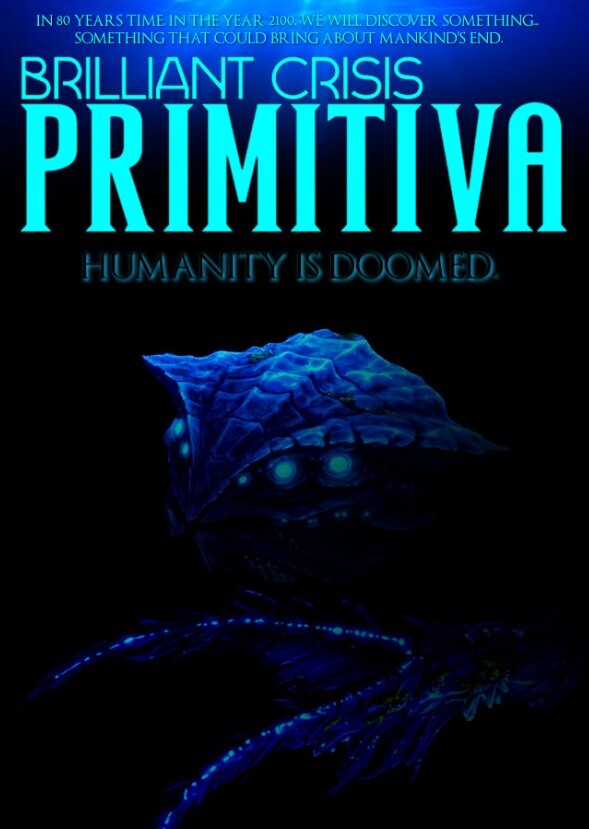
In the beginning of the year 2100, five years after the events of World War IV, a crew of scientists are recruited by U.S. Navy SEALS to investigate a series of missing submarines and Navy Ships across the Arctic. By January, they discover the wrecks of the subs and ships across the coast of Greenland, however, they found something else... Going deep into Greenland's crust, they find a race of strange, Bioluminescent and hostile creatures of seemingly alien origin. A majority of the crew was killed, but a select few that have survived don't know what will come next. Upon returning to the United States, the creatures, with various sizes and powers, begin to manifest across the world, and begin attacking mankind. One scientist's efforts to stop the creatures leads him and his colleagues to the mysterious paramilitary organization HERZ, which had been founded 20 years prior, as they we're aware of the the existence of the creatures, which are called the "Primitivans." HERZ must both research and combat the threat of the Primitivans while dealing with tensions between their own members and the United Nations. They soon will discover that the Primitivans' goal for humanity is more justified than they think, and are more godlike than they seem.




