
Alaska (/əˈlæskə/ (About this soundlisten); Aleut: Alax̂sxax̂; Inupiaq: Alaasikaq; Alutiiq: Alas'kaaq; Yup'ik: Alaskaq;[4] Tlingit: Anáaski) is a state in the Western United States on the northwest extremity of North America. A semi-exclave of the U.S., it borders the Canadian province of British Columbia and the territory of Yukon to the east and has a maritime border with Russia's Chukotka Autonomous Okrug to the west, just across the Bering Strait. To the north are the Chukchi and Beaufort seas of the Arctic Ocean, while the Pacific Ocean lies to the south and southwest. Alaska is by far the largest U.S. state by area, comprising more total area than the next three largest states (Texas, California, and Montana) combined. It represents the seventh largest subnational division in the world. It is the third-least populous and the most sparsely populated state, but by far the continent's most populous territory located mostly north of the 60th parallel, with a population of 736,081 as of 2020—more than quadruple the combined populations of Northern Canada and Greenland.[3] Approximately half of Alaska's residents live within the Anchorage metropolitan area. The state capital of Juneau is the second-largest city in the United States by area, comprising more territory than the states of Rhode Island and Delaware. The former capital of Alaska, Sitka, is the largest U.S. city by area. Alaska was occupied by various indigenous peoples for thousands of years before the arrival of Europeans. The state is considered the entry point for the settlement of North America by way of the Bering land bridge. The Russians were the first Europeans to settle the area beginning in the 18th century, eventually establishing Russian America, which spanned most of the current state. The expense and difficulty of maintaining this distant possession prompted its sale to the U.S. in 1867 for US$7.2 million (equivalent to $133 million in 2020), or approximately two cents per acre ($4.74/km2). The area went through several administrative changes before becoming organized as a territory on May 11, 1912. It was admitted as the 49th state of the U.S. on January 3, 1959.[5] While it has one of the smallest state economies in the country, Alaska's per capita income is among the highest, owing to a diversified economy dominated by fishing, natural gas, and oil, all of which it has in abundance. United States armed forces bases and tourism are also a significant part of the economy; more than half the state is federally owned public land, including a multitude of national forests, national parks, and wildlife refuges. The indigenous population of Alaska is proportionally the highest of any U.S. state, at over 15 percent.[6] Close to two dozen native languages are spoken, and Alaskan Natives exercise considerable influence in local and state politics.
Alaska

Filming Locations
for Filming Locations in Brilliant Crisis Primitiva
Suggested by GodzillaLover04
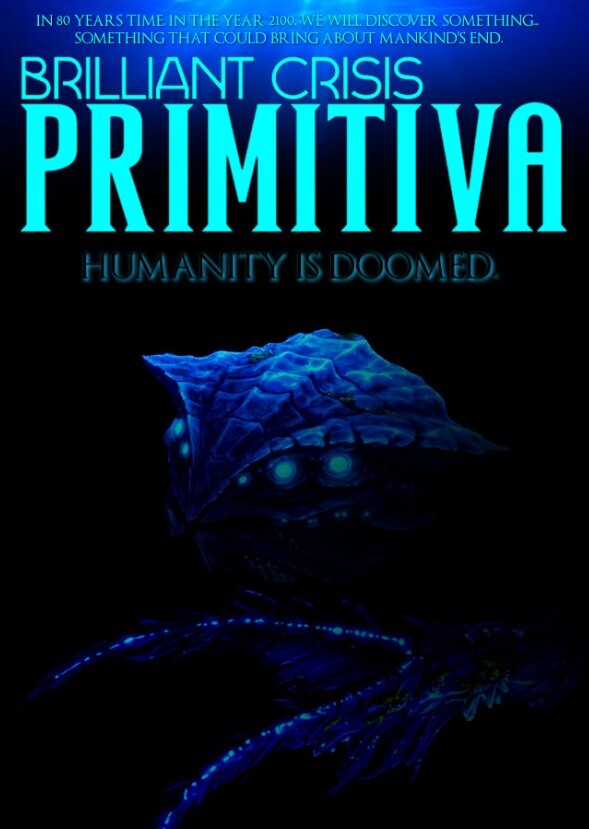
In the beginning of the year 2100, five years after the events of World War IV, a crew of scientists are recruited by U.S. Navy SEALS to investigate a series of missing submarines and Navy Ships across the Arctic. By January, they discover the wrecks of the subs and ships across the coast of Greenland, however, they found something else... Going deep into Greenland's crust, they find a race of strange, Bioluminescent and hostile creatures of seemingly alien origin. A majority of the crew was killed, but a select few that have survived don't know what will come next. Upon returning to the United States, the creatures, with various sizes and powers, begin to manifest across the world, and begin attacking mankind. One scientist's efforts to stop the creatures leads him and his colleagues to the mysterious paramilitary organization HERZ, which had been founded 20 years prior, as they we're aware of the the existence of the creatures, which are called the "Primitivans." HERZ must both research and combat the threat of the Primitivans while dealing with tensions between their own members and the United Nations. They soon will discover that the Primitivans' goal for humanity is more justified than they think, and are more godlike than they seem.




