
Singapore (Republic of Singapore) is a sovereign island city-state in maritime South-East Asia. It lies about one degree of latitude (137 kilometers or 85 miles) north of the equator, off the southern tip of the Malay Peninsula, bordering the Straits of Malacca to the west, the Riau Islands (Indonesia) to the south, and the South China Sea to the east. The country's territory is composed of one main island, 63 satellite islands and islets, and one outlying islet, the combined area of which has increased by 25% since the country's independence as a result of extensive land reclamation projects. It has the second greatest population density in the world. With a multicultural population and recognizing the need to respect cultural identities, Singapore has four official languages; English, Malay, Mandarin, and Tamil. English is the lingua franca. Multi-racialism is enshrined in the constitution and continues to shape national policies in education, housing, and politics. Modern Singapore was founded in 1819 by Sir Stamford Raffles as a trading post of the British Empire. In 1867, the colonies in Southeast Asia were reorganized and Singapore came under the direct control of Britain as part of the Straits Settlements. During the 2nd World War, Singapore was occupied by Japan in 1942, and returned to British control as a separate crown colony following Japan's surrender in 1945. Singapore gained self-governance in 1959 and in 1963 became part of the new federation of Malaysia, alongside Malaya, North Borneo (Sabah) and Sarawak. Ideological differences led to Singapore being expelled from the federation two years later and it became an independent country. After early years of turbulence and despite lacking natural resources and a hinterland, the nation rapidly developed to become one of the 4 Asian Tigers based on external trade, becoming a highly developed country; it is ranked ninth on the UN Human Development Index and has the 2nd-highest GDP per capita (PPP) in the world. Singapore is the only country in Asia with a AAA sovereign rating from all major rating agencies. It is a major financial and shipping hub, consistently ranked the most expensive city to live in since 2013, and has been identified as a tax haven. Singapore is placed highly in key social indicators: education, healthcare, quality of life, personal safety, and housing, with a home-ownership rate of 91%. Singaporeans enjoy one of the world's longest life expectancies, fastest Internet connection speeds and one of the lowest infant mortality rates in the world. Singapore is a unitary parliamentary republic with a Westminster system of unicameral parliamentary government. While elections are considered generally free, the government exercises significant control over politics and society, and the People's Action Party has ruled continuously since independence. One of the five founding members of ASEAN, Singapore is also the headquarters of the Asia-Pacific Economic Cooperation (APEC) Secretariat and Pacific Economic Cooperation Council (PECC) Secretariat, as well as many international conferences and events. Singapore is also a member of the United Nations, World Trade Organization, East Asia Summit, Non-Aligned Movement and the Commonwealth of Nations.
Singapore

Filming Locations
for Filming Locations in Brilliant Crisis Primitiva
Suggested by GodzillaLover04
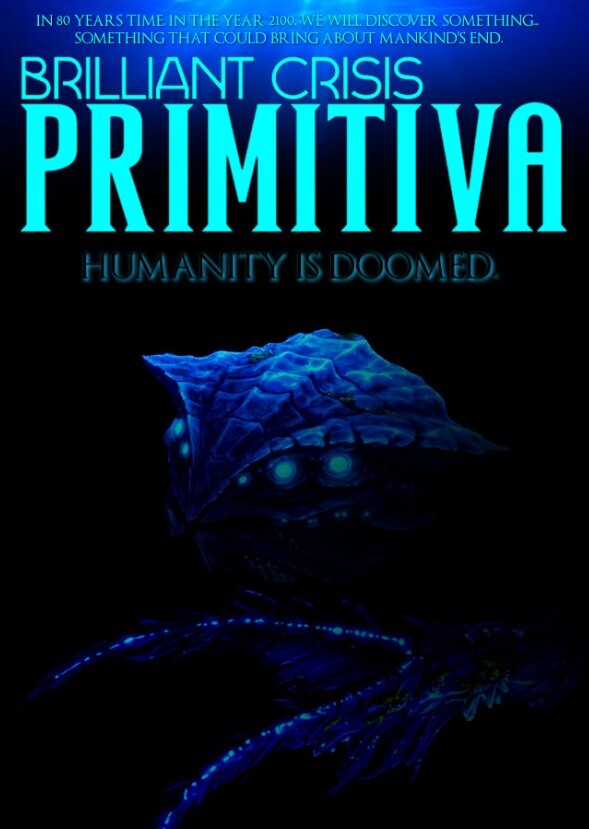
In the beginning of the year 2100, five years after the events of World War IV, a crew of scientists are recruited by U.S. Navy SEALS to investigate a series of missing submarines and Navy Ships across the Arctic. By January, they discover the wrecks of the subs and ships across the coast of Greenland, however, they found something else... Going deep into Greenland's crust, they find a race of strange, Bioluminescent and hostile creatures of seemingly alien origin. A majority of the crew was killed, but a select few that have survived don't know what will come next. Upon returning to the United States, the creatures, with various sizes and powers, begin to manifest across the world, and begin attacking mankind. One scientist's efforts to stop the creatures leads him and his colleagues to the mysterious paramilitary organization HERZ, which had been founded 20 years prior, as they we're aware of the the existence of the creatures, which are called the "Primitivans." HERZ must both research and combat the threat of the Primitivans while dealing with tensions between their own members and the United Nations. They soon will discover that the Primitivans' goal for humanity is more justified than they think, and are more godlike than they seem.




