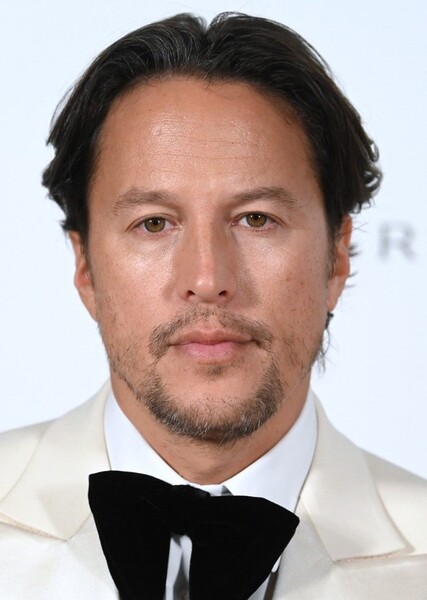
Age: 61
male
Sir Samuel Alexander Mendes CBE (born 1 August 1965) is a British film and stage director, producer, and screenwriter. In 2000, Mendes was appointed a CBE for his services to drama, and he was knighted in the 2020 New Year Honours List. In 2000, Mendes was awarded the Shakespeare Prize by the Alfred Toepfer Foundation in Hamburg, Germany. In 2005, he received a lifetime achievement award from the Directors Guild of Great Britain. In 2008, The Daily Telegraph ranked him number 15 in their list of the "100 most powerful people in British culture". Born in Berkshire to a Trinidadian Catholic father and an English Jewish mother, Mendes grew up in North London. He read English at Peterhouse at Cambridge University. He began directing plays there before joining Donmar Warehouse, a centre of 1990s London theatre culture. In theatre, he is known for his dark re-inventions of the stage musicals Cabaret (1993), Oliver! (1994), Company (1995), and Gypsy (2003). For the first time, he directed an original West End stage musical with Charlie and the Chocolate Factory (2013). For his work on the London stage, Mendes has received three Laurence Olivier Awards for Company, Twelfth Night, and The Ferryman. On Broadway, he earned two Tony Awards for Best Direction of a Play for The Ferryman in 2019 and The Lehman Trilogy in 2022. In film, he made his directorial debut with the drama American Beauty (1999), which earned him the Academy Award and Golden Globe Award for Best Director. He has since directed the films Road to Perdition (2002), Jarhead (2005), Revolutionary Road (2008), and the James Bond films Skyfall (2012) and Spectre (2015). For the war film 1917 (2019), he received the BAFTA Award and Golden Globe Award for Best Director, as well as his second Academy Award nomination for Best Director, Best Picture and Best Original Screenplay. Description above from the Wikipedia article Sam Mendes, licensed under CC-BY-SA, full list of contributors on Wikipedia.
Sam Mendes

X-Men: Apocalypse (2025) Director
for X-Men: Apocalypse (2025) Director in X-Men: Re-imagined
Suggested by bencasting
My attempt to reorganise X-Men films into a more cohesive timeline. X-Men (2000): Growing fear of mutants. Focus on the X-men’s found-family dynamic across generations. Rogue given more character development. Clash with Magneto & the Brotherhood stopping his increasingly extreme plan. X-Men: Mankind (2003): Wolverine’s past emerges through flashbacks. The cruelty of William Stryker’s Weapon X program forces the X-Men and Magneto into a reluctant alliance, while Jean Grey’s powers are pushed to the limit saving the team. X-Men: Phoenix Rising (2007): Jean, believed dead, returns with the Phoenix Force, amplifying her anger at humans, Charles & Magneto. She causes destruction, struggles morally, and ultimately chooses to take control of the power, manifesting as the Phoenix in the sky and removing herself from the world. Sentinel program quietly advances. X-Men: First Class (2010): Nathaniel Essex as architect pulling strings from the shadows. More time with Erik hunting Nazis. More comic-accurate Emma Frost; Darwin survives; Havok swapped to fix continuity. X-Men: Days of Future Past (2013): Mostly the same but with enough focus and better lines for characters to give them time to shine. X-Men: Bloodlines (2023): Set against the fall of the iron curtain – Mr. Sinister is abducting unregistered mutants across Europe. Setting traps for the x-men, to divide and capture Scott & Jean to harness their DNA. Jean’s powers surge during a showdown beneath Berlin, destroying Sinister’s archives, forcing his retreat. X-Men: Apocalypse (2025): Jeans power surge & Sinister’s failure awakens Apocalypse. Seeing his “pawn” could not control the X-Men or Jean’s cosmic power, Apocalypse corrupts 4 Horsemen to reshape the modern world. Guided by future Charles via the astral plane, Jean learns to control her Phoenix energy. The team overcome Apocalypse, entombing him & preventing his conquest.