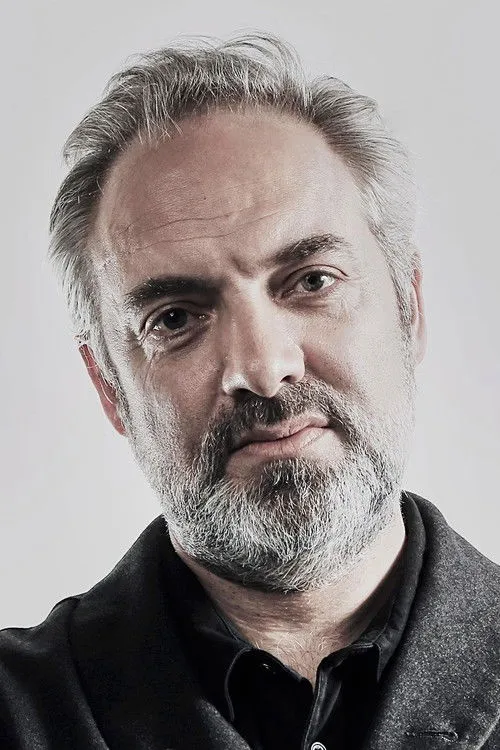
Age: 61
male
Sir Samuel Alexander Mendes CBE (born 1 August 1965) is a British film and stage director, producer, and screenwriter. In 2000, Mendes was appointed a CBE for his services to drama, and he was knighted in the 2020 New Year Honours List. In 2000, Mendes was awarded the Shakespeare Prize by the Alfred Toepfer Foundation in Hamburg, Germany. In 2005, he received a lifetime achievement award from the Directors Guild of Great Britain. In 2008, The Daily Telegraph ranked him number 15 in their list of the "100 most powerful people in British culture". Born in Berkshire to a Trinidadian Catholic father and an English Jewish mother, Mendes grew up in North London. He read English at Peterhouse at Cambridge University. He began directing plays there before joining Donmar Warehouse, a centre of 1990s London theatre culture. In theatre, he is known for his dark re-inventions of the stage musicals Cabaret (1993), Oliver! (1994), Company (1995), and Gypsy (2003). For the first time, he directed an original West End stage musical with Charlie and the Chocolate Factory (2013). For his work on the London stage, Mendes has received three Laurence Olivier Awards for Company, Twelfth Night, and The Ferryman. On Broadway, he earned two Tony Awards for Best Direction of a Play for The Ferryman in 2019 and The Lehman Trilogy in 2022. In film, he made his directorial debut with the drama American Beauty (1999), which earned him the Academy Award and Golden Globe Award for Best Director. He has since directed the films Road to Perdition (2002), Jarhead (2005), Revolutionary Road (2008), and the James Bond films Skyfall (2012) and Spectre (2015). For the war film 1917 (2019), he received the BAFTA Award and Golden Globe Award for Best Director, as well as his second Academy Award nomination for Best Director, Best Picture and Best Original Screenplay. Description above from the Wikipedia article Sam Mendes, licensed under CC-BY-SA, full list of contributors on Wikipedia.
Sam Mendes

Director
for Director in World War II: The War in the Pacific
Suggested by darksith

The Pacific War, sometimes called the Asia-Pacific War, was the scene of World War II, which took place in East Asia, the Pacific Ocean, the Indian Ocean, and Oceania. Geographically, it was the largest theater of the war, including the huge war rampage in the Pacific, the war in the Southwest Pacific, the Second Sino-Japanese War, and the Soviet-Japanese War. The Second Sino-Japanese War between the Empire of Japan and the Republic of China had been ongoing since July 7, 1937, with hostilities extending as far back as September 19, 1931, with the Japanese invasion of Manchuria. The Pacific War itself began on December 7 (December 8 Japanese time) 1941, when the Japanese simultaneously attacked United States military bases in Hawaii, Wake Island, Guam, and the Philippines and invaded Thailand and the British colonies of Malaya, Singapore and Hong Kong. In the Pacific War, the Allies opposed Japan, aided by Thailand and to a lesser extent by Axis allies. The fighting consisted of some of the largest naval battles in history and incredibly fierce battles and war crimes across Asia and the Pacific Islands resulting in huge loss of life. The war culminated in massive Allied air raids on Japan, including the dropping of atomic bombs on Hiroshima and Nagasaki, accompanied by a declaration of war by the Soviet Union and the invasion of Manchuria and other territories on August 9, 1945, causing the Japanese to announce their intention to surrender on August 15, 1945.