Age: 88
male
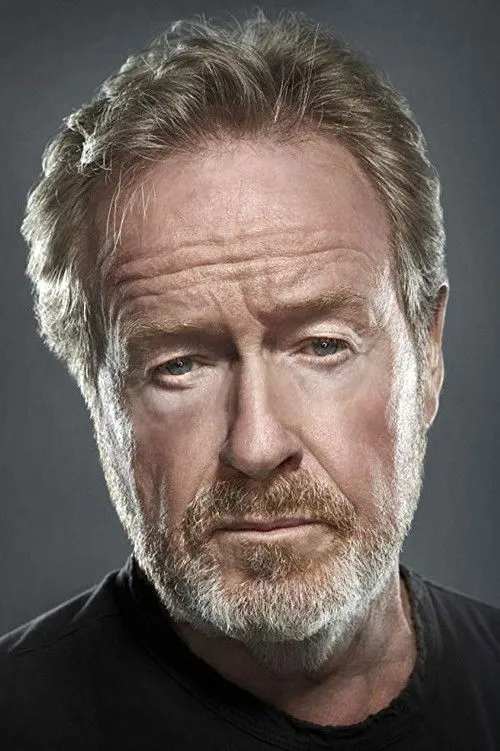
Sir Ridley Scott (born 30 November 1937) is an English film director, screenwriter and producer. He directs films in the science fiction, crime, and historical epic genres with an atmospheric and highly concentrated visual style. He ranks among the highest-grossing directors, with his films grossing a cumulative $5 billion worldwide. He has received many accolades, including the BAFTA Fellowship for Lifetime Achievement in 2018, two Primetime Emmy Awards, and a Golden Globe Award. He was knighted by Queen Elizabeth II in 2003 and appointed a Knight Grand Cross by King Charles III in 2024. An alumnus of the Royal College of Art in London, Scott began his career in television as a designer and director before moving into advertising as a director of commercials. He made his film directorial debut with The Duellists (1977) and gained wider recognition with his next film, Alien (1979). Though his films range widely in setting and period, they showcase memorable imagery of urban environments, spanning 2nd-century Rome in Gladiator (2000) and its 2024 sequel, 12th-century Jerusalem in Kingdom of Heaven (2005), medieval England in Robin Hood (2010), ancient Memphis in Exodus: Gods and Kings (2014), contemporary Mogadishu in Black Hawk Down (2001), futuristic cityscapes of Los Angeles in Blade Runner (1982) and extraterrestrial worlds in Alien, Prometheus (2012), The Martian (2015) and Alien: Covenant (2017). Scott has been nominated for three Academy Awards: Directing for Thelma & Louise, Gladiator, and Black Hawk Down. Gladiator won the Academy Award for Best Picture and received a nomination in the same category for The Martian. In 1995, Scott and his brother Tony received a British Academy Film Award for Outstanding British Contribution to Cinema. Scott's films Alien, Blade Runner and Thelma & Louise were each selected for preservation in the United States National Film Registry by the Library of Congress for being considered "culturally, historically, or aesthetically significant". In a 2004 BBC poll, Scott was ranked 10 on the list of most influential people in British culture. Scott also works in television and has earned 10 Primetime Emmy Award nominations. He won twice, for Outstanding Television Film for the HBO film The Gathering Storm (2002) and Outstanding Documentary or Nonfiction Special for the History Channel's Gettysburg (2011). He was Emmy-nominated for RKO 281 (1999), The Andromeda Strain (2008), and The Pillars of the Earth (2010). Description above from the Wikipedia article Ridley Scott, licensed under CC-BY-SA, full list of contributors on Wikipedia.
Ridley Scott

Director
for Director in World War II: The War in the Pacific
Suggested by darksith

The Pacific War, sometimes called the Asia-Pacific War, was the scene of World War II, which took place in East Asia, the Pacific Ocean, the Indian Ocean, and Oceania. Geographically, it was the largest theater of the war, including the huge war rampage in the Pacific, the war in the Southwest Pacific, the Second Sino-Japanese War, and the Soviet-Japanese War. The Second Sino-Japanese War between the Empire of Japan and the Republic of China had been ongoing since July 7, 1937, with hostilities extending as far back as September 19, 1931, with the Japanese invasion of Manchuria. The Pacific War itself began on December 7 (December 8 Japanese time) 1941, when the Japanese simultaneously attacked United States military bases in Hawaii, Wake Island, Guam, and the Philippines and invaded Thailand and the British colonies of Malaya, Singapore and Hong Kong. In the Pacific War, the Allies opposed Japan, aided by Thailand and to a lesser extent by Axis allies. The fighting consisted of some of the largest naval battles in history and incredibly fierce battles and war crimes across Asia and the Pacific Islands resulting in huge loss of life. The war culminated in massive Allied air raids on Japan, including the dropping of atomic bombs on Hiroshima and Nagasaki, accompanied by a declaration of war by the Soviet Union and the invasion of Manchuria and other territories on August 9, 1945, causing the Japanese to announce their intention to surrender on August 15, 1945.