Age: 71
male
Denzel Hayes Washington Jr. (born December 28, 1954) is an American actor, producer, and director. Known for his dramatic roles on stage and screen, he is widely regarded as one of the best actors of his generation, with The New York Times declaring him the greatest actor of the 21st century in 2020. Over his career, he has received several accolades, including two Academy Awards, three Golden Globe Awards, a Screen Actors Guild Award, and a Tony Award, as well as nominations for two Emmy Awards and a Grammy Award. Washington has been honoured with the Cecil B. DeMille Award in 2016, the AFI Life Achievement Award in 2019, and the Presidential Medal of Freedom in 2022. After training at the American Conservatory Theatre, Washington began his career in theatre, acting in performances off-Broadway. He first came to prominence in the NBC medical drama series St. Elsewhere (1982–1988) and in the war film A Soldier's Story (1984). He won two Academy Awards, his first for Best Supporting Actor for playing an American Civil War soldier in the war drama Glory (1989) and his second for Best Actor for playing a corrupt police officer in the crime thriller Training Day (2001). He was Oscar-nominated for his performances in Cry Freedom (1987), Malcolm X (1992), The Hurricane (1999), Flight (2012), Fences (2016), Roman J. Israel, Esq. (2017), and The Tragedy of Macbeth (2021). A prominent leading man, Washington also acted in Mo' Better Blues (1990), Mississippi Masala (1991), Philadelphia (1993), Courage Under Fire (1996), Remember the Titans (2000), Man on Fire (2004), Inside Man (2006), American Gangster (2007), and The Equalizer trilogy (2014–2023). Washington directed and starred in the films Antwone Fisher (2002), The Great Debaters (2007), and Fences (2016). On stage, he has acted in productions of both Coriolanus (1979) and The Tragedy of Richard III (1990) at the Public Theater. He made his Broadway debut in the Ron Milner play Checkmates (1988). He won the Tony Award for Best Actor in a Play for his role as a disillusioned working-class father in the Broadway revival of August Wilson's play Fences (2010). He has also acted in the Broadway revivals of William Shakespeare's Julius Caesar (2005), Lorraine Hansberry's A Raisin in the Sun (2014), and Eugene O'Neill's play The Iceman Cometh (2018).
Denzel Washington

Bramblecrest the Echidna
for Bramblecrest the Echidna in War for Mobius: Age of Darkness
Suggested by AutobotSonicFan
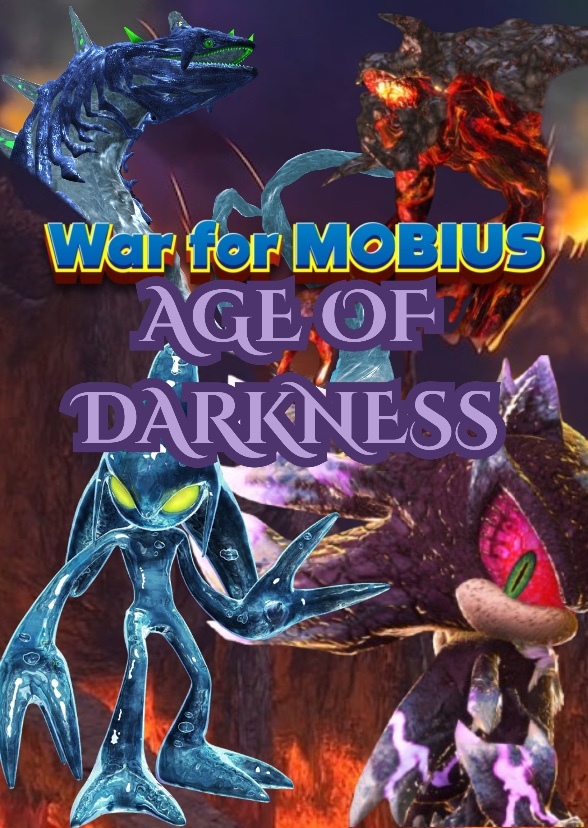
The Ancients may have taken a leave of absence ever since Black Doom was beaten by Chaos, but the war was still going on, giving Mobius 600 years of prep time which is a mere blink for the Ancients. But Chaos begins to grow weak because of all the battles and creating the Emeralds and protecting Mobius. The Ancients knew they had to come up with something so they could win once and for all. And that was when the Dark Age of Mobius had begun with their newest creation: Mephiles the Dark!! Mephiles was the living embodiment of darkness itself, created by the Ancients with a combination of essence from the star known as Solaris, dark cosmic powers, a hint of Black Arms DNA, and their own shadows and power to turn the tide against Chaos, who was winning the war. To up the ante, they also created Iblis by capturing Solaris and mutating it with the biggest volcano on Mobius known as Mt. Disaster, thus creating the Flames of Disaster. Mephiles was created for the conquest of Mobius, entrusted to destroy it with his eternally powerful darkness and Iblis’ flames. Then he fought Chaos as he was created to do. This was the Battle of Solaris (because remains of the destroyed star were fighting Chaos) which started when Mephiles sent out Iblis to burn down the entire world after he made everything dark. Then, he betrayed his creators and destroyed them before Chaos could touch them. Mephiles and Iblis began to plunge the world into darkness and destruction. Then, Chaos took action and defeated Iblis by sealing him in The Seal of Solaris, where only certain words, spoken by a being of powerful might (like Chaos, or Mephiles), could release him. The words in question were “Flames of Disaster, all I beg is this! Come back to serve your master, either me or Mephiles!” Holding the seal alone means that Iblis follows the one who holds it as if they’re his master with undying loyalty. But destroying the seal would ensure his freedom to unleash his fiery wrath. After Chaos defeated Iblis, Mephiles took matters into his own hands and fought Chaos to avenge his pet. With his final form, he fought Perfect Chaos and nearly won. Their battle shook the planet, but ultimately with the Chaos Emeralds, he beat Mephiles, and showed him mercy by not killing him, but by sealing him in a relic the Echidnas of ancient times created. But Mephiles vowed he’d return and that the Dark Age of Mobius will be restored. And thus, the centuries-long war between cosmic god-like creatures was finally over