
Allosaurus (/ˌæləˈsɔːrəs/) is a genus of large carnivorous theropod dinosaur that lived 155 to 145 million years ago during the Late Jurassic epoch (Kimmeridgian to late Tithonian. The name "Allosaurus" means "different lizard" alluding to its unique (at the time of its discovery) concave vertebrae. It is derived from the Greek ἄλλος (allos) ("different, other") and σαῦρος (sauros) ("lizard / generic reptile"). The first fossil remains that could definitively be ascribed to this genus were described in 1877 by paleontologist Othniel Charles Marsh. As one of the first well-known theropod dinosaurs, it has long attracted attention outside of paleontological circles. Allosaurus was a large bipedal predator. Its skull was light, robust and equipped with dozens of sharp, serrated teeth. It averaged 10 meters (33 ft) in length, though fragmentary remains suggest it could have reached over 12 m (39 ft). Relative to the large and powerful hindlimbs, its three-fingered forelimbs were small, and the body was balanced by a long and heavily muscled tail. It is classified as an allosaurid, a type of carnosaurian theropod dinosaur. The genus has a complicated taxonomy, and includes three valid species, the best known of which is A. fragilis. The bulk of Allosaurus remains have come from North America's Morrison Formation, with material also known from Portugal. It was known for over half of the 20th century as Antrodemus, but a study of the copious remains from the Cleveland-Lloyd Dinosaur Quarry brought the name "Allosaurus" back to prominence and established it as one of the best-known dinosaurs. As the most abundant large predator in the Morrison Formation, Allosaurus was at the top of the food chain, probably preying on contemporaneous large herbivorous dinosaurs, and perhaps other predators. Potential prey included ornithopods, stegosaurids, and sauropods. Some paleontologists interpret Allosaurus as having had cooperative social behavior, and hunting in packs, while others believe individuals may have been aggressive toward each other, and that congregations of this genus are the result of lone individuals feeding on the same carcasses.
Allosaurus

The Lost Wildlife
for The Lost Wildlife in Van Helsing : Quest for the Lost World
Suggested by jeanpaulvalley
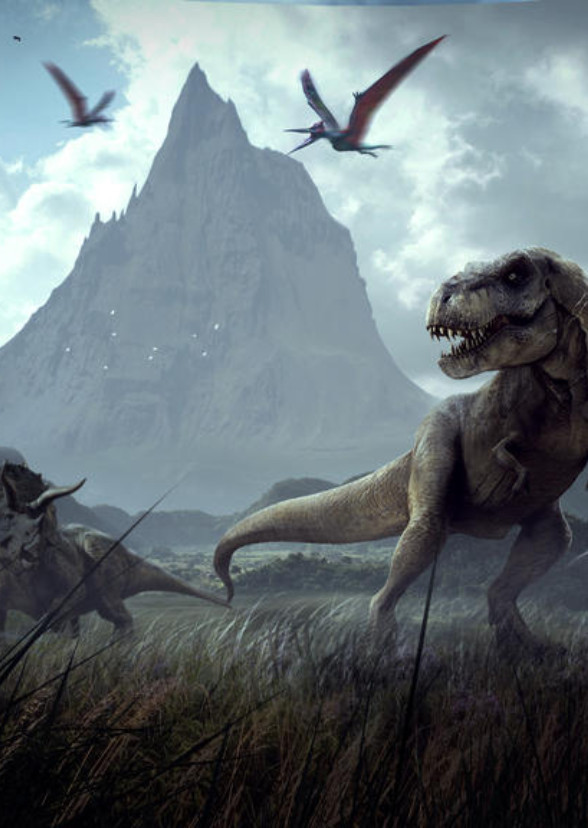
1907, four years after the events of the last two movies. While Van Helsing and his team have succeeded in arresting the murderers of Rue Morgue, in France, a new threat is coming and this time mankind is directly responsible for it. A peculiar scientist, well-connected to the British government, Doctor Alexander Zorka, discovered proof of the existence of a Lost World, somewhere in South America, deep in the Amazon rainforest. There lies a new metal in the underground mines, which could help Zorka create weapons like no other, which could change the balance of the world in his favor. Our heroes, as they go on a mission to hunt down monsters in the Congo, will be challenged by Koschei, the famous Russian warrior of several centuries who cannot die, and the one he protect, the young Medusa, daughter of the last Gorgon, to warn them of this threat. Unfortunately, they will not be able to prevent the kidnapping of Professor Challenger, who was studing in the country, by Zorka's men to take them to the mysterious South American plateau, but they will be able to count in particular on the expertise of Gill-Man, who heard of this foreign place. To prevent Zorka from causing a world war, our heroes will have to go and explode a world where creatures from another era still exist and where survival can be complicated, even for beings like them !




