
Brachiosaurus (/ˌbrækiəˈsɔːrəs/) is a genus of sauropod dinosaur that lived in North America during the Late Jurassic, about 154–153 million years ago. It was first described by American paleontologist Elmer S. Riggs in 1903 from fossils found in the Colorado River valley in western Colorado, United States. Riggs named the dinosaur Brachiosaurus altithorax; the generic name is Greek for "arm lizard", in reference to its proportionately long arms, and the specific name means "deep chest". Brachiosaurus is estimated to have been between 18 and 21 meters (59 and 69 ft) long; weight estimates range from 28.3 to 58 metric tons (31.2 and 64 short tons). It had a disproportionately long neck, small skull, and large overall size, all of which are typical for sauropods. Atypically, Brachiosaurus had longer forelimbs than hindlimbs, which resulted in a steeply inclined trunk, and a proportionally shorter tail. Brachiosaurus is the namesake genus of the family Brachiosauridae, which includes a handful of other similar sauropods. Most popular depictions of Brachiosaurus are in fact based on Giraffatitan, a genus of brachiosaurid dinosaur from the Tendaguru Formation of Tanzania. Giraffatitan was originally described by German paleontologist Werner Janensch in 1914 as a species of Brachiosaurus, B. brancai, but moved to its own genus in 2009. Three other species of Brachiosaurus have been named based on fossils found in Africa and Europe; two are no longer considered valid, and a third has become a separate genus, Lusotitan. The type specimen of B. altithorax is still the most complete specimen, and only a few other specimens are thought to belong to the genus, making it one of the rarer sauropods of the Morrison Formation. It is regarded as a high browser, possibly cropping or nipping vegetation as high as 9 meters (30 ft) off the ground. Unlike other sauropods, it was unsuited for rearing on its hindlimbs. It has been used as an example of a dinosaur that was most likely ectothermic because of its large size and the corresponding need for sufficient forage, but more recent research suggests it was warm-blooded. Among the most iconic and initially thought to be one of the largest dinosaurs, Brachiosaurus has appeared in popular culture, notably in the 1993 film Jurassic Park.
Brachiosaurus

The Lost Wildlife
for The Lost Wildlife in Van Helsing : Quest for the Lost World
Suggested by jeanpaulvalley
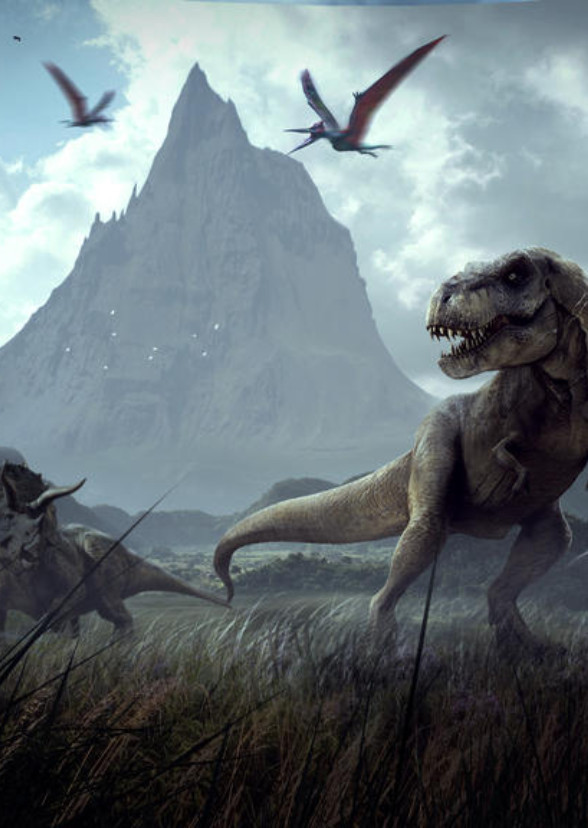
1907, four years after the events of the last two movies. While Van Helsing and his team have succeeded in arresting the murderers of Rue Morgue, in France, a new threat is coming and this time mankind is directly responsible for it. A peculiar scientist, well-connected to the British government, Doctor Alexander Zorka, discovered proof of the existence of a Lost World, somewhere in South America, deep in the Amazon rainforest. There lies a new metal in the underground mines, which could help Zorka create weapons like no other, which could change the balance of the world in his favor. Our heroes, as they go on a mission to hunt down monsters in the Congo, will be challenged by Koschei, the famous Russian warrior of several centuries who cannot die, and the one he protect, the young Medusa, daughter of the last Gorgon, to warn them of this threat. Unfortunately, they will not be able to prevent the kidnapping of Professor Challenger, who was studing in the country, by Zorka's men to take them to the mysterious South American plateau, but they will be able to count in particular on the expertise of Gill-Man, who heard of this foreign place. To prevent Zorka from causing a world war, our heroes will have to go and explode a world where creatures from another era still exist and where survival can be complicated, even for beings like them !




