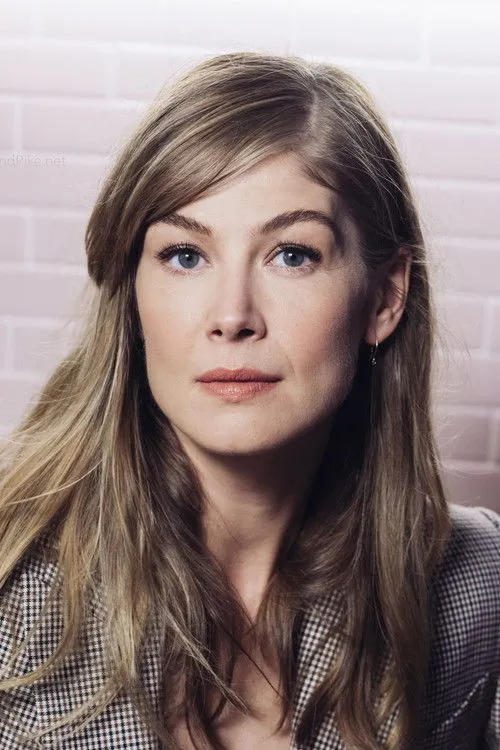
Age: 60
female
Björk Guðmundsdóttir (born 21 November 1965) is an Icelandic singer, songwriter, composer, record producer and actress. Over her four-decade career, she has developed an eclectic musical style that draws on influences and genres including electronic, pop, jazz, experimental, trip hop, alternative, classical, and avant-garde music. Born and raised in Reykjavík, Björk began her music career at the age of 11 and gained international recognition as the lead singer of the alternative rock band the Sugarcubes. After the band's breakup in 1992, Björk embarked on a solo career, coming to prominence with albums such as Debut (1993), Post (1995), and Homogenic (1997), while collaborating with a range of artists and exploring a variety of multimedia projects. Her other albums include Vespertine (2001), Medúlla (2004), Volta (2007), Biophilia (2011), Vulnicura (2015), Utopia (2017) and Fossora (2022). Several of Björk's albums have reached the top 20 on the US Billboard 200 chart. As of 2015, she had sold between 20 and 40 million records worldwide. 31 of her singles have reached the top 40 on pop charts around the world, with 22 top-40 hits in the UK, including the top-10 singles "It's Oh So Quiet", "Army of Me", and "Hyperballad" and the top-20 singles "Play Dead", "Big Time Sensuality", and "Violently Happy". Her accolades and awards include the Order of the Falcon, five BRIT Awards, and 15 Grammy nominations. In 2015, Time named her one of the 100 most influential people in the world. Rolling Stone named her the 60th greatest singer and the 81st greatest songwriter. Björk starred in the 2000 Lars von Trier film Dancer in the Dark, for which she won the Best Actress Award at the 2000 Cannes Film Festival, and was nominated for the Academy Award for Best Original Song for "I've Seen It All". Biophilia was marketed as an interactive app album with its own education program. Björk has also been an advocate for environmental causes in Iceland. A retrospective exhibition dedicated to Björk was held at the New York Museum of Modern Art in 2015.
Björk

Lady of the Lake
for Lady of the Lake in The Tragedy of Arthur, King of Britain
Suggested by elgrenudocascarrabias

King Arthur was a legendary British leader who, according to medieval histories and romances, led the defence of Britain against Saxon invaders in the late 5th and early 6th centuries. The details of Arthur's story are mainly composed of folklore and literary invention, and modern historians generally agree that he is unhistorical. The sparse historical background of Arthur is gleaned from various sources, including the Annales Cambriae, the Historia Brittonum, and the writings of Gildas. Arthur's name also occurs in early poetic sources such as Y Gododdin. Arthur is a central figure in the legends making up the Matter of Britain. The legendary Arthur developed as a figure of international interest largely through the popularity of Geoffrey of Monmouth's fanciful and imaginative 12th-century Historia Regum Britanniae (History of the Kings of Britain). In some Welsh and Breton tales and poems that date from before this work, Arthur appears either as a great warrior defending Britain from human and supernatural enemies or as a magical figure of folklore, sometimes associated with the Welsh otherworld Annwn.[6] How much of Geoffrey's Historia (completed in 1138) was adapted from such earlier sources, rather than invented by Geoffrey himself, is unknown.