Age: 100
male
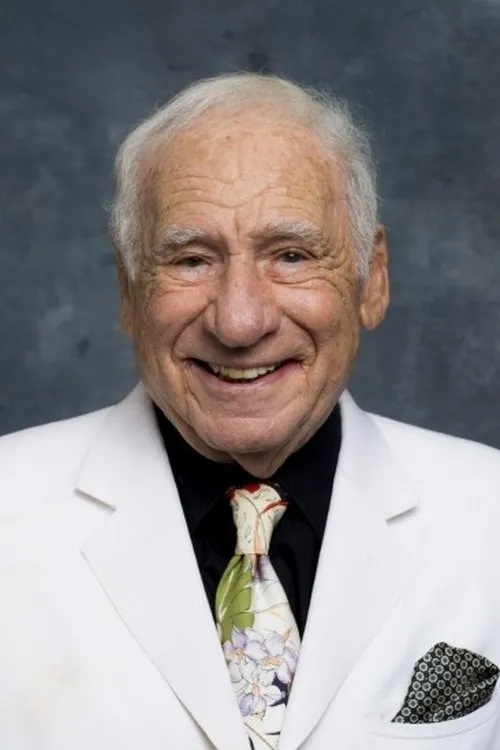
Melvin James Brooks (né Kaminsky; June 28, 1926) is an American actor, comedian, filmmaker, and songwriter. With a career spanning over seven decades, he is known as a writer and director of a variety of successful broad farces and parodies. A recipient of numerous accolades, he is one of 21 entertainers to win the EGOT (which includes an Emmy, a Grammy, an Oscar, and a Tony). He received a Kennedy Center Honor in 2009, a Hollywood Walk of Fame star in 2010, the AFI Life Achievement Award in 2013, a British Film Institute Fellowship in 2015, a National Medal of Arts in 2016, a BAFTA Fellowship in 2017, and the Honorary Academy Award in 2024. Brooks began his career as a comic and a writer for Sid Caesar's variety show Your Show of Shows(1950–1954). There, he worked with Neil Simon, Woody Allen, Larry Gelbart, and Carl Reiner. With Reiner, he co-created the comedy sketch The 2000 Year Old Man. He released several comedy albums, starting with 2000 Year Old Man in 1960. Brooks received five nominations for the Grammy Award for Best Comedy Album, finally winning in 1999. With Buck Henry, he created the hit satirical spy comedy series Get Smart (1965–1970) on NBC television. Brooks won the Academy Award for Best Original Screenplay for The Producers (1967). He then rose to prominence by directing a string of successful comedy films such as The Twelve Chairs (1970), Blazing Saddles (1974), Young Frankenstein (1974), Silent Movie (1976), and High Anxiety (1977). Later, Brooks made History of the World, Part I (1981), Spaceballs (1987), Life Stinks (1991), Robin Hood: Men in Tights (1993), and Dracula: Dead and Loving It (1995). A musical adaptation of his first film, The Producers, ran on Broadway from 2001 to 2007 and earned Brooks three Tony Awards. The project was remade into a musical film in 2005. He wrote and produced the Hulu series History of the World, Part II (2023). Brooks was married to actress Anne Bancroft from 1964 until she died in 2005. Their son, Max Brooks, is an actor and author known for his novel World War Z: An Oral History of the Zombie War (2006). In 2021, Mel Brooks published his memoir titled All About Me!. Three of his films are included on the American Film Institute's list of the top 100 comedy films of the past 100 years (1900–2000), all of which were ranked in the top 15: Blazing Saddles at number 6, The Producers at number 11, and Young Frankenstein at number 13.
Mel Brooks

Grandfather
for Grandfather in The Princess Bride
Suggested by jacksonswindell23

An elderly man reads the book "The Princess Bride" to his sick and thus currently bedridden adolescent grandson, the reading of the book which has been passed down within the family for generations. The grandson is sure he won't like the story, with a romance at its core, he preferring something with lots of action and "no kissing". But the grandson is powerless to stop his grandfather, whose feelings he doesn't want to hurt. The story centers on Buttercup, a former farm girl who has been chosen as the princess bride to Prince Humperdinck of Florian. Buttercup does not love him, she who still laments the death of her one true love, Westley, five years ago. Westley was a hired hand on the farm, his stock answer of "as you wish" to any request she made of him which she came to understand was his way of saying that he loved her. But Westley went away to sea, only to be killed by the Dread Pirate Roberts. On a horse ride to clear her mind of her upcoming predicament of marriage, Buttercup is kidnapped by a band of bandits: Vizzini who works on his wits, and his two associates, a giant named Fezzik who works on his brawn, and a Spaniard named Inigo Montoya, who has trained himself his entire life to be an expert swordsman. They in turn are chased by the Dread Pirate Roberts himself. But chasing them all is the Prince, and his men led by Count Tyrone Rugen. What happens to these collectives is dependent partly on Buttercup, who does not want to marry the Prince, and may see other options as lesser evils, and partly on the other motives of individuals within the groups. But a larger question is what the grandson will think of the story as it proceeds and at its end, especially as he sees justice as high a priority as action.