Thailand (historically known as Siam and officially the Kingdom of Thailand) is a country in Southeast Asia, located at the center of the Indochinese Peninsula, spanning 513,120 square kilometers (198,120 sq mi), with a population of almost 70 million. The country is bordered to the north by Myanmar and Laos, to the east by Laos and Cambodia, to the south by the Gulf of Thailand and Malaysia, and to the west by the Andaman Sea and the extremity of Myanmar. Thailand also shares maritime borders with Vietnam to the southeast, and Indonesia and India to the southwest. Bangkok is the nation's capital and largest city. Thai people migrated from southwestern China to mainland Southeast Asia in the 11th century. Indianised kingdoms such as the Mon, Khmer Empire and Malay states ruled the region, competing with Thai states such as the Kingdoms of Ngoenyang, Sukhothai, Lan Na, and Ayutthaya, which also rivaled each other. European contact began in 1511 with a Portuguese diplomatic mission to Ayutthaya, which became a regional power by the end of the 15th century. Ayutthaya reached its peak during the 18th century until it was destroyed in the Burmese-Siamese War. Taksin quickly reunified the fragmented territory and established the short-lived Thonburi Kingdom. He was succeeded in 1782 by Buddha Yodfa Chulaloke, the first monarch of the current Chakri dynasty. Throughout the era of Western imperialism in Asia, Siam remained the only nation in the region to avoid colonization by foreign powers, although it was often forced to cede territory, trade, and legal concessions in unequal treaties. The Siamese system of government was centralized and transformed into a modern unitary absolute monarchy during the reign of Chulalongkorn. In World War I, Siam sided with the Allies, a political decision made in order to amend the unequal treaties. Following a bloodless revolution in 1932, it became a constitutional monarchy and changed its official name to Thailand, becoming an ally of Japan in World War II. In the late 1950s, a military coup under Field Marshal Sarit Thanarat revived the monarchy's historically influential role in politics. Thailand became a major ally of the United States and played an anti-communist role in the region as a member of the failed SEATO, but from 1975 sought to improve relations with Communist China and Thailand's neighbors. Apart from a brief period of parliamentary democracy in the mid-1970s, Thailand has periodically alternated between democracy and military rule. Since the 2000s the country has been caught in the continual bitter political conflict between supporters and opponents of Thaksin Shinawatra, which resulted in two coups (in 2006 and 2014), along with the establishment of its current constitution, a nominally democratic government after the 2019 Thai general election, and large pro-democracy protests in 2020-2021 which included unprecedented demands to reform the monarchy. Since 2019, it has been nominally a parliamentary constitutional monarchy; in practice, however, structural advantages in the constitution have ensured the military's hold on power. Thailand is a middle power in global affairs and a founding member of ASEAN and ranks very high in the Human Development Index. It has the second-largest economy in Southeast Asia and the 22nd-largest in the world by PPP. Thailand is classified as a newly industrialized economy, with manufacturing, agriculture, and tourism as leading sectors.
Thailand
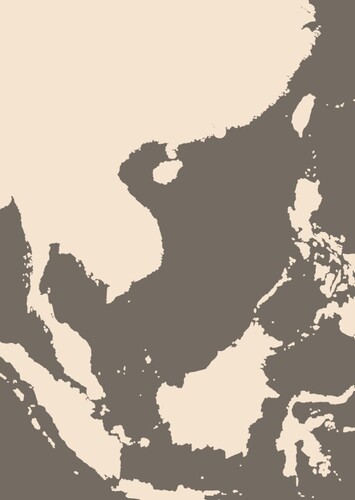
Southeast Asia
for Southeast Asia in The "Living World" Protocol
Suggested by benpopplewell
To create new locations of both real-life and fictional places around the world as part of geography with fictional lore is an ambitious and rewarding project that ranges from the spiritual philosophy of Sangkhara in Southeast Asia to the Furatistan in the Middle East—the best way to frame this project for a "number one" ranking and maximum fan engagement is through the lens of "Philosophical Cartography." Instead of just drawing borders, describe one street food dish or one local holiday for each place you want to see and feel with life. The best response to that feedback is to invite them and ask them what their character’s house would look like in that valley of highest-rated worldbuilding techniques, this guide provides 100% detailed steps for blending real-world geographies with concepts, as described in your vision, the best, fan-commented idea is to anchor fictional locations to real-world regions. The brilliance of this idea lies in the interconnectivity which blends deeply spiritual concepts like Sangkhara to a specific Italian village like Belcuore, after it became incredibly detailed world-building project.