Indonesia (officially the Republic of Indonesia | Indonesian: Republik Indonesia) is a country in Southeast Asia and Oceania between the Indian and Pacific oceans. It consists of over seventeen thousand islands, including Sumatra, Java, Sulawesi, and parts of Borneo (Kalimantan) and New Guinea (Papua). Indonesia is the world's largest island country and the 14th-largest country by land area, at 1,904,569 square kilometers (735,358 square miles). With more than 270 million people, Indonesia is the world's fourth-most populous country and the most populous Muslim-majority country. Java, the world's most populous island, is home to more than half of the country's population. Indonesia is a presidential, constitutional republic with an elected legislature. It has 34 provinces, of which five have special status. The country's capital, Jakarta, is the world's second-most populous urban area. The country shares land borders with Papua New Guinea, East Timor, and the eastern part of Malaysia. Other neighboring countries include Singapore, Vietnam, the Philippines, Australia, Palau, and India (Andaman and Nicobar Islands). Despite its large population and densely populated regions, Indonesia has vast areas of wilderness that support one of the world's highest levels of biodiversity. The Indonesian archipelago has been a valuable region for trade since at least the 7th century when Srivijaya and later Majapahit traded with entities from mainland China and the Indian subcontinent. Local rulers gradually absorbed foreign influences from the early centuries, and Hindu and Buddhist kingdoms flourished. Sunni traders and Sufi scholars brought Islam, while Christianity was brought mostly through European explorers. Although sometimes interrupted by the Portuguese, French, and British, the Dutch were the foremost colonial power for much of their 350-year presence in the archipelago. The concept of "Indonesia" as a nation-state emerged in the early 20th century, culminating later in the proclamation of Indonesian Independence in 1945. However, it was not until 1949 that the Dutch recognized Indonesia's sovereignty following an armed and diplomatic conflict between the two. Indonesia consists of hundreds of distinct native ethnic and linguistic groups, with Javanese being the largest. A shared identity has developed with the motto "Bhinneka Tunggal Ika" ("Unity in Diversity" literally, "many, yet one"), defined by a national language, ethnic diversity, religious pluralism within a Muslim-majority population, and a history of colonialism and rebellion against it. The economy of Indonesia is the world's 16th-largest by nominal GDP and the 7th-largest by PPP. It is a regional power[11] and is considered a middle power in global affairs. The country is a member of several multilateral organizations, including the United Nations, World Trade Organization, G20, and a founding member of the Non-Aligned Movement, Association of Southeast Asian Nations, East Asia Summit, and the Organisation of Islamic Cooperation.
Indonesia
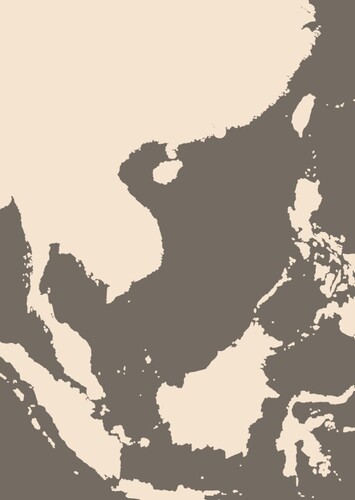
Southeast Asia
for Southeast Asia in The "Living World" Protocol
Suggested by benpopplewell
To create new locations of both real-life and fictional places around the world as part of geography with fictional lore is an ambitious and rewarding project that ranges from the spiritual philosophy of Sangkhara in Southeast Asia to the Furatistan in the Middle East—the best way to frame this project for a "number one" ranking and maximum fan engagement is through the lens of "Philosophical Cartography." Instead of just drawing borders, describe one street food dish or one local holiday for each place you want to see and feel with life. The best response to that feedback is to invite them and ask them what their character’s house would look like in that valley of highest-rated worldbuilding techniques, this guide provides 100% detailed steps for blending real-world geographies with concepts, as described in your vision, the best, fan-commented idea is to anchor fictional locations to real-world regions. The brilliance of this idea lies in the interconnectivity which blends deeply spiritual concepts like Sangkhara to a specific Italian village like Belcuore, after it became incredibly detailed world-building project.