Age: 49
female
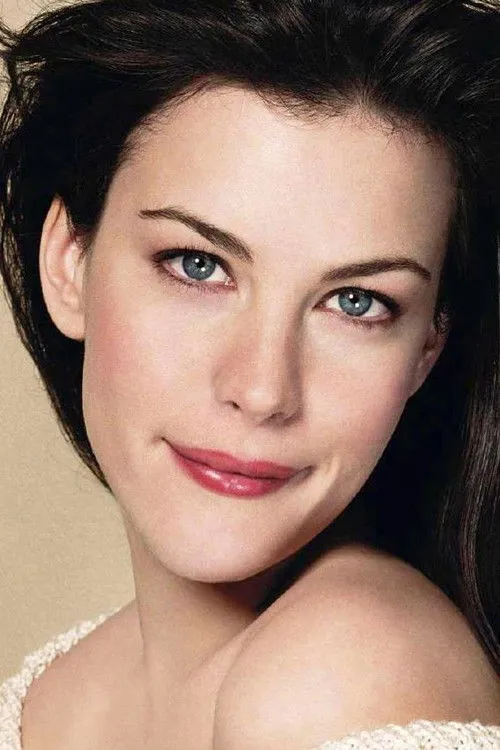
Liv Rundgren Tyler (born Liv Rundgren; July 1, 1977) is an American actress. She began a modelling career at age 14 before making her film debut in Silent Fall (1994); she went on to achieve critical recognition with starring roles in Heavy and Empire Records (both 1995), as well as That Thing You Do! and Stealing Beauty (both 1996). She then appeared in films such as Inventing the Abbotts (1997), Armageddon (1998), Cookie's Fortune and Onegin (both 1999), Dr. T & the Women (2000), and One Night at McCool's (2001). She then played the elf Arwen Undómiel in the Lord of the Rings film trilogy (2001–2003), which became one of the highest-grossing film series in history. Following the success of Lord of the Rings, Tyler has appeared in a variety of roles, including the films Jersey Girl (2004), Lonesome Jim (2005), Reign Over Me (2007), The Strangers, The Incredible Hulk (both 2008), Robot & Frank (2012), Space Station 76 (2014), Wildling (2018), and Ad Astra (2019). Outside of film, she starred in the HBO supernatural drama series The Leftovers (2014–2017), the BBC period drama series Gunpowder (2017), the ITV/Hulu period drama series Harlots (2018–2019), and the Foxprocedural drama series 9-1-1: Lone Star (2020). Tyler is also a singer. Having sung with composer Howard Shore, she appeared as a guest vocalist on The Lemonheads' album Varshons (2009), singing a cover of the Leonard Cohen song "Hey, That's No Way to Say Goodbye." She appeared on the 2017 bonus disc of Evan Dando's album Baby I'm Bored (2003), providing featured vocals for the song "Shots Is Fired." In 2011, she released her debut single, "Need You Tonight.". Tyler has served as a UNICEF Goodwill Ambassador for the United States since 2003 and as a spokesperson for Givenchy's line of perfume and cosmetics. She is the daughter of Steven Tyler and Bebe Buell, although she has a very close relationship with her adoptive father, Todd Rundgren. Description above from the Wikipedia article Liv Tyler, licensed under CC-BY-SA, full list of contributors on Wikipedia.
Liv Tyler

Elizabeth Ross
for Elizabeth Ross in The Incredible Hulk
Suggested by miguelrodriguez

Dr. Bruce Banner is a brilliant but emotionally fractured scientist working on a classified U.S. military project aimed at unlocking cellular regeneration for soldiers exposed to extreme trauma. Funded by the Department of Defense and overseen by General Thaddeus “Thunderbolt” Ross, the program promises breakthroughs in battlefield survivability—but demands results fast. Bruce’s research is haunted by his past. Years earlier, his father Brian Banner, a former government physicist, conducted illegal experiments on himself while studying radiation-based genetic enhancement. The experiments left Brian unstable, brilliant, and dangerous—eventually landing him in a high-security psychiatric facility. Bruce has spent his life trying to bury that legacy. When Bruce secretly alters the experiment to remove radiation variables—believing gamma exposure to be the missing link—an unauthorized test goes catastrophically wrong. A massive gamma surge floods Bruce’s body. He survives… but something primal awakens. Enter Betty Ross, a biochemist, Bruce’s closest collaborator, and the emotional anchor keeping him human. Betty notices disturbing changes: Bruce’s heart rate spikes under stress, his body temperature rises unnaturally, and his emotional control begins to slip. When a violent outburst during a lab incident results in an explosion that levels the facility, Ross witnesses something impossible—Bruce transforming into a towering, rage-fueled creature before disappearing into the night. Ross immediately classifies Bruce as a hostile asset. Consumed by guilt and obsession, Ross frames the Hulk as a military threat that must be contained or destroyed. He deploys covert strike teams, triggering a relentless manhunt that leaves devastation in its wake. Meanwhile, Brian Banner escapes custody, drawn to gamma radiation like a beacon. Unlike Bruce, Brian embraces what the experiments unlocked inside him. He believes the Hulk is not a curse—but evolution. Brian begins manipulating events from the shadows, engineering situations that force Bruce to transform, pushing him closer to losing control completely. As Bruce flees across borders, battling fear, rage, and isolation, he realizes the horrifying truth: the Hulk is not just anger—it’s survival, trauma, and inherited violence given form. And the more the world hunts him, the stronger it becomes. The film ends with Bruce staring at his reflection after another transformation, trembling as he whispers: “I’m not the monster… but I don’t know how to stop him.”