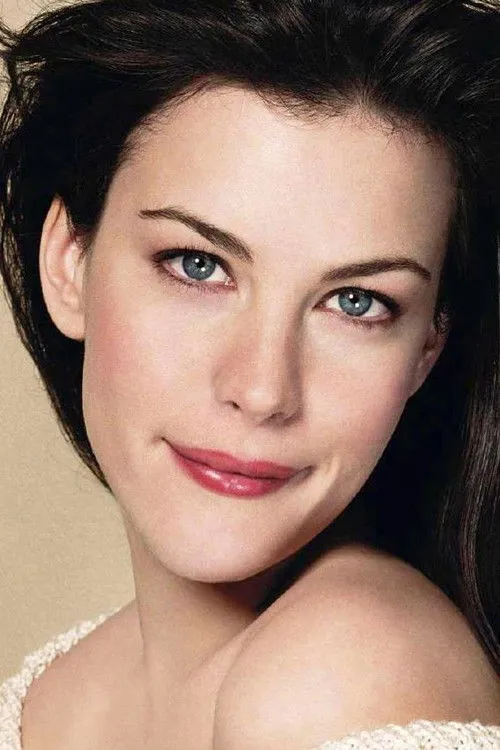
Age: 43
female
Emily Olivia Laura Blunt (born 23 February 1983) is a British actress. She has received several accolades, including a Golden Globe Award and two Screen Actors Guild Awards, in addition to nominations for an Academy Award and four British Academy Film Awards. Forbes ranked her as one of the highest-paid actresses in the world in 2020. Blunt made her acting debut in the 2001 drama production of The Royal Family and portrayed Catherine Howard in the television miniseries Henry VIII (2003). She made her feature film debut in the drama My Summer of Love (2004). Blunt's breakthrough came in 2006 with her starring roles in the television film Gideon's Daughter and the comedy-drama The Devil Wears Prada. The former won her a Golden Globe Award for Best Supporting Actress. Her profile continued to grow with leading roles in the period film The Young Victoria (2009), the romantic comedy Salmon Fishing in the Yemen (2011), the science fiction films The Adjustment Bureau (2011), Looper(2012) and Edge of Tomorrow (2014), and the musical Into the Woods (2014). Blunt received critical acclaim for playing an idealistic FBI agent in the crime film Sicario (2015), an alcoholic in the psychological thriller The Girl on the Train (2016), and a survivalist mother in her husband John Krasinski's horror film A Quiet Place (2018), for which she won a SAG Award for Best Supporting Actress. She has since starred in the sequels Mary Poppins Returns (2018) and A Quiet Place Part II (2021), the fantasy adventure Jungle Cruise (2021), and the revisionist Western television miniseries The English (2022). Her portrayal of Katherine Oppenheimer in Christopher Nolan's biographical thriller film Oppenheimer (2023) earned her a nomination for the Academy Award for Best Supporting Actress. Blunt has been working with the American Institute for Stuttering since 2006 to help children overcome stuttering through educational resources and raise awareness of the realities of the condition. She is on the institute's board of directors and hosts a gala to raise funds for speech therapy scholarships for children and adults. Description above from the Wikipedia article Emily Blunt, licensed under CC-BY-SA, full list of contributors on Wikipedia.
Emily Blunt

Elizabeth Ross
for Elizabeth Ross in The Incredible Hulk
Suggested by miguelrodriguez

Dr. Bruce Banner is a brilliant but emotionally fractured scientist working on a classified U.S. military project aimed at unlocking cellular regeneration for soldiers exposed to extreme trauma. Funded by the Department of Defense and overseen by General Thaddeus “Thunderbolt” Ross, the program promises breakthroughs in battlefield survivability—but demands results fast. Bruce’s research is haunted by his past. Years earlier, his father Brian Banner, a former government physicist, conducted illegal experiments on himself while studying radiation-based genetic enhancement. The experiments left Brian unstable, brilliant, and dangerous—eventually landing him in a high-security psychiatric facility. Bruce has spent his life trying to bury that legacy. When Bruce secretly alters the experiment to remove radiation variables—believing gamma exposure to be the missing link—an unauthorized test goes catastrophically wrong. A massive gamma surge floods Bruce’s body. He survives… but something primal awakens. Enter Betty Ross, a biochemist, Bruce’s closest collaborator, and the emotional anchor keeping him human. Betty notices disturbing changes: Bruce’s heart rate spikes under stress, his body temperature rises unnaturally, and his emotional control begins to slip. When a violent outburst during a lab incident results in an explosion that levels the facility, Ross witnesses something impossible—Bruce transforming into a towering, rage-fueled creature before disappearing into the night. Ross immediately classifies Bruce as a hostile asset. Consumed by guilt and obsession, Ross frames the Hulk as a military threat that must be contained or destroyed. He deploys covert strike teams, triggering a relentless manhunt that leaves devastation in its wake. Meanwhile, Brian Banner escapes custody, drawn to gamma radiation like a beacon. Unlike Bruce, Brian embraces what the experiments unlocked inside him. He believes the Hulk is not a curse—but evolution. Brian begins manipulating events from the shadows, engineering situations that force Bruce to transform, pushing him closer to losing control completely. As Bruce flees across borders, battling fear, rage, and isolation, he realizes the horrifying truth: the Hulk is not just anger—it’s survival, trauma, and inherited violence given form. And the more the world hunts him, the stronger it becomes. The film ends with Bruce staring at his reflection after another transformation, trembling as he whispers: “I’m not the monster… but I don’t know how to stop him.”