
Age: 58
female
Patricia T. Arquette (born April 8, 1968) is an American actress. She made her feature film debut as Kristen Parker in A Nightmare on Elm Street 3: Dream Warriors (1987). Her other notable films include True Romance (1993), Ed Wood (1994), Flirting with Disaster (1996), Lost Highway (1997), The Hi-Lo Country (1998), Bringing Out the Dead (1999), Stigmata (1999), Holes (2003), Fast Food Nation (2006), The Wannabe (2015), and Toy Story 4 (2019). For playing a divorced mother in the coming-of-age drama film Boyhood (2014), which was filmed from 2002 until 2014, Arquette received widespread critical praise and won several awards, including the Academy Award for Best Supporting Actress. On television, she played the character Allison DuBois—based on the author and medium Allison DuBois, who claims to have psychic abilities—in the supernatural drama series Medium (2005–2011). She won the Primetime Emmy Award for Outstanding Lead Actress in a Drama Series in 2005, from two nominations she received for the role, in addition to three Golden Globe Award and Screen Actors Guild Award nominations. Arquette also appeared in the CSI franchise as Avery Ryan, the Deputy Director of the FBI, starring in CSI: Cyber (2015–16). She went on to star as Joyce Mitchell in the Showtime miniseries Escape at Dannemora (2018), winning a Golden Globe Award for Best Actress and a Screen Actors Guild Award for Outstanding Performance by a Female Actor in a Miniseries or Television Movie, and as Dee Dee Blanchard in the Hulu anthology series The Act (2019), winning the Golden Globe Award and Primetime Emmy Award for Outstanding Supporting Actress.
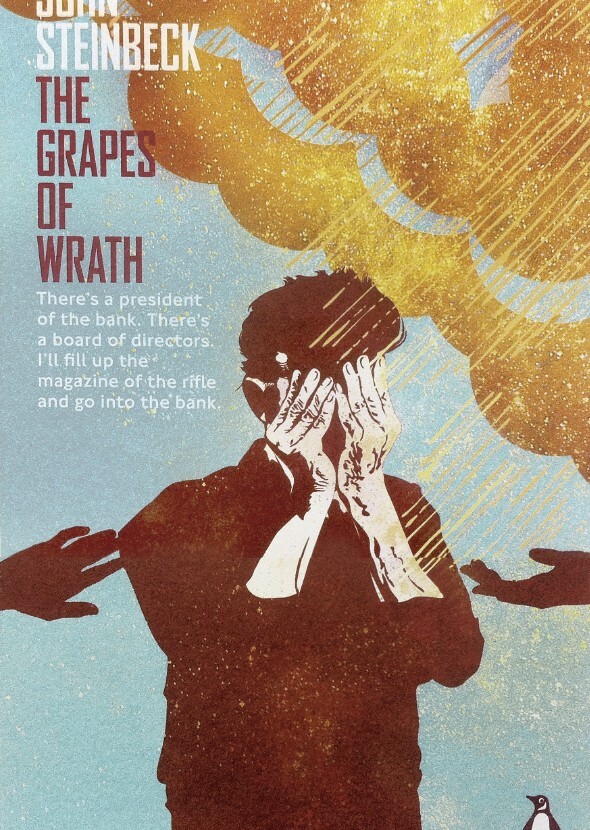
First published in 1939, Steinbeck’s Pulitzer Prize-winning epic of the Great Depression chronicles the Dust Bowl migration of the 1930s and tells the story of one Oklahoma farm family, the Joads—driven from their homestead and forced to travel west to the promised land of California. Out of their trials and their repeated collisions against the hard realities of an America divided into Haves and Have-Nots evolves a drama that is intensely human yet majestic in its scale and moral vision, elemental yet plainspoken, tragic but ultimately stirring in its human dignity. A portrait of the conflict between the powerful and the powerless, of one man’s fierce reaction to injustice, and of one woman’s stoical strength, the novel captures the horrors of the Great Depression and probes into the very nature of equality and justice in America. At once a naturalistic epic, captivity narrative, road novel, and transcendental gospel, Steinbeck’s powerful landmark novel is perhaps the most American of American Classics.