
Age: 62
female
Laura Leggett Linney (born February 5, 1964) is an American actress. She is the recipient of several awards, including two Golden Globe Awards and four Primetime Emmy Awards, and has been nominated for three Academy Awards and five Tony Awards. Linney made her Broadway debut in 1990 before going on to receive Tony Award nominations for the 2002 revival of The Crucible, the original Broadway productions of Sight Unseen (2004), Time Stands Still (2010), My Name Is Lucy Barton (2020), and the 2017 revival of The Little Foxes. On television, she won her first Emmy Award for the television film Wild Iris (2001), and had subsequent wins for the sitcom Frasier (2003–04) and the miniseries John Adams (2008). From 2010 to 2013, she starred in the Showtime series The Big C, which won her a fourth Emmy in 2013, and from 2017 to 2022 she starred in the Netflix crime series Ozark. Linney is also an established film actress. She made her film debut with a minor role in Lorenzo's Oil (1992) and went on to receive Academy Award nominations for the dramas You Can Count on Me (2000), Kinsey (2004), and The Savages (2007). She's also known for her performances in Primal Fear (1996), The Truman Show (1998), Mystic River and Love Actually (both 2003), The Squid and the Whale (2005), The Nanny Diaries (2007), Hyde Park on Hudson (2012), Mr. Holmes (2015), Sully and Nocturnal Animals (both 2016).
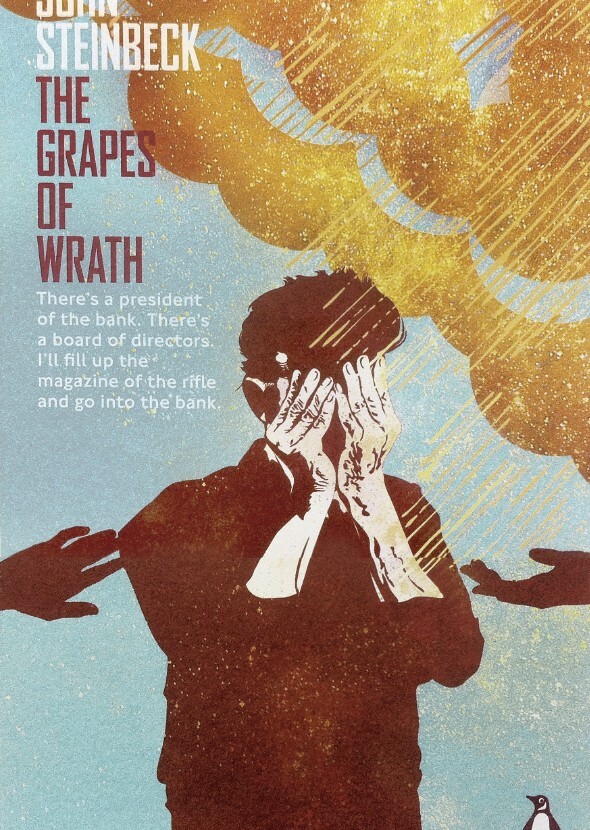
First published in 1939, Steinbeck’s Pulitzer Prize-winning epic of the Great Depression chronicles the Dust Bowl migration of the 1930s and tells the story of one Oklahoma farm family, the Joads—driven from their homestead and forced to travel west to the promised land of California. Out of their trials and their repeated collisions against the hard realities of an America divided into Haves and Have-Nots evolves a drama that is intensely human yet majestic in its scale and moral vision, elemental yet plainspoken, tragic but ultimately stirring in its human dignity. A portrait of the conflict between the powerful and the powerless, of one man’s fierce reaction to injustice, and of one woman’s stoical strength, the novel captures the horrors of the Great Depression and probes into the very nature of equality and justice in America. At once a naturalistic epic, captivity narrative, road novel, and transcendental gospel, Steinbeck’s powerful landmark novel is perhaps the most American of American Classics.