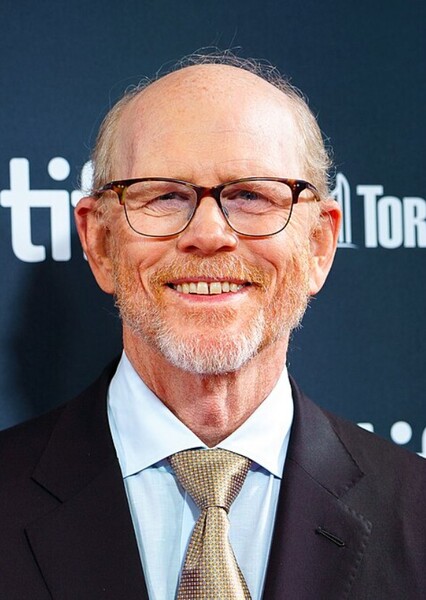
Age: 74
male
Robert Lee Zemeckis (born May 14, 1952) is an American filmmaker known for directing and producing a range of successful and influential movies. He often blends cutting-edge visual effects with storytelling. He has received several accolades, including an Academy Award and a Golden Globe Award, as well as nominations for five British Academy Film Awards and a Daytime Emmy Award. Zemeckis started his career directing the comedy films I Wanna Hold Your Hand (1978), Used Cars (1980), and Romancing the Stone (1984). He gained prominence directing the science-fiction comedy Back to the Future trilogy (1985–1990), the fantasy comedy Who Framed Roger Rabbit (1988), and the comedy-drama Forrest Gump (1994), the latter of which won Academy Awards for Best Picture and Best Director. He has also directed the satirical black comedy Death Becomes Her (1992), the science fiction film Contact (1997), and the drama films Cast Away (2000), Flight (2012), The Walk (2015), and Allied (2016). His exploration of motion capture techniques can be seen in the animated films The Polar Express (2004) and A Christmas Carol (2009), as well as the action fantasy drama Beowulf (2007) and the drama Welcome to Marwen (2018). He has collaborated with film composer Alan Silvestri since 1984 and directed Tom Hanks in five films. Description above from the Wikipedia article Robert Zemeckis, licensed under CC-BY-SA, full list of contributors on Wikipedia.

Stan Lee[1] (born Stanley Martin Lieber /ˈliːbər/, December 28, 1922 – November 12, 2018) was an American comic-book writer, editor, producer, and publisher. He was the editor-in-chief of Marvel Comics,[2] and later its publisher[3] and chairman,[4] leading its expansion from a small division of a publishing house to a large multimedia corporation. In collaboration with several artists—particularly Jack Kirby and Steve Ditko—he co-created fictional characters including Spider-Man, the Hulk, Doctor Strange, the Fantastic Four, Daredevil, Black Panther, the X-Men, and—with co-writer Larry Lieber—the characters Ant-Man, Iron Man, and Thor. In doing so, he pioneered a more complex approach to writing superheroes in the 1960s, and in the 1970s challenged the standards of the Comics Code Authority, indirectly leading to it updating its policies.