Age: 52
male
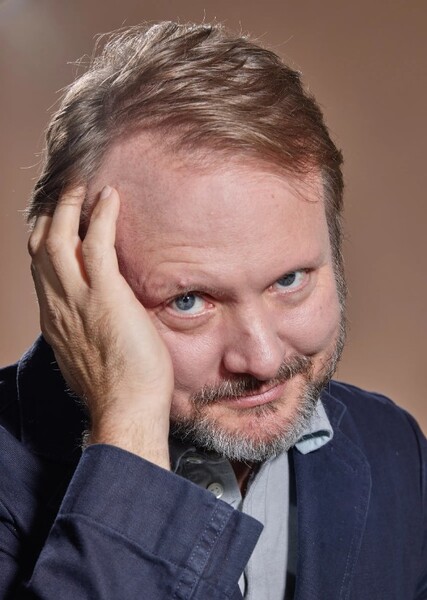
Rian Craig Johnson (born December 17, 1973) is an American filmmaker. He made his directorial debut with the neo-noir mystery film Brick (2005), which received positive reviews and grossed nearly $4 million on a $450,000 budget. Transitioning to higher-profile films, Johnson achieved mainstream recognition for writing and directing the science-fiction thriller Looper (2012) to critical and commercial success. Johnson landed his largest project when he wrote and directed the space opera Star Wars: The Last Jedi (2017), which grossed over $1 billion. He returned to the mystery genre with Knives Out (2019) and its sequel Glass Onion (2022), both of which earned him Academy Award nominations for Best Original Screenplay and Best Adapted Screenplay, respectively. Additionally, Johnson is also known for directing three highly acclaimed episodes for the television series Breaking Bad (2008–2013), namely "Ozymandias," "Fly," and "Fifty-One"; for the latter, he received the Directors Guild of America Award for Outstanding Directing—Drama Series in 2013. He also created a murder mystery series titled Poker Face for Peacock with Natasha Lyonne. Johnson was named one of the 100 most influential people in the world by Time magazine in 2023. Description above from the Wikipedia article Rian Johnson, licensed under CC-BY-SA, full list of contributors on Wikipedia.

Stan Lee[1] (born Stanley Martin Lieber /ˈliːbər/, December 28, 1922 – November 12, 2018) was an American comic-book writer, editor, producer, and publisher. He was the editor-in-chief of Marvel Comics,[2] and later its publisher[3] and chairman,[4] leading its expansion from a small division of a publishing house to a large multimedia corporation. In collaboration with several artists—particularly Jack Kirby and Steve Ditko—he co-created fictional characters including Spider-Man, the Hulk, Doctor Strange, the Fantastic Four, Daredevil, Black Panther, the X-Men, and—with co-writer Larry Lieber—the characters Ant-Man, Iron Man, and Thor. In doing so, he pioneered a more complex approach to writing superheroes in the 1960s, and in the 1970s challenged the standards of the Comics Code Authority, indirectly leading to it updating its policies.