Godzilla vs. Kong is a 2021 American monster film directed by Adam Wingard. A sequel to Godzilla: King of the Monsters (2019) and Kong: Skull Island (2017), it is the fourth film in Legendary's MonsterVerse. It is also the 36th film in the Godzilla franchise, the 12th film in the King Kong franchise, and the fourth Godzilla film to be completely produced by a Hollywood studio.[b] The film stars Alexander Skarsgård, Millie Bobby Brown, Rebecca Hall, Brian Tyree Henry, Shun Oguri, Eiza González, Julian Dennison, Lance Reddick, Kyle Chandler, and Demián Bichir. In the film, Kong clashes with Godzilla as humans lure the ape into the Hollow Earth to retrieve a power source for a weapon to stop Godzilla's mysterious rampages. The project was announced in October 2015 when Legendary announced plans for a shared cinematic universe between Godzilla and King Kong. The film's writers room was assembled in March 2017, and Wingard was announced as the director in May 2017. Principal photography began in November 2018 in Hawaii, Australia and Hong Kong, and wrapped in April 2019. After being delayed from a November 2020 release date due to the COVID-19 pandemic, Godzilla vs. Kong was theatrically released internationally on March 24, 2021, and in the United States on March 31, where it was released in theaters and on HBO Max simultaneously. The film received generally positive reviews from critics, with praise for the visual effects and action sequences, but criticism towards the pacing, script and the human characters. It broke several pandemic box office records, and has grossed $415 million worldwide against a break-even point of $330 million, making it the third highest-grossing film of 2021. The film was also a streaming hit, becoming the most successful launch item in HBO Max's history at the time of its release.
Godzilla vs. Kong

King Kong
for King Kong in Spiritual Successor
Suggested by toonking1985
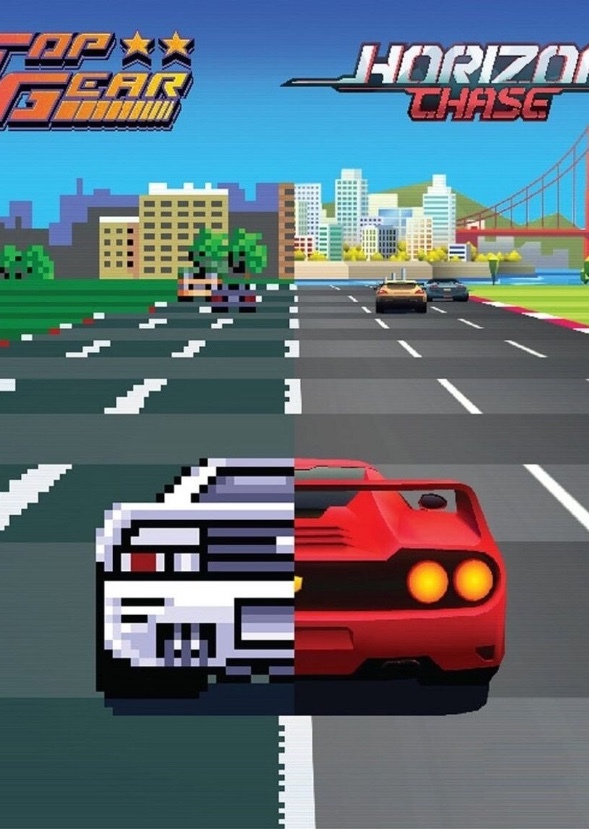
A spiritual successor is a type of follow-up work that isn’t directly connected to the original story or universe, but still carries forward its essence through similar themes, style, and ideas—essentially acting as a sequel “in spirit.” Creators may do this for many reasons: to pay homage while avoiding legal ties, to continue exploring familiar creative ground without risking a direct sequel, or simply because their artistic voice naturally echoes past work. This concept appears across many forms of media, though it’s especially common in video games, where developers may retain the tools and design philosophy of a past project even if they no longer hold the rights to its name or characters. A related concept is the spiritual adaptation, where a work in one medium closely mirrors the tone and structure of another, almost feeling like an unofficial adaptation. Spiritual successors can sometimes feel like rebranded continuations of ideas from older or discontinued franchises, effectively serving as a kind of creative reincarnation. They often overlap with ideas like unofficial counterparts or heavily inspired works, and can even share the same creative teams. While they celebrate and evolve what came before, they stand apart as independent creations, occasionally even contrasting with or redefining the works that inspired them.