E.T. the Extra-Terrestrial is a 1982 American science fiction film produced and directed by Steven Spielberg, and written by Melissa Mathison. It tells the story of Elliott, a boy who befriends an extraterrestrial, dubbed E.T., who is stranded on Earth. The film stars Dee Wallace, Henry Thomas, Peter Coyote, Robert MacNaughton, and Drew Barrymore. The concept was based on an imaginary friend Spielberg created after his parents' divorce. In 1980, Spielberg met Mathison and developed a new story from the failed project Night Skies. Filming took place from September to December 1981 on a budget of $10.5 million. Unlike most films, it was shot in rough chronological order, to facilitate convincing emotional performances from the young cast. The animatronics of E.T. were designed by Carlo Rambaldi. Released on June 11, 1982, by Universal Pictures, E.T. was an immediate blockbuster, surpassing Star Wars to become the highest-grossing film of all time—a record it held for eleven years until Jurassic Park, another Spielberg film, surpassed it. E.T. was widely acclaimed by critics and is regarded as one of the greatest films of all time, and it won four Oscars at the 55th Academy Awards: Best Original Score, Best Visual Effects, Best Sound and Best Sound Editing. It was re-released in 1985, and again in 2002, to celebrate its 20th anniversary, with altered shots, visual effects, and additional scenes. In 1994, the film was added to the National Film Registry of the Library of Congress, being designated as "culturally, historically, or aesthetically significant."
E.T. The Extra-Terrestrial

King Kong
for King Kong in Spiritual Successor
Suggested by toonking1985
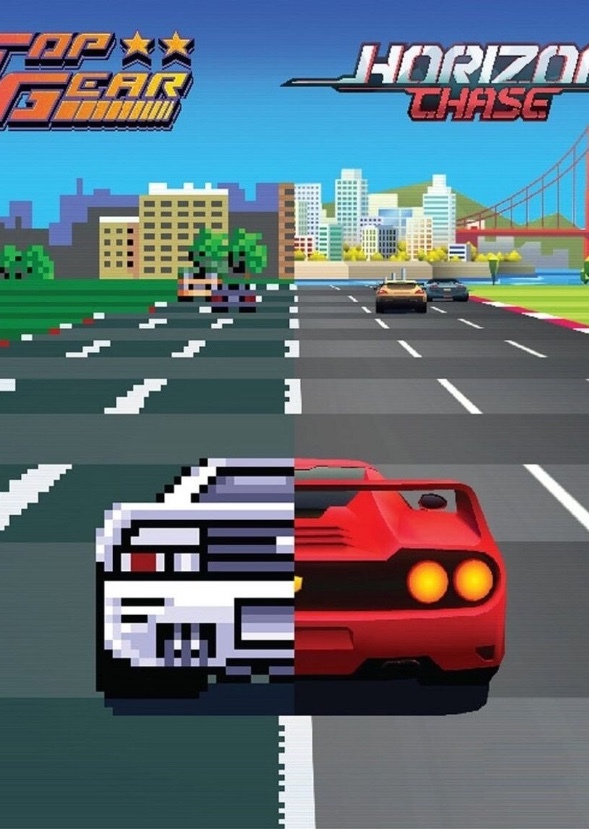
A spiritual successor is a type of follow-up work that isn’t directly connected to the original story or universe, but still carries forward its essence through similar themes, style, and ideas—essentially acting as a sequel “in spirit.” Creators may do this for many reasons: to pay homage while avoiding legal ties, to continue exploring familiar creative ground without risking a direct sequel, or simply because their artistic voice naturally echoes past work. This concept appears across many forms of media, though it’s especially common in video games, where developers may retain the tools and design philosophy of a past project even if they no longer hold the rights to its name or characters. A related concept is the spiritual adaptation, where a work in one medium closely mirrors the tone and structure of another, almost feeling like an unofficial adaptation. Spiritual successors can sometimes feel like rebranded continuations of ideas from older or discontinued franchises, effectively serving as a kind of creative reincarnation. They often overlap with ideas like unofficial counterparts or heavily inspired works, and can even share the same creative teams. While they celebrate and evolve what came before, they stand apart as independent creations, occasionally even contrasting with or redefining the works that inspired them.