Age: 14
The Legend of Korra (also known as Avatar: The Legend of Korra) is an American animated television series created by Bryan Konietzko and Michael Dante DiMartino for Nickelodeon. A sequel to Konietzko and DiMartino's previous series Avatar: The Last Airbender, which aired from 2005 to 2008, the series is animated in a style strongly influenced by anime. The Legend of Korra ran for 52 episodes ("chapters"), separated into four seasons ("books"), from April 14, 2012 to December 19, 2014. It has been continued as a comics series. As with its predecessor, the series is set in a fictional universe in which some people can manipulate, or "bend", the elements of water, earth, fire, or air. Only one person, the "Avatar," can bend all four elements, and is responsible for maintaining balance in the world. The series follows Avatar Korra, the successor of Aang from the previous series, as she faces political and spiritual unrest in a modernizing world. The main characters are voiced by Janet Varney, Seychelle Gabriel, David Faustino, P. J. Byrne, J. K. Simmons and Mindy Sterling, and supporting voice actors include Aubrey Plaza, John Michael Higgins, Kiernan Shipka, Lisa Edelstein, Steve Blum, Eva Marie Saint, Henry Rollins, Anne Heche and Zelda Williams. Several people involved in the creation of Avatar: The Last Airbender (such as designer Joaquim Dos Santos, writer Tim Hedrick and composers Jeremy Zuckerman and Benjamin Wynn) returned to work on The Legend of Korra. Like its predecessor, The Legend of Korra received critical acclaim. The series has been lauded for its writing and production values, and has been nominated for and won awards such as the Annie Awards, a Daytime Emmy Award, and a Gracie Award. The series was also praised for addressing sociopolitical issues such as social unrest and terrorism, as well as for going beyond the established boundaries of youth entertainment with respect to issues of race, gender, and sexual orientation. The series' final scene, intended to depict the beginning of a same-sex romance between Korra and Asami Sato, was unprecedented at the time and has been credited with paving the way for LGBT representation in children's television programming.
The Legend of Korra

Avatar: The Last Airbender
for Avatar: The Last Airbender in Spiritual Successor
Suggested by toonking1985
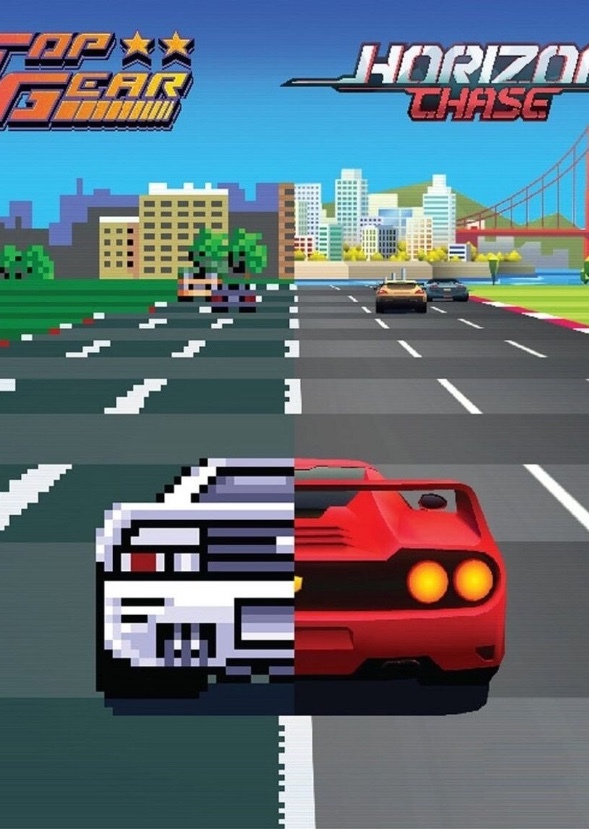
A spiritual successor is a type of follow-up work that isn’t directly connected to the original story or universe, but still carries forward its essence through similar themes, style, and ideas—essentially acting as a sequel “in spirit.” Creators may do this for many reasons: to pay homage while avoiding legal ties, to continue exploring familiar creative ground without risking a direct sequel, or simply because their artistic voice naturally echoes past work. This concept appears across many forms of media, though it’s especially common in video games, where developers may retain the tools and design philosophy of a past project even if they no longer hold the rights to its name or characters. A related concept is the spiritual adaptation, where a work in one medium closely mirrors the tone and structure of another, almost feeling like an unofficial adaptation. Spiritual successors can sometimes feel like rebranded continuations of ideas from older or discontinued franchises, effectively serving as a kind of creative reincarnation. They often overlap with ideas like unofficial counterparts or heavily inspired works, and can even share the same creative teams. While they celebrate and evolve what came before, they stand apart as independent creations, occasionally even contrasting with or redefining the works that inspired them.