Age: 63
female
Demi Gene Moore (née Guynes; November 11, 1962) is an American actress and producer. After rising to prominence in the early 1980s, Moore became the world's highest-paid actress by 1995. Her accolades include a Golden Globe Award and a Screen Actors Guild Award, and nominations for an Academy Award, a British Academy Film Award, and an Emmy Award. Moore began her career as a model and joined the cast of the soap opera General Hospital in 1981. After departing the show in 1983, she rose to prominence as a member of the Brat Pack, with roles in the films Blame It on Rio (1984), St. Elmo's Fire (1985), and About Last Night... (1986). She emerged a star with her portrayal of a grieving girlfriend in the romance film Ghost (1990), had further box office success in A Few Good Men (1992), Indecent Proposal (1993), and Disclosure (1994), and received a then-unprecedented $12.5 million to star in Striptease (1996). Her output decreased significantly after The Scarlet Letter (1995), The Juror (1996), and G.I. Jane (1997) fell below commercial expectations. Moore has since held sporadic leading roles in arthouse films; supporting roles in Charlie's Angels: Full Throttle (2003), Bobby (2006), Mr. Brooks (2007), and Margin Call (2011); as well as television credits in If These Walls Could Talk (1996), Empire (2017–2018), and Feud: Capote vs. The Swans (2024). She received renewed recognition for her performance as an aging celebrity in the body horror film The Substance (2024), which earned her a Golden Globe and a nomination for the Academy Award for Best Actress.
Demi Moore

Ruby James
for Ruby James in Rumble Fish (1983 Genderswap)
Suggested by chris83
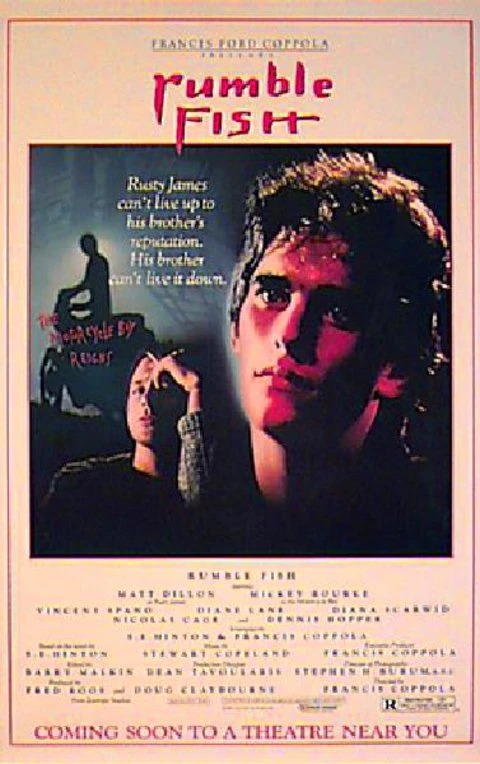
In a decaying industrial town, Ruby James is a teenage girl gang leader coasting on her reputation and the shadow of her older sister, the Motorcycle Girl—a legendary street catfighter now returned from out of state. Ruby idolizes her sister but struggles to understand her philosophical detachment from the violence that once defined her. As Ruby navigates the brutal hierarchy of street gangs, petty crime, and the search for meaning, the Motorcycle Girl emerges as a tragic figure caught between the world of rumble fish—aggressive, territorial creatures that destroy each other when confined—and the possibility of escape. Their relationship becomes a meditation on legacy, violence, and the possibility of transcendence. Set against a noir-tinged landscape of neon signs and abandoned spaces, the film explores how young girls are trapped by circumstance, reputation, and the need to prove themselves through combat. Ruby's journey toward understanding her sister's quiet rebellion becomes a coming-of-age story about recognizing that true strength might lie in refusing to fight.