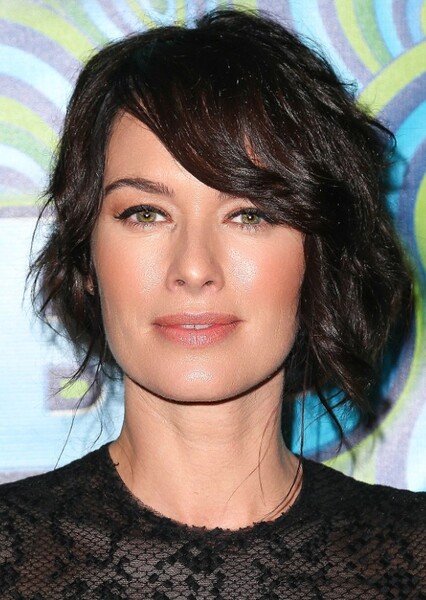
Age: 56
female
Uma Karuna Thurman is an American actress, writer, producer and model. She has acted in a variety of films, from romantic comedies and dramas to science fiction and action films. Following her appearances on the December 1985 and May 1986 covers of British Vogue, Thurman's breakthrough role was Dangerous Liaisons (1988) in which she starred. She rose to international prominence with her role as Mia Wallace in Quentin Tarantino's 1994 film Pulp Fiction, for which she was nominated for the Academy Award, the BAFTA Award, and the Golden Globe Award for Best Supporting Actress. Often hailed as Tarantino's muse, she reunited with the director to play the main role of The Bride in Kill Bill: Volume 1 and 2 (2003, 2004), which brought her two additional Golden Globe Award nominations. Established as a Hollywood leading lady, her other notable films include Henry & June (1990), The Truth About Cats & Dogs (1996), Batman & Robin (1997), Gattaca (1997), Les Misérables (1998), Paycheck (2003), The Producers (2005), My Super Ex-Girlfriend (2006), Percy Jackson & the Olympians: The Lightning Thief (2010), Lars von Trier's Nymphomaniac (2013) and The House That Jack Built (2018). In 2011, Thurman was a member of the jury for the main competition at the 64th Cannes Film Festival, and in 2017, she was named president of the 70th edition's "Un Certain Regard" jury. Thurman made her Broadway debut in The Parisian Woman (2017–2018). For her performance in the made-for-HBO film Hysterical Blindness (2002), Thurman won the Golden Globe Award for Best Actress in a Television Film, and for her five-episode role in the NBC musical series Smash (2012), she received a Primetime Emmy Award nomination for Outstanding Guest Actress in a Drama Series. Thurman has starred in the miniseries The Slap (2015) and the series Imposters (2017–2018). Description above from the Wikipedia article Uma Thurman, licensed under CC-BY-SA, full list of contributors on Wikipedia.
Uma Thurman

Igraine
for Igraine in King Arthur and the Knights of the Round Table
Suggested by shadowthorne3

King Arthur was a legendary British leader who, according to medieval histories and romances, led the defence of Britain against Saxon invaders in the late 5th and early 6th centuries. The details of Arthur's story are mainly composed of folklore and literary invention, and modern historians generally agree that he is unhistorical. The sparse historical background of Arthur is gleaned from various sources, including the Annales Cambriae, the Historia Brittonum, and the writings of Gildas. Arthur's name also occurs in early poetic sources such as Y Gododdin. Arthur is a central figure in the legends making up the Matter of Britain. The legendary Arthur developed as a figure of international interest largely through the popularity of Geoffrey of Monmouth's fanciful and imaginative 12th-century Historia Regum Britanniae (History of the Kings of Britain). In some Welsh and Breton tales and poems that date from before this work, Arthur appears either as a great warrior defending Britain from human and supernatural enemies or as a magical figure of folklore, sometimes associated with the Welsh otherworld Annwn.[6] How much of Geoffrey's Historia (completed in 1138) was adapted from such earlier sources, rather than invented by Geoffrey himself, is unknown.