Age: 61
male
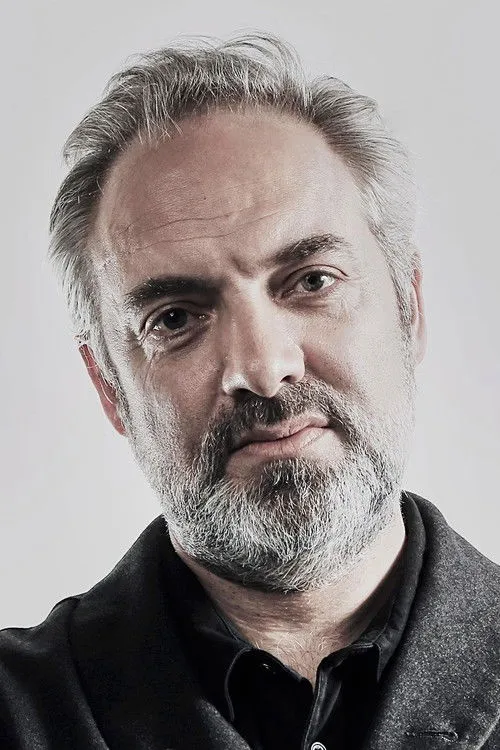
Sir Samuel Alexander Mendes CBE (born 1 August 1965) is a British film and stage director, producer, and screenwriter. In 2000, Mendes was appointed a CBE for his services to drama, and he was knighted in the 2020 New Year Honours List. In 2000, Mendes was awarded the Shakespeare Prize by the Alfred Toepfer Foundation in Hamburg, Germany. In 2005, he received a lifetime achievement award from the Directors Guild of Great Britain. In 2008, The Daily Telegraph ranked him number 15 in their list of the "100 most powerful people in British culture". Born in Berkshire to a Trinidadian Catholic father and an English Jewish mother, Mendes grew up in North London. He read English at Peterhouse at Cambridge University. He began directing plays there before joining Donmar Warehouse, a centre of 1990s London theatre culture. In theatre, he is known for his dark re-inventions of the stage musicals Cabaret (1993), Oliver! (1994), Company (1995), and Gypsy (2003). For the first time, he directed an original West End stage musical with Charlie and the Chocolate Factory (2013). For his work on the London stage, Mendes has received three Laurence Olivier Awards for Company, Twelfth Night, and The Ferryman. On Broadway, he earned two Tony Awards for Best Direction of a Play for The Ferryman in 2019 and The Lehman Trilogy in 2022. In film, he made his directorial debut with the drama American Beauty (1999), which earned him the Academy Award and Golden Globe Award for Best Director. He has since directed the films Road to Perdition (2002), Jarhead (2005), Revolutionary Road (2008), and the James Bond films Skyfall (2012) and Spectre (2015). For the war film 1917 (2019), he received the BAFTA Award and Golden Globe Award for Best Director, as well as his second Academy Award nomination for Best Director, Best Picture and Best Original Screenplay. Description above from the Wikipedia article Sam Mendes, licensed under CC-BY-SA, full list of contributors on Wikipedia.
Sam Mendes

Director
for Director in King Arthur and the Knights of the Round Table
Suggested by mike1seravello

King Arthur was a legendary British leader who, according to medieval histories and romances, led the defence of Britain against Saxon invaders in the late 5th and early 6th centuries. The details of Arthur's story are mainly composed of folklore and literary invention, and modern historians generally agree that he is unhistorical. The sparse historical background of Arthur is gleaned from various sources, including the Annales Cambriae, the Historia Brittonum, and the writings of Gildas. Arthur's name also occurs in early poetic sources such as Y Gododdin. Arthur is a central figure in the legends making up the Matter of Britain. The legendary Arthur developed as a figure of international interest largely through the popularity of Geoffrey of Monmouth's fanciful and imaginative 12th-century Historia Regum Britanniae (History of the Kings of Britain). In some Welsh and Breton tales and poems that date from before this work, Arthur appears either as a great warrior defending Britain from human and supernatural enemies or as a magical figure of folklore, sometimes associated with the Welsh otherworld Annwn.[6] How much of Geoffrey's Historia (completed in 1138) was adapted from such earlier sources, rather than invented by Geoffrey himself, is unknown.