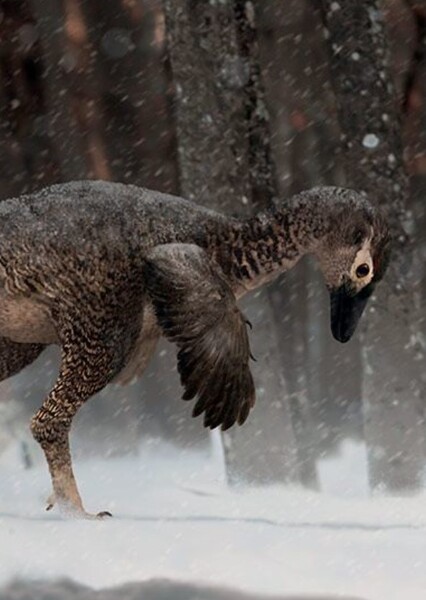
Protoceratops (/ˌproʊtoʊˈsɛrətɒps/; from Greek proto-/πρωτο- "first", cerat-/κερατ- "horn" and -ops/-ωψ "face", meaning "first horned face")[1] is a genus of sheep-sized (1.8 m long) herbivorous ceratopsian dinosaur, from the Upper Cretaceous Period (Campanian stage) of what is now Mongolia. It was a member of the Protoceratopsidae, a group of early horned dinosaurs. Unlike later ceratopsians, however, it was a much smaller creature that lacked well-developed horns and retained some basal traits not seen in later genera. Protoceratops had a large neck frill which was likely used as a display site to impress other members of the species. Other hypotheses about its function include protection of the neck and anchoring of jaw muscles, but the fragility of the frill and the poor leverage offered by possible attachment sites here makes these ideas implausible. Described by Walter W. Granger and W.K. Gregory in 1923, Protoceratops was initially believed to be an ancestor of the North American ceratopsians. Researchers currently distinguish two species of Protoceratops (P. andrewsi and P. hellenikorhinus), based in part by their respective sizes. In the 1920s, Roy Chapman Andrews discovered fossilized eggs in Mongolia that were interpreted as belonging to this dinosaur, but which turned out to be those of Oviraptor. However, it wouldn't be until 2011 that a genuine Protoceratops nest was discovered, with the remains of the neonates inside suggesting parental care in this dinosaur.
Protoceratops

dinosaurs
for dinosaurs in Jurassic World Extinction
Suggested by lllaryn34
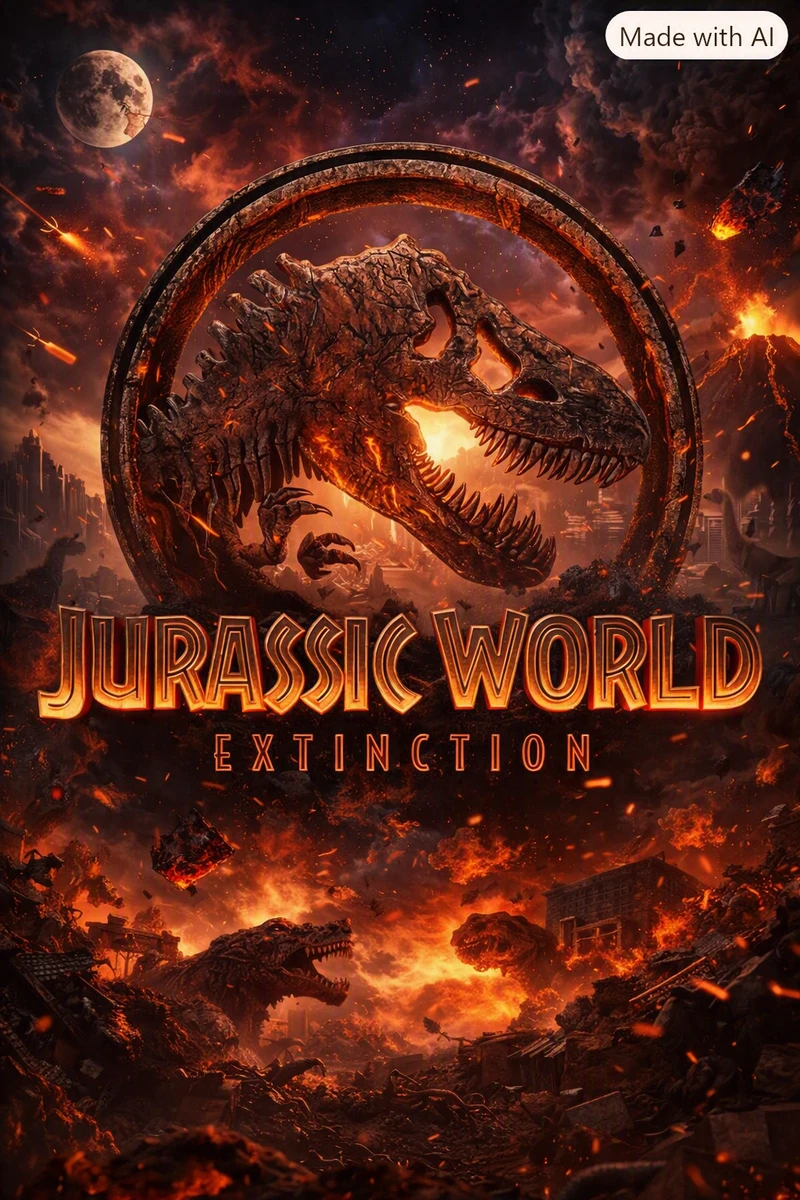
In a world where humanity's dominance is challenged by apex prehistoric predators, Jurassic World: Extinction follows the journey of Zach Mitchell and Lex Grady as they navigate the chaos that unfolds when a bio-engineered hybrid known as the Ultimasaurus breaks free. With the help of their family—Owen Grady, Claire Dearing, and Maisie Lockwood—they must unite to protect their sanctuary from this formidable threat. As they confront the hybrid's relentless power, Zach learns to face his past trauma with Lex by his side, forging a deep bond that transcends mere survival.Set against the backdrop of Isla Sorna, the film explores themes of family, resilience, and coexistence with nature. As the characters evolve from mere survivors to a cohesive unit, they discover that true strength lies not in controlling the dinosaurs but in learning to live alongside them. Ultimately, they must confront their fears and fight for a future where both humans and dinosaurs can coexist in harmony.