Age: 60
male
Mads Dittmann Mikkelsen (Danish: [ˈmæsˈme̝kl̩sn̩]; born 22 November 1965) is a Danish-American actor. He rose to fame in Denmark as an actor for his roles such as Tonny in the first two films of the Pusher film trilogy (1996, 2004), Detective Sergeant Allan Fischer in the television series Rejseholdet (2000–2004), Niels in Open Hearts (2002), Svend in The Green Butchers (2003), Ivan in Adam's Apples (2005), and Jacob Petersen in After the Wedding (2006). Mikkelsen achieved worldwide recognition for playing the main antagonist, Le Chiffre, in the twenty-first James Bond film, Casino Royale (2006). His other film roles include Igor Stravinsky in Coco Chanel & Igor Stravinsky (2008), Johann Friedrich Struensee in A Royal Affair (2012), his Cannes Film Festival Best Actor Award-winning performance as Lucas in the Danish film The Hunt (2012), Kaecilius in Marvel's Doctor Strange (2016), Galen Erso in Lucasfilm's Rogue One (2016), his BAFTA-nominated role as Martin in Another Round (2020), Gellert Grindelwald in Fantastic Beasts: The Secrets of Dumbledore (2022), Dr. Jürgen Voller in Indiana Jones and the Dial of Destiny (2023), and Captain Ludwig Kahlen in The Promised Land (2023). Outside of film, he is known for his roles as Dr. Hannibal Lecter in the television series Hannibal (2013–2015) and Cliff Unger in Hideo Kojima's video game Death Stranding (2019). A. O. Scott of The New York Times remarked that in the Hollywood scene, Mikkelsen has "become a reliable character actor with an intriguing mug" but stated that on the domestic front "he is something else: a star, an axiom, a face of the resurgent Danish cinema". Description above from the Wikipedia article Mads Mikkelsen, licensed under CC-BY-SA, full list of contributors on Wikipedia.
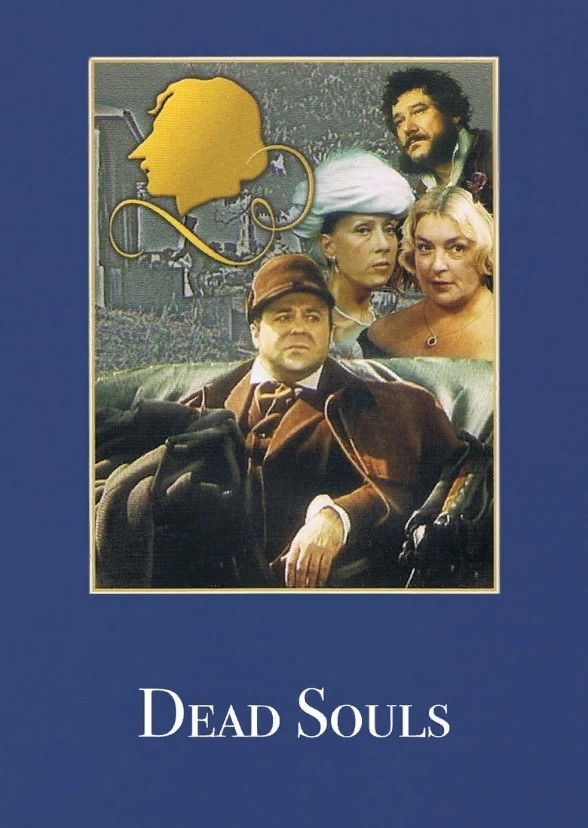
Dead Souls is a novel by Nikolai Gogol, first published in 1842, and widely regarded as an exemplar of 19th-century Russian literature. The novel chronicles the travels and adventures of Pavel Ivanovich Chichikov (Russian: Павел Иванович Чичиков) and the people whom he encounters. These people are typical of the Russian middle-class of the time. Gogol himself saw it as an "epic poem in prose", and within the book as a "novel in verse". Despite supposedly completing the trilogy's second part, Gogol destroyed it shortly before his death. Although the novel ends in mid-sentence (like Sterne's Sentimental Journey), it is usually regarded as complete in the extant form