
Age: 78
male
Jeremy John Irons (born 19 September 1948) is an English actor and activist. After receiving classical training at the Bristol Old Vic Theatre School, Irons began his acting career on stage in 1969 and has appeared in many West End theatre productions, including the Shakespeare plays The Winter's Tale, Macbeth, Much Ado About Nothing, The Taming of the Shrew and Richard II. In 1984, he made his Broadway debut in Tom Stoppard's The Real Thing, receiving the Tony Award for Best Actor in a Play. Irons's break-out role came in the ITV series Brideshead Revisited (1981) and is frequently ranked among the greatest British television dramas as well as greatest literary adaptations. It would earn him a Golden Globe Award nomination. His first major film role came in the romantic drama The French Lieutenant's Woman (1981), for which he received a BAFTA nomination for Best Actor. After starring in dramas, such as Moonlighting (1982), Betrayal (1983), and The Mission (1986), he was praised for portraying twin gynaecologists in David Cronenberg's psychological thriller Dead Ringers (1988). Irons has won multiple awards, including the Academy Award for Best Actor, for his portrayal of the accused attempted murderer Claus von Bülow in Reversal of Fortune (1990). Irons had roles in Steven Soderbergh's mystery thriller Kafka (1991), the period drama The House of the Spirits (1993), the romantic drama M. Butterfly (1993), voiced Scar in Disney's The Lion King (1994), played Simon Gruber in the action film Die Hard with a Vengeance (1995), Humbert Humbert in Lolita (1997) and Aramis in The Man in the Iron Mask (1998). He starred in the action adventure Dungeons & Dragons (2000), played Antonio in The Merchant of Venice (2004), appeared in Being Julia (2004), the historical drama Kingdom of Heaven (2005), the fantasy-adventure Eragon (2006), the Western Appaloosa (2008), and the indie drama Margin Call (2011). In 2016, he appeared in Assassin's Creed and portrayed Alfred Pennyworth in Batman v Superman: Dawn of Justice, Justice League (2017), and Zack Snyder's Justice League (2021). On television, Irons appeared in the historical miniseries Elizabeth I, receiving a Golden Globe and an Emmy Award for Best Supporting Actor. From 2011 to 2013, he starred as Pope Alexander VI in the Showtime historical series The Borgias. In 2019, he appeared as Adrian Veidt / Ozymandias in HBO's Watchmen. He is one of the few actors who have achieved the "Triple Crown of Acting" in the US, winning an Oscar for film, an Emmy for television and a Tony Award for theatre. In October 2011, he was nominated the Goodwill Ambassador for the Food and Agriculture Organization of the United Nations.
Jeremy Irons

Xaltotun
for Xaltotun in Conan: The Hyborian Age (TV-Series)
Suggested by rickzeo
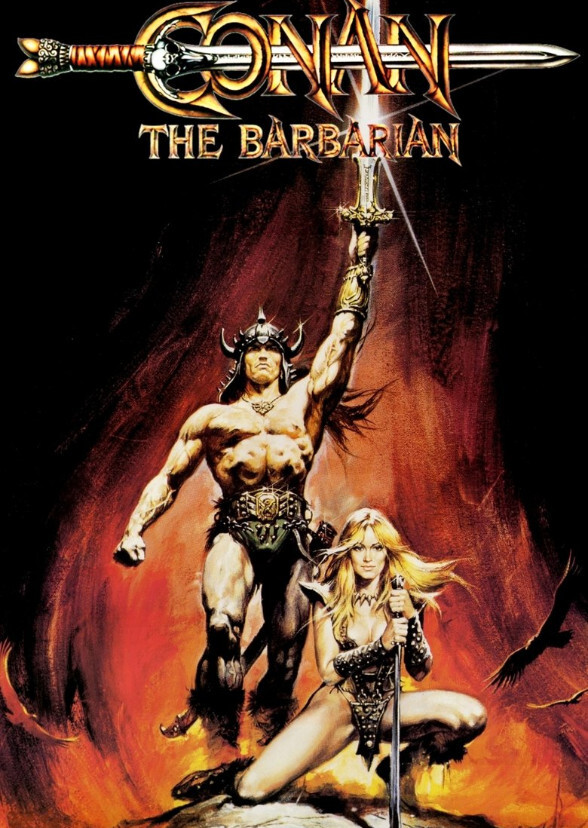
The kingdoms of the Hyborian Age have reached a decadent pinnacle. In the great nations of the West , a new "Doctrine of Serenity" has taken hold. Led by a class of refined scholars and "benevolent" viziers, society has come to view the primal impulses of man—his capacity for protective violence, his rugged independence, and his competitive fire—as "atavistic tremors" that threaten the social harmony. Strength is treated as a defect; passion is treated as a sickness. Amidst this quiet, perfumed stagnation arrives Conan of Cimmeria. To the "enlightened" nobility, he is a walking blasphemy—a man who smells of sweat and leather in a world of silk and incense. He does not speak in riddles, he does not perform for the court, and he reacts to injustice with a heavy hand. He is the "Inconvenient Man," an unrefined mirror reflecting the cowardice of a society that has traded its agency for comfort. But the "Doctrine of Serenity" is not a human evolution; it is a siege strategy. The viziers are the Serpent Men of Valusia, ancient reptilian infiltrators who have traded their swords for the "Illusion of the Serpent." They understand that a man who has lost his "will to strive" is a man who cannot defend his home. By systematically shaming the warrior spirit and pathologizing the individual, the Serpent Men are "taming" humanity into a docile herd, stripping away their natural defenses before the final strike. The tragedy lies in the people themselves. Conditioned to fear their own shadows, the citizens actively hunt the "barbarians" among them, believing that by extinguishing the last embers of human fire, they will finally be safe. Only when the Serpent Men shed their human masks do the deluded realize their error. In a world of "harmonious" slaves, the unrefined Cimmerian alone remains capable of holding a blade, proving that the savage virtues society tried to "cure" were the only things keeping the darkness at bay.


