Age: 84
male
Giancarlo Giannini (Italian: [dʒaŋˈkarlo dʒanˈniːni]; born 1 August 1942) is an Italian actor. He won the Cannes Film Festival Award for Best Actor for his performance in Love and Anarchy (1973) and received an Academy Award nomination for Seven Beauties (1975). He is also a four-time recipient of the David di Donatello Award for Best Actor. Giannini began his career on stage, starring in Franco Zeffirelli's productions of Romeo and Juliet and A Midsummer Night's Dream. After appearing predominantly on television throughout the early 1960s, he had his first lead role in a film in Rita the Mosquito (1965), the first of many collaborations with filmmaker Lina Wertmüller. He rose to international stardom through Wertmüller's The Seduction of Mimi (1972), Love and Anarchy (1973), Swept Away (1974), culminating in his Oscar-nominated turn in Seven Beauties (1975). His other films include The Innocent (1976), Lili Marleen (1980), New York Stories (1990), A Walk in the Clouds (1995), Hannibal (2001), Man on Fire (2004), and the James Bond films Casino Royale (2006) and Quantum of Solace (2008). He is also a dubbing artist, contributing voice work to the Italian-language versions of dozens of films since the 1960s. He has been the main Italian dubber of Al Pacino since 1975, and has also dubbed Jack Nicholson, Michael Douglas, and Helmut Berger. Description above from the Wikipedia article Giancarlo Giannini, licensed under CC-BY-SA, full list of contributors on Wikipedia.
Giancarlo Giannini

Strabonus
for Strabonus in Conan: The Hyborian Age (TV-Series)
Suggested by rickzeo
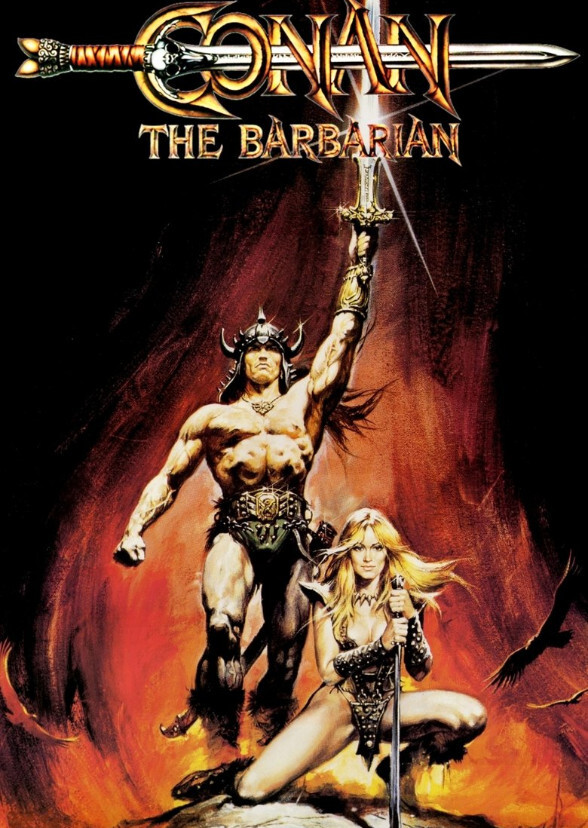
The kingdoms of the Hyborian Age have reached a decadent pinnacle. In the great nations of the West , a new "Doctrine of Serenity" has taken hold. Led by a class of refined scholars and "benevolent" viziers, society has come to view the primal impulses of man—his capacity for protective violence, his rugged independence, and his competitive fire—as "atavistic tremors" that threaten the social harmony. Strength is treated as a defect; passion is treated as a sickness. Amidst this quiet, perfumed stagnation arrives Conan of Cimmeria. To the "enlightened" nobility, he is a walking blasphemy—a man who smells of sweat and leather in a world of silk and incense. He does not speak in riddles, he does not perform for the court, and he reacts to injustice with a heavy hand. He is the "Inconvenient Man," an unrefined mirror reflecting the cowardice of a society that has traded its agency for comfort. But the "Doctrine of Serenity" is not a human evolution; it is a siege strategy. The viziers are the Serpent Men of Valusia, ancient reptilian infiltrators who have traded their swords for the "Illusion of the Serpent." They understand that a man who has lost his "will to strive" is a man who cannot defend his home. By systematically shaming the warrior spirit and pathologizing the individual, the Serpent Men are "taming" humanity into a docile herd, stripping away their natural defenses before the final strike. The tragedy lies in the people themselves. Conditioned to fear their own shadows, the citizens actively hunt the "barbarians" among them, believing that by extinguishing the last embers of human fire, they will finally be safe. Only when the Serpent Men shed their human masks do the deluded realize their error. In a world of "harmonious" slaves, the unrefined Cimmerian alone remains capable of holding a blade, proving that the savage virtues society tried to "cure" were the only things keeping the darkness at bay.