
Age: 84
male
Francesco Clemente Giuseppe Sparanero (born November 23, 1941), known professionally as Franco Nero, is an Italian actor, producer, and director. His breakthrough role was as the title character in the Spaghetti Western film Django (1966), which made him a pop culture icon and launched an international career that includes over 200 leading and supporting roles in a wide variety of films and television programmes. During the 1960s and 1970s, Nero was actively involved in many popular Italian "genre trends", including poliziotteschi, gialli, and Spaghetti Westerns. His best-known films include The Bible: In the Beginning... (1966), Camelot (1967), The Day of the Owl (1968), The Mercenary (1968), Battle of Neretva (1969), Tristana (1970), Compañeros (1970), Confessions of a Police Captain (1971), The Fifth Cord (1971), High Crime (1973), Street Law (1974), Keoma (1976), Hitch-Hike (1977), Force 10 from Navarone (1978), Enter the Ninja (1981), Die Hard 2 (1990), Letters to Juliet (2010), Cars 2 (2011), and John Wick: Chapter 2 (2017). Nero has had a long relationship with Vanessa Redgrave, which began during the filming of Camelot. They were married in 2006, and are the parents of the actor Carlo Gabriel Nero.
Franco Nero

Strabonus
for Strabonus in Conan: The Hyborian Age (TV-Series)
Suggested by rickzeo
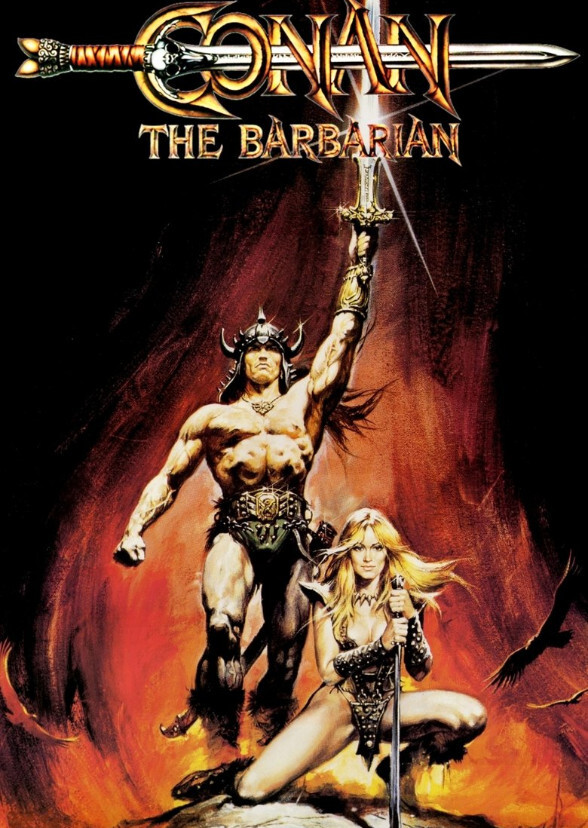
The kingdoms of the Hyborian Age have reached a decadent pinnacle. In the great nations of the West , a new "Doctrine of Serenity" has taken hold. Led by a class of refined scholars and "benevolent" viziers, society has come to view the primal impulses of man—his capacity for protective violence, his rugged independence, and his competitive fire—as "atavistic tremors" that threaten the social harmony. Strength is treated as a defect; passion is treated as a sickness. Amidst this quiet, perfumed stagnation arrives Conan of Cimmeria. To the "enlightened" nobility, he is a walking blasphemy—a man who smells of sweat and leather in a world of silk and incense. He does not speak in riddles, he does not perform for the court, and he reacts to injustice with a heavy hand. He is the "Inconvenient Man," an unrefined mirror reflecting the cowardice of a society that has traded its agency for comfort. But the "Doctrine of Serenity" is not a human evolution; it is a siege strategy. The viziers are the Serpent Men of Valusia, ancient reptilian infiltrators who have traded their swords for the "Illusion of the Serpent." They understand that a man who has lost his "will to strive" is a man who cannot defend his home. By systematically shaming the warrior spirit and pathologizing the individual, the Serpent Men are "taming" humanity into a docile herd, stripping away their natural defenses before the final strike. The tragedy lies in the people themselves. Conditioned to fear their own shadows, the citizens actively hunt the "barbarians" among them, believing that by extinguishing the last embers of human fire, they will finally be safe. Only when the Serpent Men shed their human masks do the deluded realize their error. In a world of "harmonious" slaves, the unrefined Cimmerian alone remains capable of holding a blade, proving that the savage virtues society tried to "cure" were the only things keeping the darkness at bay.


