
Gigantopithecus is an extinct genus of ape from the Early to Middle Pleistocene of southern China, represented by one species, G. blacki. Potential identifications have also been made in Thailand, Vietnam, and Indonesia. The first remains of Gigantopithecus, two third molar teeth, were identified in a drugstore by anthropologist Ralph von Koenigswald in 1935, who subsequently described the ape. In 1956, the first mandible and over 1,000 teeth were found in Liucheng, and numerous more remains have since been found in at least 16 sites. Only teeth and four mandibles are known currently, and other skeletal elements were likely consumed by porcupines before they could fossilise.[2] Gigantopithecus was once argued to be a hominin, a member of the human line, but it is now thought to be closely allied with orangutans, classified in the subfamily Ponginae. Gigantopithecus has traditionally been restored as a massive, gorilla-like ape, potentially 200–300 kg (440–660 lb) when alive, but the paucity of remains make total size estimates highly speculative. The species may have been sexually dimorphic, with males much bigger than females. The incisors are reduced and the canines appear to have functioned like cheek teeth (premolars and molars). The premolars are high-crowned, and the fourth premolar is very molar-like. The molars are the largest of any known ape, and have a relatively flat surface. Gigantopithecus had the thickest enamel by absolute measure of any ape, up to 6 mm (a quarter of an inch) in some areas, though was only fairly thick when tooth size is taken into account. Gigantopithecus appears to have been a generalist herbivore of C3 forest plants, with the jaw adapted to grinding, crushing, and cutting through tough, fibrous plants; and the thick enamel functioning to resist foods with abrasive particles such as stems, roots, and tubers with dirt. Some teeth bear traces of fig family fruits. It primarily lived in subtropical to tropical forest, and went extinct about 300,000 years ago likely because of the retreat of preferred habitat due to climate change, and potentially archaic human activity by Homo erectus. Gigantopithecus has become popular in cryptozoology circles as the identity of the Tibetan yeti or the American bigfoot, humanlike monsters in local folklore.
Gigantopithecus

Animals Of Asia
for Animals Of Asia in Blue Sky Studios's Khan Kluay (2006)
Suggested by jacobtolentino
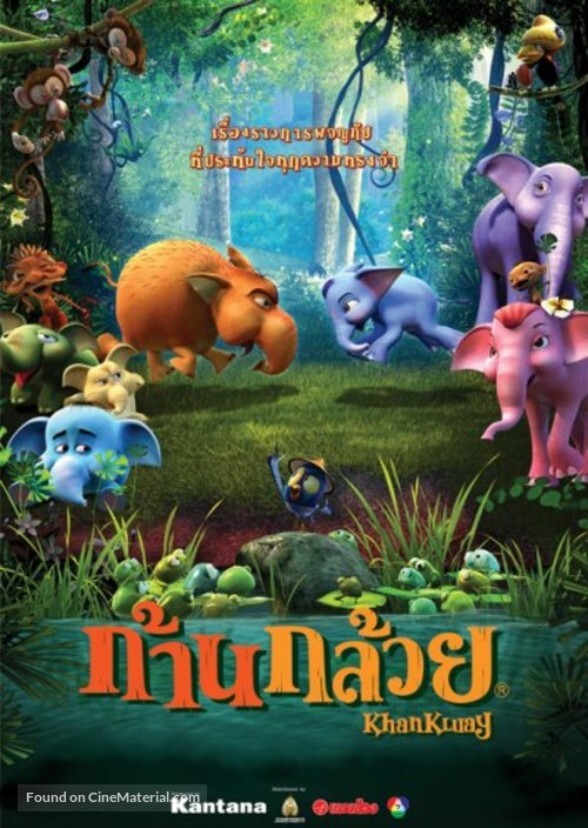
After the Events of Ice Age in 2002 and Robots 2005 even Ice Age the Meltdown,Khan Kluay is a 2006 American Computer-animated film produced by Blue Sky Studios and Distributed by 20th Century Fox. In the 1500s, an elephant named Saeng Da gave birth to a calf, whom she names Khan Kluay. Phupa, Khan Kluay's father, is a war elephant of the Ayutthaya army. As a young calf, Khan Kluay befriends a columbidae named Jitrit. As the two roam around the jungle, Khan Kluay meets Chaba Kaew, a pink elephant who lived with humans since her birth.




