4,819 stories

Meridian
Set in 2089, Meridian is a science fiction action film about first contact diplomacy — the most consequential negotiation in human history. Commander Avital Ben-David, 41, leads the United Earth Diplomatic Corps' first formal contact team tasked with negotiating a territorial treaty with the Vorath — a non-human species who have been observing Earth for forty years and have decided, based on that observation, that humanity is worth engaging. The Vorath are not hostile, but they are alien in ways that make human assumptions about communication, trust, and intent continuously misleading. Avital must negotiate across a conceptual gulf that no human has successfully crossed while simultaneously managing the political pressures of Earth's fractured power blocs who want the treaty to serve their specific interests. The romance with Dr. Emeka Osei — the team's first-contact linguist — is built on the specific intimacy of two people who are the only humans who understand what they are doing and what it means.

The General's Wife
A historical political thriller set during Israel's War of Independence (1948), The General's Wife follows Ruth Peled, 28, the wife of a senior Haganah commander whose official role is entirely domestic and whose actual role is entirely not. Ruth runs a network of intelligence sources from her kitchen table — housewives, shopkeepers, telephone operators, domestic workers — who collectively constitute the most significant intelligence apparatus operating in the new state's first war. Her husband David knows and does not acknowledge knowing; the men above him are grateful for the intelligence while pretending not to ask where it comes from. The film follows one month of the war's most critical period, including the UN ceasefire negotiations that Ruth's network directly influenced, and the specific price of being the architect of something that history will record as someone else's achievement. The romance is the marriage itself — David and Ruth's relationship across the pressure of the war, which is the film's most carefully observed element.

The Venetian
Sofia Marchetti, 36, is an international art appraiser whose speciality is provenance — the legal and historical ownership chains of valuable artworks. She is the best in the world at finding where things really came from, which is a forensic discipline dressed in the clothing of art history. When she is hired to appraise the private collection of recently deceased Venetian noblewoman Contessa Valeria Montefeltro, she arrives at a palazzo on the Grand Canal expecting a straightforward catalogue job and finds instead a collection with deliberate anomalies — pieces positioned to communicate, paintings hiding documents, a dead woman who apparently spent her final years arranging her own collection as a message. The mystery Sofia is solving across the film is what the Contessa wanted her specifically to find, and why she was chosen. The romance with Marco Cattaneo — a Venetian detective assigned to ensure the palazzo's contents are legally inventoried — develops across the investigation with the specific dynamic of two professionals who are each better at their job than the other expected.

The Covenant
Noa Levi, 37, is the Mossad's most celebrated field operative — a woman of extraordinary tactical intelligence who has spent fifteen years running operations across Europe and the Middle East with a success rate that the institution uses to define what excellence means. She speaks seven languages (Hebrew, Arabic, English, French, German, Russian, Farsi), has built intelligence networks across six countries, and has never once questioned whether the missions she executes are as clean as the briefings suggest. When she is assigned to her most sensitive operation yet — the protection of a high-value defector carrying evidence about a long-running surveillance network — she discovers that the defector's information points not at an enemy state but at a faction within her own institution that has been using her operations to eliminate political opposition inside Israel's closest ally relationships. Season one is Noa discovering the betrayal. Season two is her dismantling the faction from outside the institution while simultaneously trying to understand what, if anything, she still believes in. The romance with Daniel — a documentary journalist who has been investigating the same network from the outside — develops across both seasons with the specific tension of two people whose professional pursuits make trust both necessary and impossible.
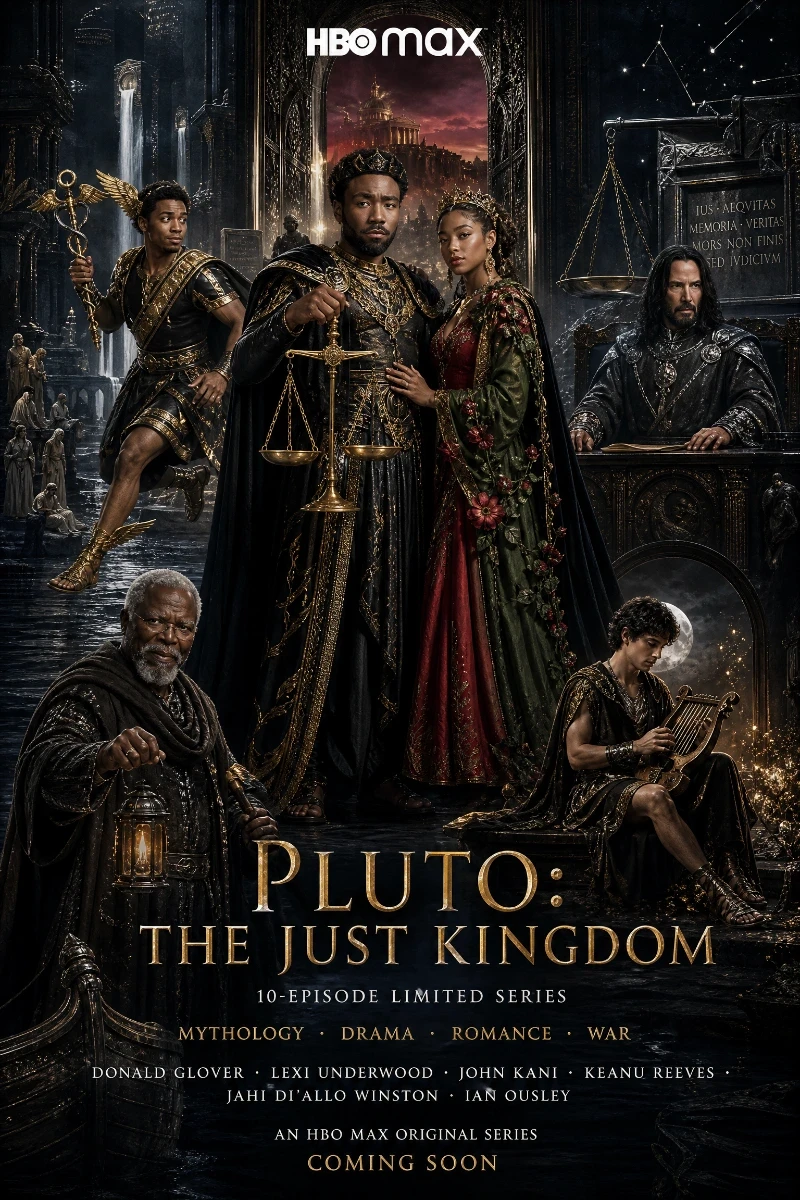
Pluto: The Just Kingdom
The definitive, comprehensive, and long-overdue portrait of Pluto as he actually appears in Roman religion and literature — and the universe's most important corrective to centuries of misrepresentation. Pluto in Roman mythology is the god of the earth's wealth (his name literally means 'wealth'), the sovereign of the Underworld's order, and the most impartial judge in the entire divine hierarchy. He is not associated with evil, not resentful of his domain, not jealous of his brothers. He received the Underworld by lot and governs it with the seriousness it deserves. This series shows his daily governance: adjudicating with his judges Minos, Rhadamanthus, and Aeacus; managing the river Styx with Charon; administering the Elysian Fields and the Asphodel Meadows; navigating rare visits from living mortals with appropriate gravity; building his life with Proserpina from their marriage onward. The series is quiet, formal, and occasionally deeply funny — Pluto's dry wit is the show's greatest comedic resource, deployed sparingly and therefore devastatingly. S6E1 — The Kingdom A day in the Underworld. No crisis. No drama. Just governance. Pluto adjudicating with his judges. Speaking quietly with Proserpina. Receiving the newly dead with solemn dignity. The episode is deliberately quiet and the most powerful of the six series. S6E5 — Orpheus Orpheus arrives. His music fills the Underworld. Everything stops. Pluto's decision to release Eurydice is the episode's moral center: an act of genuine compassion from the most just deity in the cosmos. S6E10 — The Oldest Promise Series finale: The universe's final episode meditates on what Pluto's domain actually means — not punishment but completion. Every soul received with care. Every judgment made with fairness. The final image: Pluto and Proserpina in their palace, purposeful and at peace. The camera holds on Pluto's face — steady, certain, entirely without resentment — which is the Roman Chronicles universe's last word.
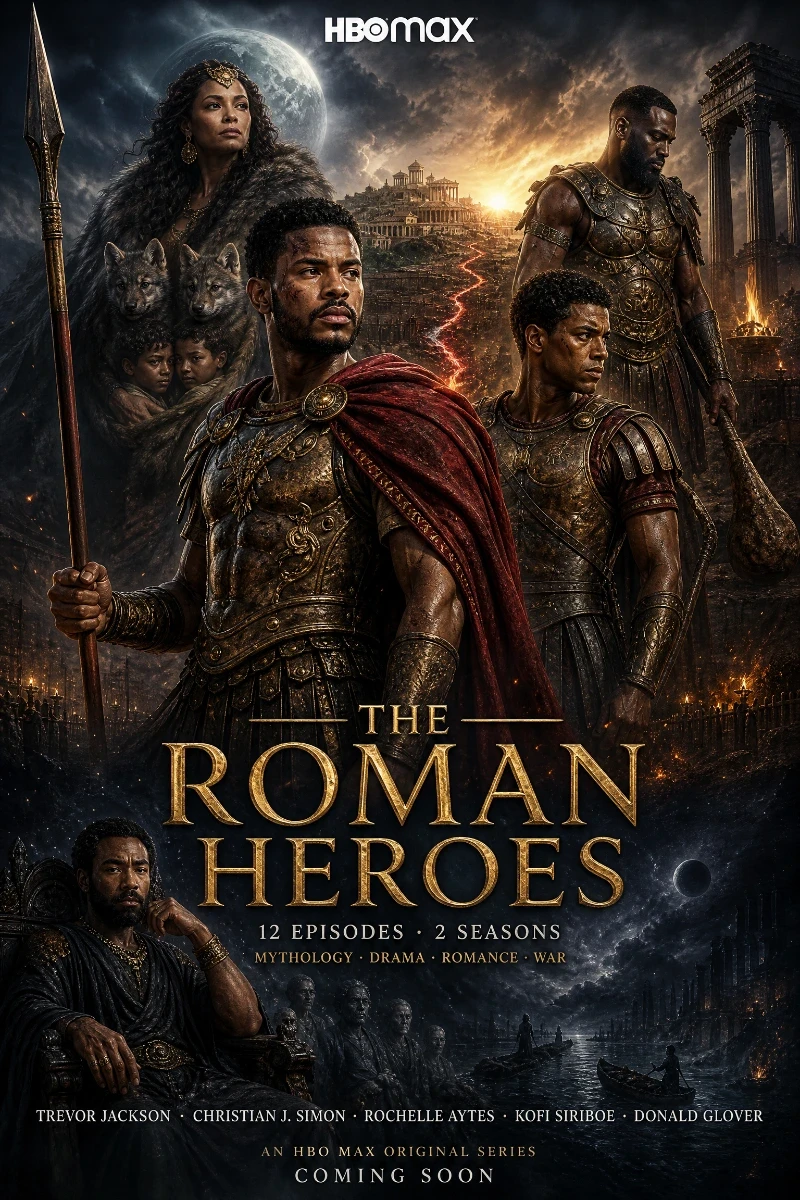
The Roman Heroes
Romulus founded a city. Hercules held the sky. The heroes of Rome were mortal and divine and the difference was never as clear as either side believed. An anthology-style series following the great heroes of Roman mythology across two seasons, with each season's episodes forming a connected arc. Season 1 follows Romulus and Remus — from their birth to Rhea Silvia, their abandonment on the Tiber, their raising by the wolf Lupa, their founding conflict, and the tragedy of Remus's death at Romulus's hand (treated with full moral weight rather than mythological dismissal). Season 2 follows Hercules in his specifically Roman context — Hercules Romanus, whose twelve labors are reframed as the labors of a man trying to prove to himself, not the gods, that he deserves to exist after the crime of his madness. The Underworld sequences across both seasons feature Pluto and Proserpina, with Pluto's administration of judgment — for both Romulus and Hercules at different points — the series' most formally precise divine representation. S1E1 — The River Romulus and Remus abandoned on the Tiber. Lupa's arrival — not accidental but chosen. The series' foundational act of divine care. S1E10 — The Wall Remus's death. The full moral weight carried without deflection. Romulus knowing what he has done for the rest of his life. S2E12 — Olympus Series finale: Hercules's apotheosis — his ascension to divine status. The series ends not on triumph but on the question he spent ten years asking: whether atonement can be complete. The answer, the series suggests, is that the asking was itself the answer.
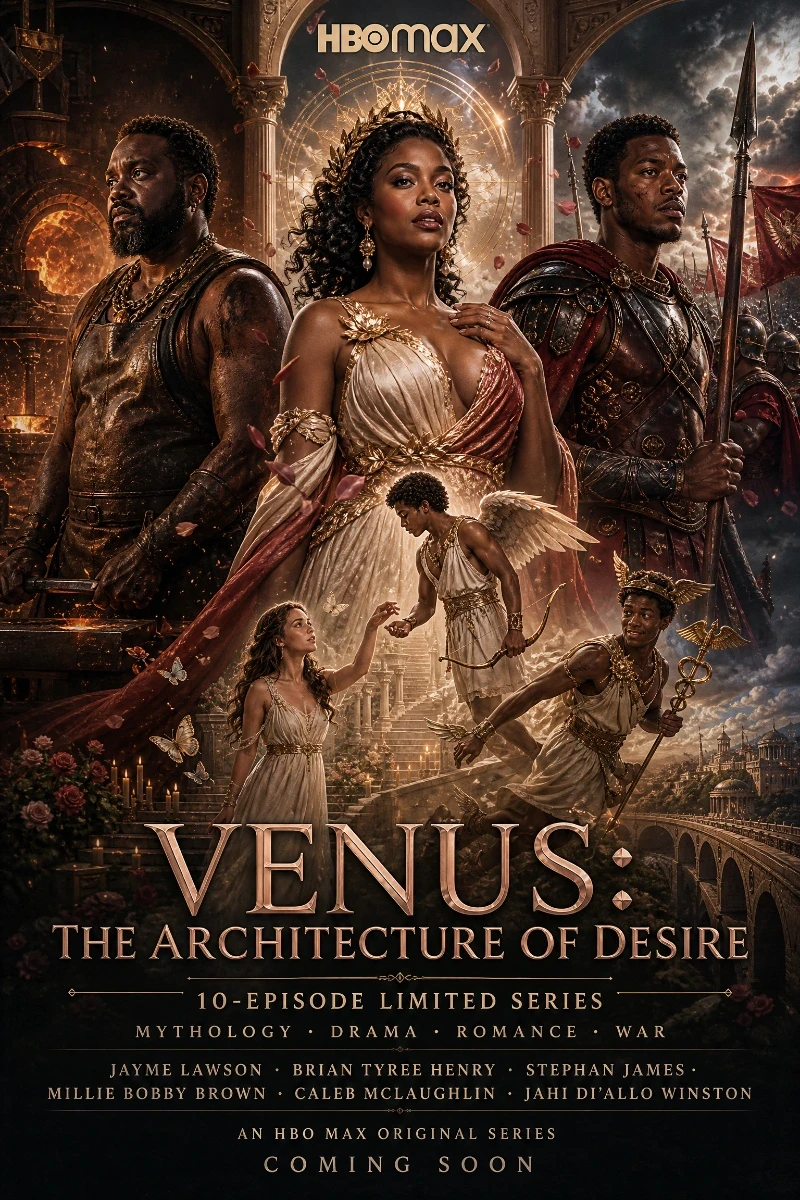
Venus: The Architecture of Desire
She is the most misunderstood force in the cosmos. She is not beauty's servant. She is beauty's sovereign. A character-centered limited series placing Venus — radically misunderstood by popular culture — at its center. The Roman Venus has specific dimensions that make her more complex than Aphrodite: she is the divine ancestor of the Julian family, the protector of Rome itself, and a goddess whose domain extends to gardens, nature, and the prosperity of the city. This series explores her across multiple storylines: her complicated marriage to Vulcan, her love for Mars (which in Roman tradition has political as well as passionate dimensions), her involvement in Psyche's trials (examined here as a genuine divine judgment rather than simple jealousy), and her role as Aeneas's divine mother. The central argument: Venus is not superficial vanity but the foundational force without which nothing in the cosmos reaches toward anything else. She is the reason. S4E1 — What Venus Actually Is An episode structured as Venus correcting every misapprehension about her domain — not vanity but foundational force. The divine court's response to her argument is the episode's comedy and its philosophy. S4E5 — Psyche's Trials Venus sets Psyche's tasks — examined here not as petty revenge but as genuine divine judgment about whether this mortal woman is who Cupid believes her to be. S4E10 — The Architecture Series finale: All the love stories resolve simultaneously. Venus alone at the episode's end — watching, satisfied. Not with having won anything but with having been, finally, understood.
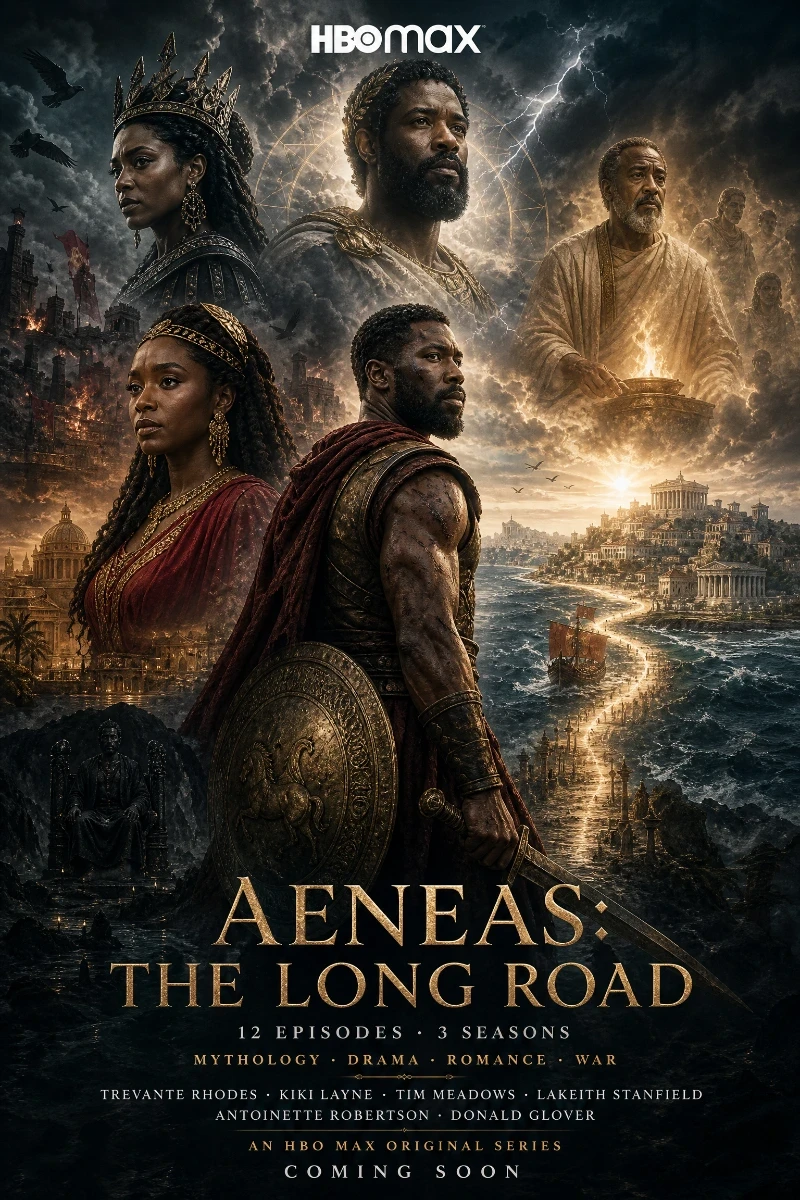
Aeneas: The Long Road
Troy fell. Rome waited. Between them: one man, the gods' attention, and a woman in Carthage who deserved better. A faithful, psychologically rich adaptation of the Aeneid — Virgil's foundational Roman epic — that treats Aeneas neither as simply heroic nor as Dido's callous abandoner, but as an extraordinarily complicated man caught between personal love and divine obligation in a way that destroys everyone involved. Three seasons cover the fall of Troy and the Mediterranean wandering (Season 1), the Carthage episode and its devastating aftermath (Season 2), and the Italian wars and Rome's founding (Season 3). The Underworld episode — in which Aeneas descends to meet his dead father Anchises and glimpse Rome's future — is the universe's most sacred sequence: Pluto and Proserpina receive Aeneas with the grave dignity their domain commands. Pluto neither performs menace nor displays resentment. He is the sovereign of a realm Aeneas has entered legitimately, through divine dispensation, and he treats the visit with the seriousness it deserves. S1E1 — The Fall of Troy Troy burning. Aeneas carrying his father on his back, his son's hand in his, his gods under his arm. The founding loss from which everything else follows. S2E6 — Carthage The full Dido and Aeneas arc. The love, the domesticity, the divine intervention, the departure. The series' most emotionally devastating episode. S3E12 — Roma Series finale: The wars concluded. The city's lineage secured. Aeneas dying having completed his task. The camera holds on the Tiber, the seven hills, the city that does not yet exist but will.
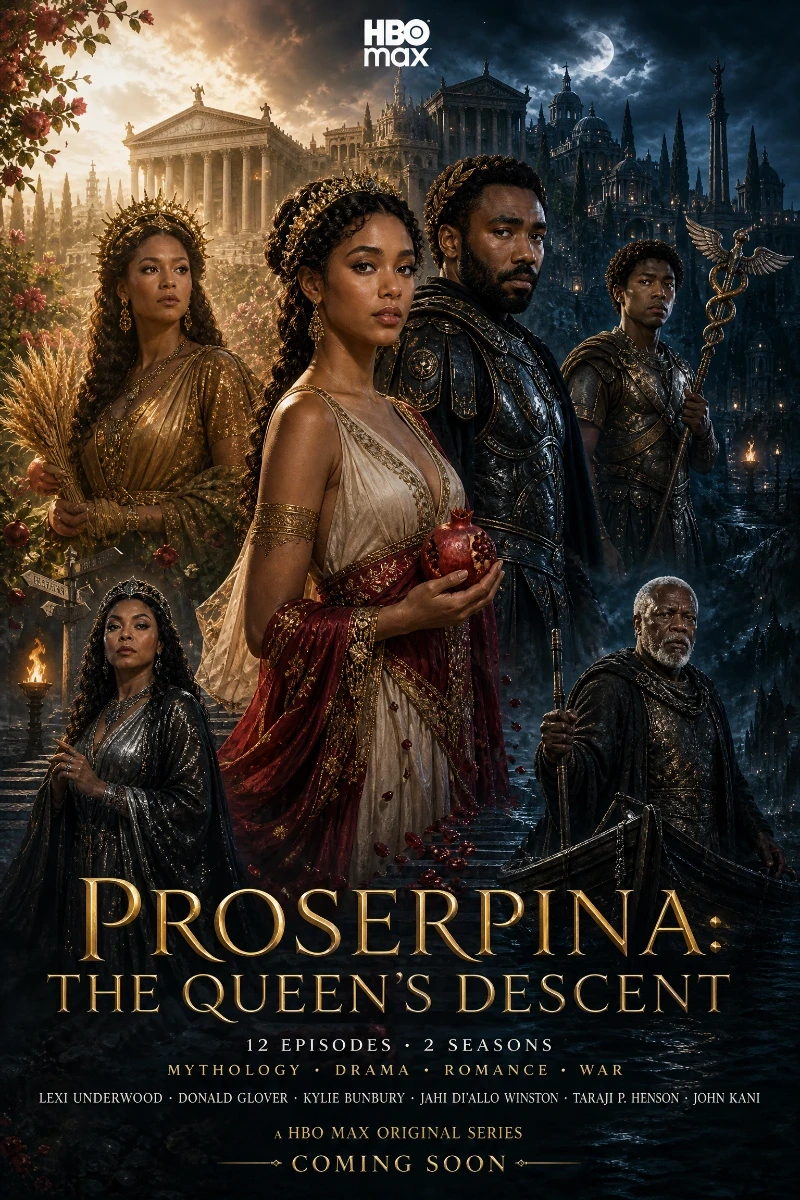
Proserpina: The Queen's Descent
She was not stolen. She was not a victim. She was a goddess discovering that her nature was larger than her mother's garden. The most faithful, psychologically rich retelling of the Proserpina myth ever produced — and a deliberate corrective to centuries of misrepresentation. Proserpina is not abducted; she is drawn to the Underworld by her own divine nature (as goddess of spring's return, she is inherently connected to the cycle of descent and renewal) and by genuine curiosity about the domain her uncle Pluto governs. Pluto is portrayed throughout as a figure of exceptional honor: patient, deeply fair, constitutionally incapable of coercion. The pomegranate seeds are Proserpina's informed choice. Their relationship builds from formal acquaintance to intellectual companionship to genuine love — two divine beings who are surprised to find an equal. Mercury (Mercurius) serves as the inter-realm negotiator and the series' sharpest comedic voice. Ceres's grief is treated with full weight without making Pluto its villain. S2E1 — The Garden's Edge Proserpina drawn to the Underworld's threshold by her own nature — the goddess of return cannot fully exist without understanding descent. S2E6 — The Pomegranate Proserpina understands what eating the seeds means. She eats them with full, deliberate knowledge. Pluto watches and says nothing — he will not influence her choice. His expression when she does is the episode's defining image. S2E12 — Two Thrones The arrangement reached: six months each realm. Proserpina facing Ceres and saying, gently but completely, that she chose her life. The world understands seasons for the first time.

Capitolium: The First War
Before Rome had a city, it had gods. Before the gods had order, they had the war against the Titans. This is what it cost them. The Roman Chronicles opens with its most epic, most visually ambitious installment: the war between the Olympian gods (in their Roman identities) and the Titans who preceded them. Jupiter, Neptune, Pluto, Juno, Ceres, and Vesta fight together as siblings against the Titanic forces of Saturn who swallowed them. The series is deliberately Roman rather than Greek in its register — the gods are portrayed with the specific Roman character: more formal, more civic, more concerned with the ordering principles of the cosmos than with individual passion. Jupiter is not merely ambitious — he wants a cosmos governed by law. Neptune is not merely volatile — he is the sea's necessity made divine. Pluto is not a reluctant inheritor — he is a god whose domain is the most necessary of all three, who accepts it with the calm of someone who understands that without death, life has no meaning. The Titanomachy here is a war of governance, not of revenge. S1E1 — The Drawing of Lots After the Titanomachy's conclusion, the three brothers draw lots for dominion. The sequence is treated as the universe's founding civic act — Pluto receives the Underworld with the dignity of a god who understands that governance, not glamour, is the highest calling. S1E5 — Saturn's Court A flashback to the Titan court — the gods as children within their father's palace, before the war. Pluto as a young divine, already the most patient and most observant of the siblings. S1E10 — Pax Deorum Series finale: The new divine order established. Each god taking their domain. Pluto's final scene — descending into the Underworld not as exile but as sovereign, arranging it with the same careful attention to order that will characterize his governance for eternity.
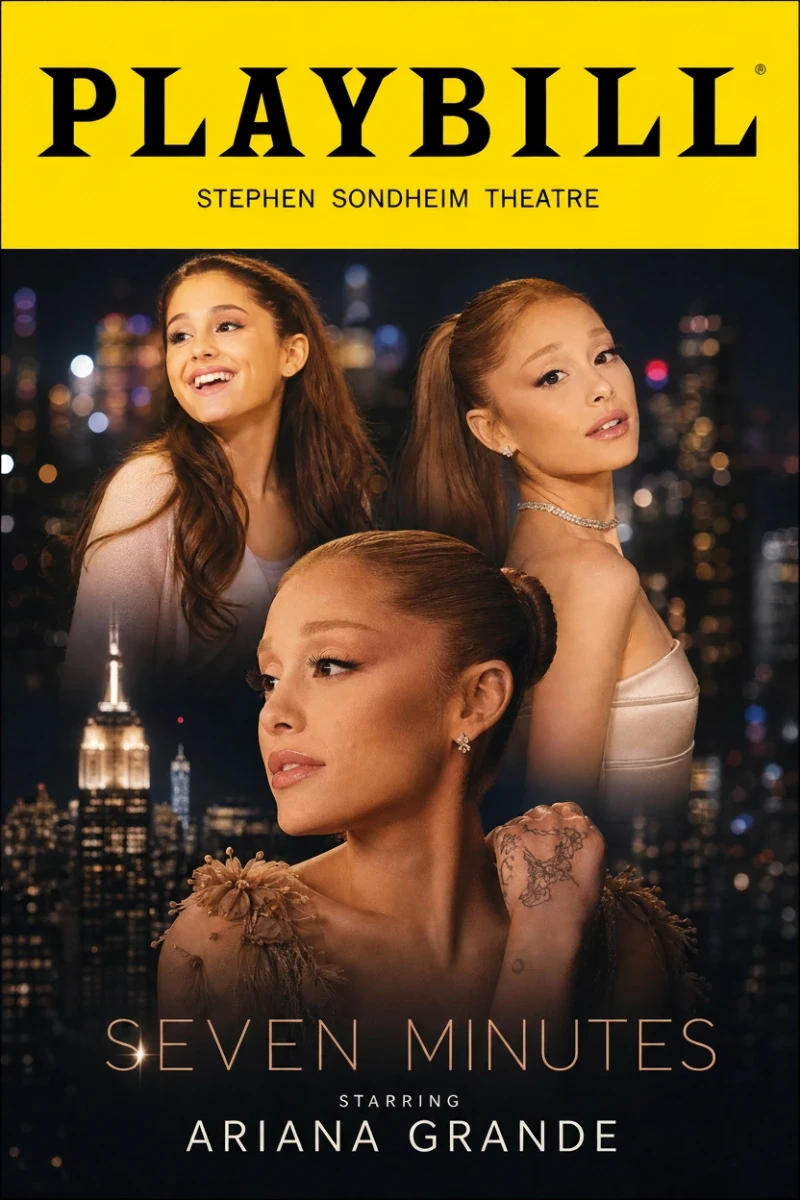
Seven Minutes
It takes seven minutes on average for someone to decide if they love a person. He spent six years getting to seven minutes. Seven Minutes is a contemporary romantic musical structured around the seven-minute rule — the psychological research suggesting that first impressions are formed in the first seven minutes of a meeting. The musical follows Nora, 28, who meets Leo under seven different circumstances across six years — always for exactly seven minutes (a coincidence that becomes increasingly preposterous and increasingly dear). Each of the seven meetings is its own musical sequence, with the songs showing who Nora and Leo are in that specific moment of their lives. The accumulation of seven seven-minute meetings builds a portrait of two people across six years without any of the ordinary relationship development — each meeting complete in itself, each one slightly different because they are both slightly different. The musical's structural conceit is its greatest formal achievement and its romantic argument: that love is not a single decision but an accumulation of decisions that feel like one. Runtime: 2h 10min. Seven Meetings Meeting 1 (age 22/24): A coffee shop. Nora spills. Leo helps. Both late. Seven minutes. Meeting 3 (age 24/26): A bookshop. Same section. No reason. Seven minutes. Meeting 5 (age 26/28): A hospital waiting room. Neither will explain why they're there. Seven minutes. Meeting 7 (age 28/30): A theatre lobby. Neither late. Neither leaving. The musical's finale runs seven minutes precisely.
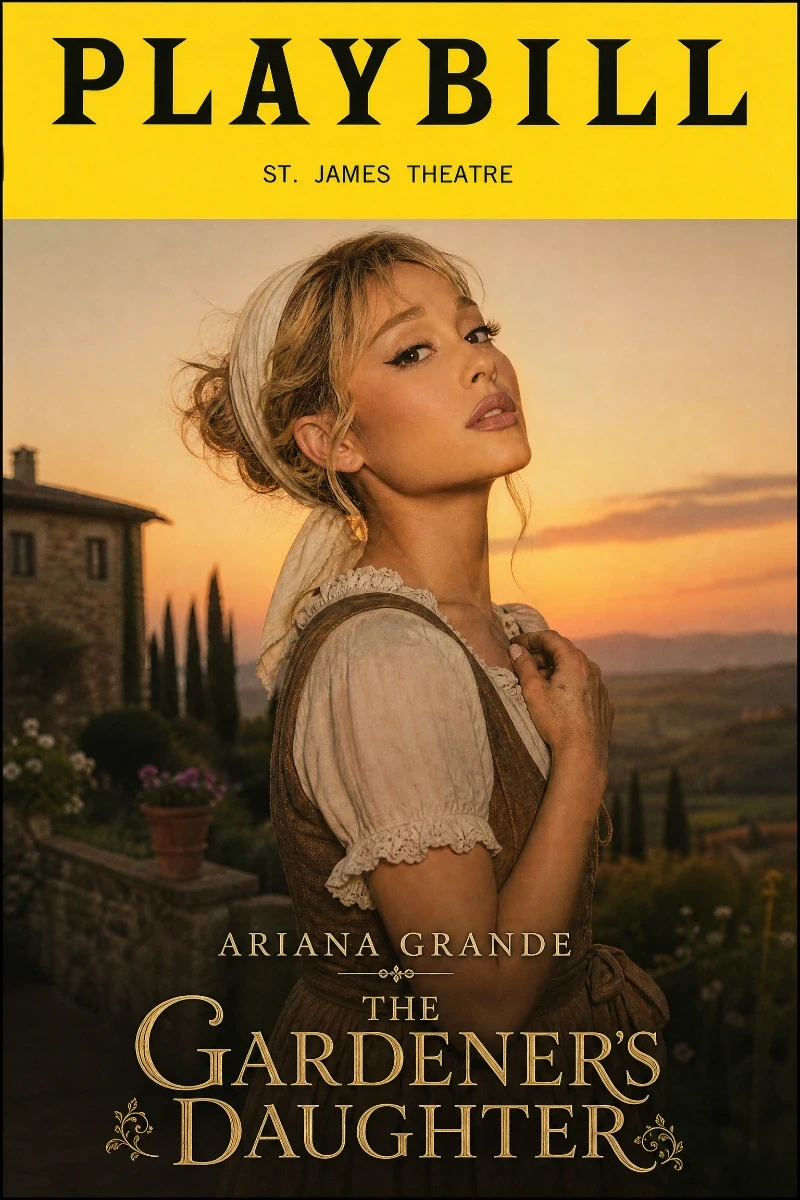
The Gardener's Daughter
Italy, 1920. She inherited a garden, a debt, and a man who had been promised neither. The Gardener's Daughter is a period musical romance set in 1920 Tuscany, following Sofia, 24, the daughter of a celebrated Italian gardener whose death leaves her both his extraordinary estate and his significant debts — including a promise to a neighboring family that their son Carlo would marry her. Sofia has plans of her own: she intends to turn the garden into a botanical research station and has been corresponding with a Florentine botanist named Emilio whose letters have become, without either of them naming it, the most important conversations of her life. The musical follows one extraordinary summer in the garden — Carlo's arrival, Emilio's arrival, the debt collectors, and the garden itself, which is treated as a character through the staging. Twelve original songs. Runtime: 2h 30min. Act One Songs 'My Father's Garden' (Sofia opening number). 'The Letters' (Sofia reading Emilio's letters — a split-scene duet with both actors in different locations). 'Carlo's Introduction' (the musical's most committed comic number). Act Two Songs 'What Grows Here' (Sofia and Emilio in the garden at night — the musical's romantic centerpiece). 'The Garden Decides' (the finale, in which the garden itself — through the staging — makes the choice Sofia has been unable to).
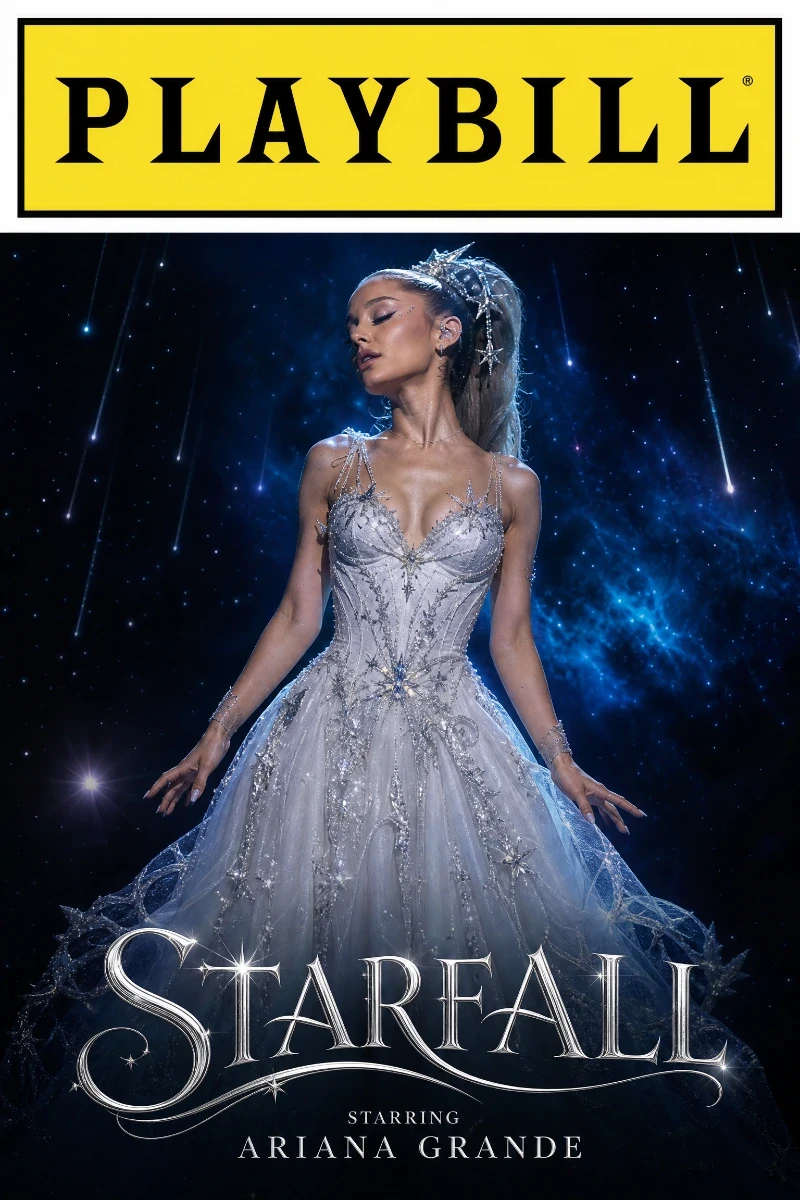
Starfall
She fell from a star. She learned what love sounds like from a child who had never heard music. Starfall is an original Broadway musical about a celestial being named Lyra who falls to Earth and must learn to be human within a single year or lose the ability to return to her realm. Her guide is an eight-year-old girl named Iris who is profoundly deaf and experiences music through vibration and light rather than sound — which transforms Lyra's entire understanding of what her voice actually is. The musical has fifteen original songs spanning from Lyra's celestial arias to Iris's vibration-pieces (performed with the full orchestra visible and conducted through lighting cues synchronized to the beat). The central love story is between Lyra and Finn, a human musician who is grieving the loss of his ability to hear following an accident, who falls in love with someone who cannot explain why sound matters and accidentally teaches him to hear differently. Runtime: 2h 45min. Act One Highlights 'The Fall' (Lyra descending — the musical's opening number, pure voice over minimal orchestration). 'What Is This?' (Lyra encountering Earth's sensory world). 'Iris Speaks' (the first Iris-Lyra duet, performed in ASL and song simultaneously). Act Two Highlights 'The Year Is Almost Gone' (the show's emotional center — Lyra understanding what staying would cost). 'One More Sound' (Finn and Lyra's Act Two duet). 'Starfall (Reprise)' (the finale, the full company, the theatre dark except for starlight).

The Florist
She left the music industry after one album. She opened a flower shop in New Jersey. She is not, it turns out, finished. A lighter, warmer series than either of the other two — The Florist follows Mara Agosto, 29, who walked away from a promising music career after one album that didn't perform as expected and opened a flower shop in Hoboken, New Jersey, where she is genuinely happy in ways the industry never made her. Three seasons track her life in the shop, her community, and the slow return of music to her life through the back door — initially as background, then as comfort, then as identity reclaimed on her own terms. The central romance is with her neighbor Eli, a quietly extraordinary person who knew her for two full seasons before discovering her music history and doesn't change a single thing about how he treats her afterward. Season 1 — The Shop Mara in Hoboken. The shop, the community, the happiness she built without a plan. Eli appearing in episode two. Season 2 — The Discovery Eli finding the album. The scene where he tells her he found it — and says what he actually thinks of it — is the series' emotional peak. Season 3 — The Song Mara writing one song. Just one. For herself. Nobody else. The series finale's final scene.

The Conservatory
She got into the world's most competitive music conservatory. She does not know if she got in for the right reasons. Set in a fictional elite conservatory modelled on the world's most competitive music training institutions, The Conservatory follows Aria Pellegrino, 20, a vocal prodigy in her first and second years navigating the specific cruelty and beauty of elite music training. The conservatory is not a villain — it is a system that produces extraordinary musicians by demanding extraordinary sacrifice, and the show does not pretend either the excellence or the cost is simple. Aria's friendship with her year-group, her relationship with her demanding but genuinely excellent teacher Professor Mariner, and her slow romantic development with Luca (a pianist in the year above) are the series' emotional threads. Two seasons track her conservatory years and the question of what she is making music for. Season 1 — Year One Aria arriving. The shock of being surrounded by people as talented as she is for the first time in her life. The joy and terror of it. Season 2 — Year Two The question of what music is for when you have been making it professionally since childhood. Aria's crisis and her resolution.

Starlight
She is the most famous person on earth. She has absolutely no idea who she is when nobody is watching. Starlight follows Celeste, 28, a global pop phenomenon navigating the specific crisis of a woman whose entire adult identity has been constructed for public consumption. She is not unhappy in the way the public expects famous people to be unhappy — she is genuinely confused about where the performance ends. Three seasons track Celeste across a world tour (season one), a deliberate sabbatical and identity search (season two), and her return to music on her own terms (season three). The show is a character study disguised as a glamour drama, with original music throughout each season. The series is structured so that Celeste's hair across seasons marks her psychological journey: elaborate performance styles in season one, completely undone in season two, a deliberate personal signature in season three that is neither the performance nor its absence. Season 1 — The Tour Three hundred shows. Every city. The gap between performance and person widening until Celeste cannot see across it. Season 2 — The Silence The sabbatical. An anonymous year in a coastal town. Felix finding her in episode four. She tells him to go home. He does. He comes back in episode eight. Season 3 — The Return Celeste returns to music on terms she wrote herself. The album is the most personal thing she has made. Felix's name is in the liner notes.

The Last Aria
She was born with a voice that could alter reality. She spent her life hiding it. The world ending was the only thing that made hiding impossible. A fantasy musical drama set in a near-future world where specific vocal frequencies can reshape physical reality — a science that emerged thirty years ago and immediately created a class system: those whose voices carry the world-altering frequency (Resonants) and those who don't. Elena Callas, 28, is a Resonant of the highest classification who has spent her life performing as a non-Resonant, terrified of what using her full voice would mean. She works as a conservatory teacher, coaching young Resonants in controlled, precise use of gifts she refuses to use herself. When a geological catastrophe threatens a major city and the only solution requires a Resonant of her specific frequency to hold a specific harmonic for eleven minutes, Elena must choose between the life she has built on concealment and the use of everything she actually is. The film has five major musical sequences, all original songs. Its central love story is with Dario, a non-Resonant composer who wrote music for her voice before he knew what her voice actually was. Act One — The Conservatory Elena teaching what she refuses to use. Dario arriving with a commission. The catastrophe's first tremor. Act Two — The Choice The authorities identifying Elena's classification. Her refusal. The city beginning to fall. Act Three — The Aria Elena holding the harmonic for eleven minutes. Dario in the control room listening to the full voice for the first time. The aftermath.

La Luce
Boca Raton, 1954. She came from Naples with a voice and a suitcase. Miami didn't know what to do with either. A period romance set in 1954 Florida, La Luce follows Lucia Ferrero, 22, the daughter of a Neapolitan immigrant family who arrived in Boca Raton when Lucia was eight. She is a nightclub singer of extraordinary talent playing the small clubs of the Florida Italian-American community — too good for the rooms she plays, unable to access the rooms she deserves because those rooms are not for people who look like her world. When Miami's most important club owner hears her sing at a private party, the opportunity arrives — but it comes with conditions she didn't plan for, including a management situation that requires her to perform as 'Lucy Ferris' (Anglicized, sanitized) and an entanglement with Marco, a musician from Chicago who plays the club's orchestra and who loves her for the voice she performs and the person behind it simultaneously. The film is a celebration of mid-century Italian-American culture, a love letter to Florida's musical history, and an examination of what it costs to make yourself legible to an industry that prefers a version of you to you. Act One — The Community Hall Lucia singing for the Italian community, for free, for the love of it. The private party. Sid Marsh in the back of the room. Act Two — Lucy Ferris The Miami club. The Anglicized name. Marco watching her perform and watching her perform performing simultaneously. Act Three — Lucia The name on the marquee that matters. The film ends in Italian.

The Understudy
She has been the understudy for six years. Tonight, the star can't go on. Neither can the narrative that everything will be fine. Luna Vega, 27, has spent six years as the understudy for the lead of Broadway's longest-running musical — a role she has performed 847 times in her imagination and three times on stage in emergencies. She is better at the role than the star. Everyone knows this. Nothing changes because of it. When the lead — the incandescent, impossible Margaux — breaks her ankle backstage on the night a major film director is in the audience specifically scouting for his upcoming musical film, Luna goes on. The performance is transformative. The film director wants her. The Broadway producers want to keep her as understudy because she is more useful to the show's stability there. Her cast mate Theo, who has had front-row seats to Luna's quality for three years and has been unable to explain his feelings about it, watches the whole situation with the particular helplessness of a man in love with someone who has been told by every structure around her that she should be grateful for what she has. The film is a romantic comedy with a genuine political argument at its center about who gets to be the lead. Act One — 847 Times Luna's world: the wings, the watching, the extraordinary competence and the institutional invisibility. Act Two — The Performance Margaux's injury. Luna going on. The director in seat D12. The audience on their feet. Act Three — The Choice Not the film director's offer or the producers' counter-offer. Luna's own understanding of what she wants, separate from any offer.

Seventh Heaven
She spent six years writing other people's feelings. She has never once written her own. Mia Rossi, 29, is one of the most successful songwriters in the music industry — her name is in the credits of forty-seven hit songs in five years, she has written number ones for artists in six countries, and absolutely nobody knows her name. She prefers it this way. Writing other people's feelings requires a specific emotional detachment she has built into an art form: she can identify what a song needs emotionally with clinical precision without ever accessing her own emotional reality. When she is commissioned to write an album for Stellan, a major pop star whose label has decided he needs a more 'authentic' emotional direction, the assignment requires her to actually spend time with him — understanding his emotional landscape, his experiences, what he genuinely feels. Stellan is not what she expected: not the managed pop product but a genuinely feeling person who begins, episode by episode, to realize that the songs Mia is writing for him are more emotional than she can explain purely professionally. The film is a slow-burn romantic drama about a woman who understands everyone else's heart with extraordinary precision and has been carefully avoiding her own. Act One — The Assignment Mia in the session room. Clinical, brilliant, precise. Stellan arriving expecting a professional and meeting something harder to categorize. Act Two — The Songs The songs taking shape. Their emotional content becoming specific in ways Stellan doesn't understand and Mia pretends not to notice. Act Three — The Credit Who wrote what, and why it matters. The film's ending is not a kiss but a song — Mia's first credit under her own name.