

Stories by @mr95
4,807 stories

A Midsummer Night's Dream
The lovers are all wrong for each other. The fairies are making it worse. The mechanicals are trying to put on a play. It is the most beautiful chaos Shakespeare ever designed. A contemporary reimagining of Shakespeare's most formally perfect comedy — set in modern London, with the enchanted forest existing as a specific other space reachable from a specific point in North London where the city's urban edge meets genuine woodland. The four lovers are young professionals whose romantic entanglements are already complicated before any fairy interference; Oberon and Titania's court is a nocturnal world of extraordinary visual beauty operating on the other side of the woodland boundary; and Nick Bottom and his companions are a community theatre group attempting to perform a play for a tech billionaire's wedding. The original verse is retained throughout — the specific argument that Shakespeare's language is alive and accessible without modernization when performed with full emotional understanding. The film is visually sumptuous: the fairy world in deep forest greens and bioluminescent golds, the London world in the specific warmth of a contemporary summer night. Act One — London The lovers' entanglement in the modern city. The community theatre group assembling. The specific night that draws everyone to the forest edge. Act Two — The Forest The fairy world in full. Puck's errors multiplying. Bottom's transformation. The visual peak of the film. Act Three — The Morning The enchantments lifting. The lovers waking in the correct pairs. Bottom's dream. The community theatre performance — the most lovingly disastrous theatrical event in the film.
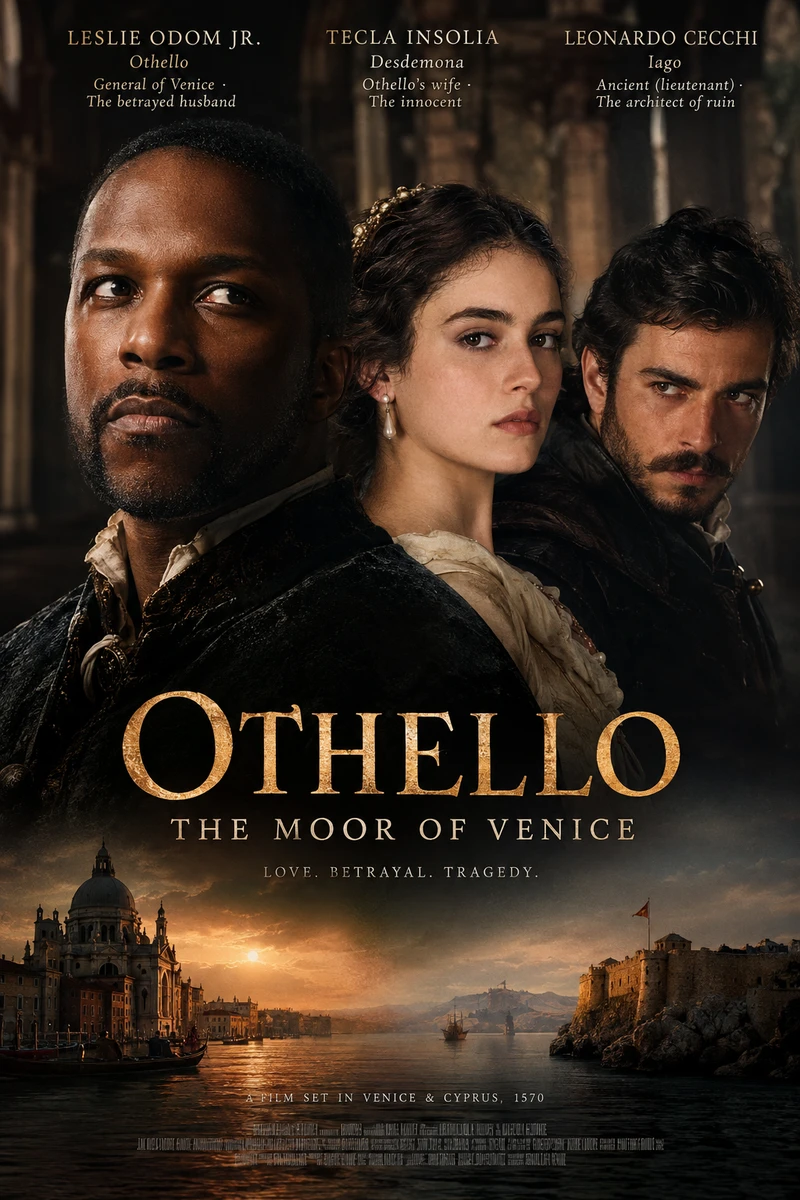
Othello: The Moor of Venice
The greatest general in Venice. The most beloved woman in the city. The one man in the room who saw the gap between those two facts and decided to use it. A faithful, cinematically magnificent period adaptation of Shakespeare's most intimate tragedy — set in the historical world of the play, 16th-century Venice and Cyprus, with full visual grandeur of the Renaissance Venetian world. The film treats Othello not as a story about race in the modern sense but as Shakespeare wrote it: a story about the specific vulnerability of a man of extraordinary achievement and genuine love who is systematically destroyed by someone who has decided his destruction is worth everything. The Venetian court's visual world — deep richly colored textiles, gondola-lined canals, the specific architecture of Renaissance power — is rendered with full cinematic beauty. The tragedy's engine — Iago's psychologically precise manipulation — is treated as what it is: the most sophisticated piece of psychological warfare in literary history, conducted by someone whose motives remain forever partially opaque. Act One — Venice The Venetian world at its most beautiful. Othello and Desdemona's love established — genuine, mutual, extraordinary. Iago's decision made in the opening scene. Act Two — Cyprus The Turkish threat defeated — anticlimactically, which focuses all the film's energy on the domestic space where Iago operates. The handkerchief. Act Three — The Willow Song Desdemona's 'Willow' song the night before her murder. The film's most formally beautiful sequence. The subsequent scenes in which Othello's eyes close around Iago's manipulation. Act Four — The Bed The final scene. The handkerchief's truth revealed too late. Emilia's accounting. Iago's silence. Othello's last speech and its terrible beauty.

Vixen: Spirit of the Wild
The Tantu Totem gives her the abilities of any animal in the world. She is also the creative director of the most influential fashion brand in Africa. On Tuesday she stopped a tsunami. On Wednesday she showed her collection in Lagos. Mari Jiwe McCabe — Vixen — combines two identities that seem impossible to reconcile and does so with absolute style: she is the creative director and face of TANTU, a Nairobi-based fashion brand that has become the most globally influential African luxury label in the world, and she is Vixen, a vigilante whose Tantu Totem amulet grants her access to the powers of any animal in the DC universe's natural world. Three seasons track Mari across three escalating threats: Season 1 — a wildlife trafficking network that she discovers is connected to the supernatural theft of animal spirits from the Tantu; Season 2 — the Tantu's origins in African mythology, and a threat from within that mythology; Season 3 — the most personal confrontation, with the people who killed her mother to steal the Totem twenty years ago. S1E1 — The Totem Mari presenting her TANTU collection in Lagos. The trafficking network's first appearance. The Totem activating in response to an animal spirit being stolen. S2E6 — The Origin The Tantu Totem's mythological origin fully revealed. What it is, what it connects to, and why it has always been in Mari's family. S3E10 — Spirit of the Wild Series finale: The confrontation with her mother's killers. The Totem's full power used for the first time. The fashion show that opens the season after the crisis — Mari's clearest statement that both her identities are real.
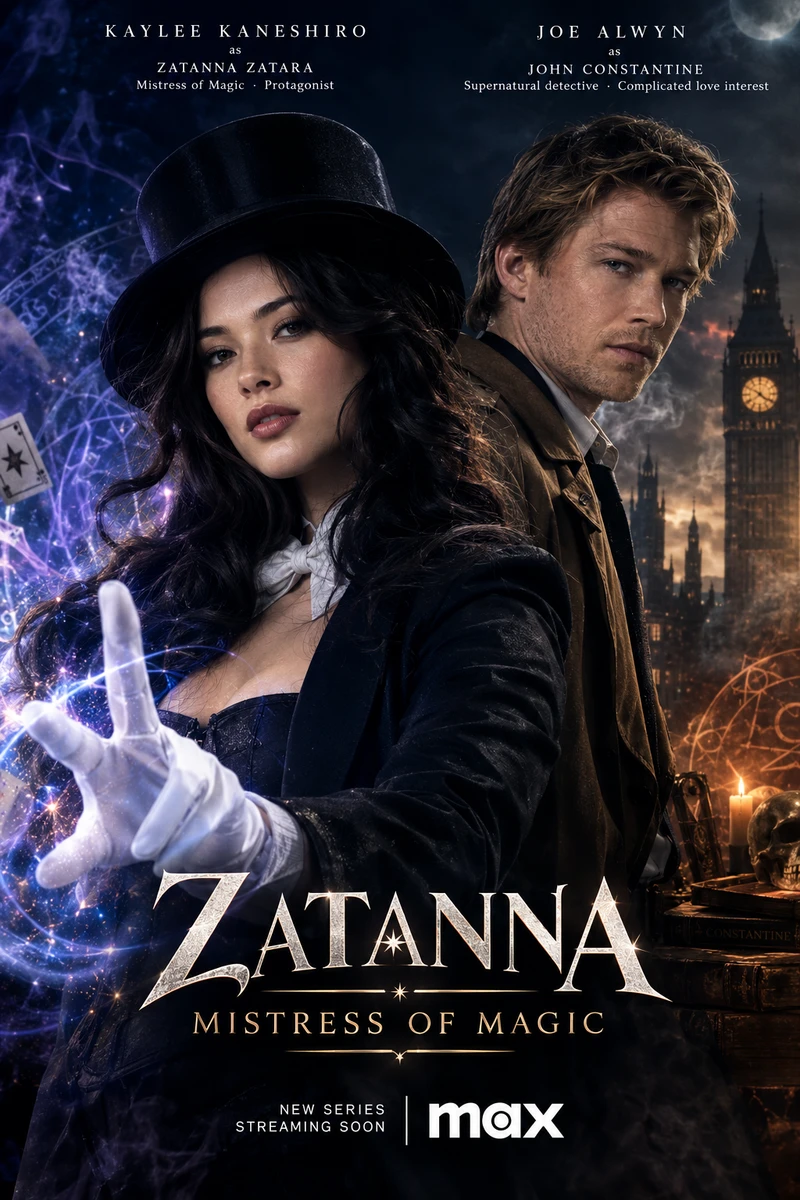
Zatanna: Mistress of Magic
Her magic is real. Her stage show is the most popular in Las Vegas. The magical underground she polices is the most dangerous world in the DC universe. She speaks her spells backwards and forwards simultaneously. Zatanna Zatara is the DC universe's most powerful magician — her abilities, cast by speaking words backwards, allow her to reshape reality at the molecular level. She maintains a double existence as Las Vegas's most celebrated stage magician (the show she puts on every night for paying audiences is the most technically spectacular magic show in the world, performed with her actual abilities carefully calibrated to appear like illusion) and as the magical community's most active law-enforcement figure, policing the DC universe's supernatural underworld. Three seasons track three magical threats of escalating scale: Season 1 — a demon lord using human hosts to accumulate magical artifacts; Season 2 — a magical plague spreading through the supernatural community; Season 3 — Zatanna's most personal confrontation, with the being that killed her father Giovanni Zatara. S1E1 — The Show Zatanna's Las Vegas stage show — the most spectacular magic performance ever put on television. The magical threat appearing backstage. S2E7 — The Plague The magical plague's source identified. Zatanna and Constantine in an alliance that is both tactical and personal. S3E10 — Giovanni Series finale: The confrontation with her father's killer. The specific magic that is grief channeled into a spell. The aftermath.

Black Canary: The Cry
Her superpower is her voice. She is also an extraordinary hand-to-hand combatant. She is also the lead singer of a band that is about to break through. She has three lives and not enough hours in the day for any of them. Dinah Lance — Black Canary — is navigating three simultaneous identities: Dinah Lance, lead vocalist of the rock band LANCE (on the verge of a major label signing); the Black Canary, a vigilante whose Canary Cry (a sonic-force metahuman ability) is both her greatest weapon and her most carefully guarded secret; and the daughter of the original Black Canary, Dinah Drake Lance, whose legacy she is both honoring and resisting. Three seasons track: Season 1 — Dinah's music career breaking through while a meta-human trafficking network targets people with sonic abilities — including her. Season 2 — The network's full scope revealed as a global operation. Season 3 — Dinah's most personal confrontation: the network's leadership is someone from her mother's past. S1E1 — The Cry Dinah performing with LANCE. The Canary Cry used for the first time on screen — a villain, a rooftop, the sound that becomes the series' signature. S2E6 — The Network The meta-human trafficking network's global scope revealed. Dinah's specific vulnerability as a sonic meta within it. S3E10 — The Legacy Series finale: The confrontation with the network's leader. Dinah's specific choice about her mother's legacy and her own identity within it.

Batwoman: Gotham's Own
Bruce Wayne is gone. Gotham's criminals know it. Kate Kane is the only person willing to make them afraid of the dark again. Kate Kane — Batwoman — inherits Gotham's protectorship in Bruce Wayne's extended absence from the city. She is not Batman. She is explicitly not trying to be Batman. She is Kate Kane, specifically — a queer Jewish woman who was expelled from a military academy, trained herself for three years to deserve the suit, and has a personal relationship with Gotham's specific pathology that Bruce never had. Four seasons track Kate's establishment of herself as Gotham's protector, her confrontations with the city's major villains, her navigation of her father Jacob Kane's complicated legacy, and her specific relationship with the city she protects — a place she loves with the specific love of someone who has been failed by it and chosen to stay anyway. S1E1 — Gotham's Dark Bruce Wayne's absence established. Gotham's criminal landscape reacting. Kate's decision to wear the suit. S2E5 — Beth and Alice The episode in which Kate and Alice's shared history is fully told — the accident, the seventeen years, the specific grief of a twin lost and found as a monster. S4E10 — Gotham's Own Series finale: Kate's definitive establishment as Gotham's protector. Not Batman. Batwoman. Specifically.

Supergirl: Last Daughter of Krypton
She remembers Krypton. She carries its loss every day and its love for human civilization in equal measure. She is also twenty-four and still figuring out who she is. Kara Zor-El — Supergirl — arrived on Earth fourteen years after her cousin Clark Kent, trapped in a phantom zone warp that suspended her aging. She is 24, with the full memories of Krypton and the full experience of fourteen years on Earth, but the specific emotional reality of someone who carries both. Four seasons track Kara across her development as a hero independent of her cousin's shadow — her specific powers, her Kryptonian heritage, her career as a reporter at CatCo Media under Cat Grant, and her relationships with the people who make Earth home. The series treats Kara's Kryptonian identity with the same seriousness it gives her Earth identity — she is genuinely both, and the tension between them is the character's richest territory. S1E1 — The Cape Kara's first public appearance as Supergirl. The specific choice to stop hiding her capabilities. Alex's face watching the news coverage. S2E8 — Krypton A Kryptonian artifact activates memories Kara had suppressed. The most emotionally devastating episode — Kara's specific grief, finally fully shown. S4E10 — Last Daughter Series finale: Kara's fourth season culmination. Who she is, on her own terms, in both her identities.

Wonder Woman: The Themysciran
She has been living among humanity for a century. She has never stopped being astonished by it — its capacity for both extraordinary cruelty and extraordinary love. She has decided both are worth fighting for. Five seasons following Diana Prince — Wonder Woman — across the modern era of the DC universe. Diana, approximately 2,500 years old but appearing 30, serves as an ambassador for Themyscira at the United Nations while operating as Wonder Woman in the world's most significant conflicts. Season 1 establishes her dual existence and her ongoing relationship with humanity — the specific combination of ancient wisdom and genuine wonder that defines her character. Season 2 introduces a resurgence of Olympian interference in human affairs as a Titan-level threat emerges. Season 3 is the most politically complex — Diana's diplomatic position in conflict with her warrior mandate as a global conflict escalates that only she can prevent. Season 4 returns to Themyscira as a constitutional crisis threatens the island's governance. Season 5 is the universe's most epic — the culmination of all five seasons' threats in a conflict that requires Diana to choose between her two worlds. S1E1 — The Ambassador Diana at the UN as Themyscira's official representative. Her first modern-day crisis as Wonder Woman. The two worlds established. S3E6 — The Choice Diana's diplomatic position requires her to allow a war she could stop. The most morally devastating episode in the series. S5E10 — Themyscira and the World Series finale: The climactic conflict resolved. Diana's choice about her permanent home. The golden lasso, the final battle, and the specific peace that follows.

A Song of Ice & Fire
The story of the people in the world of A Song of Ice & Fire.

Lois & Clark: The New Adventures of Superman
The adventures of the unlikely duo of Superman & Lois Lane.
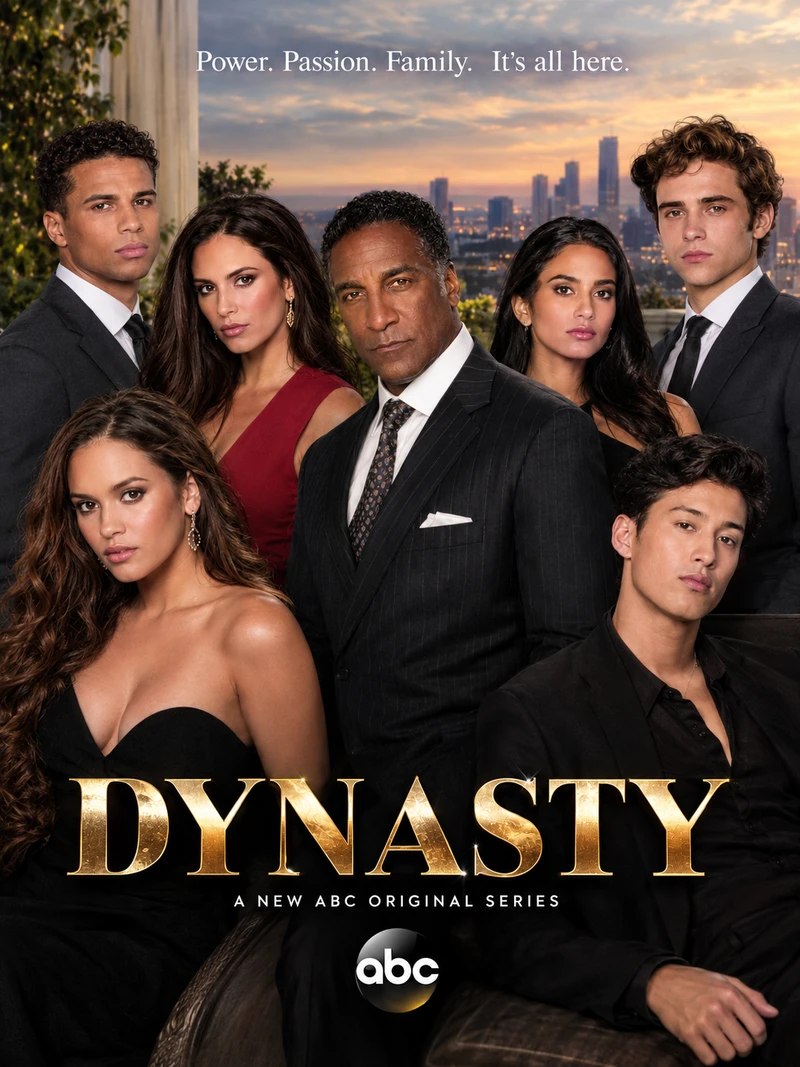
Dynasty
The story of the Carrington in Atlanta between love passion betrayal oil and money.
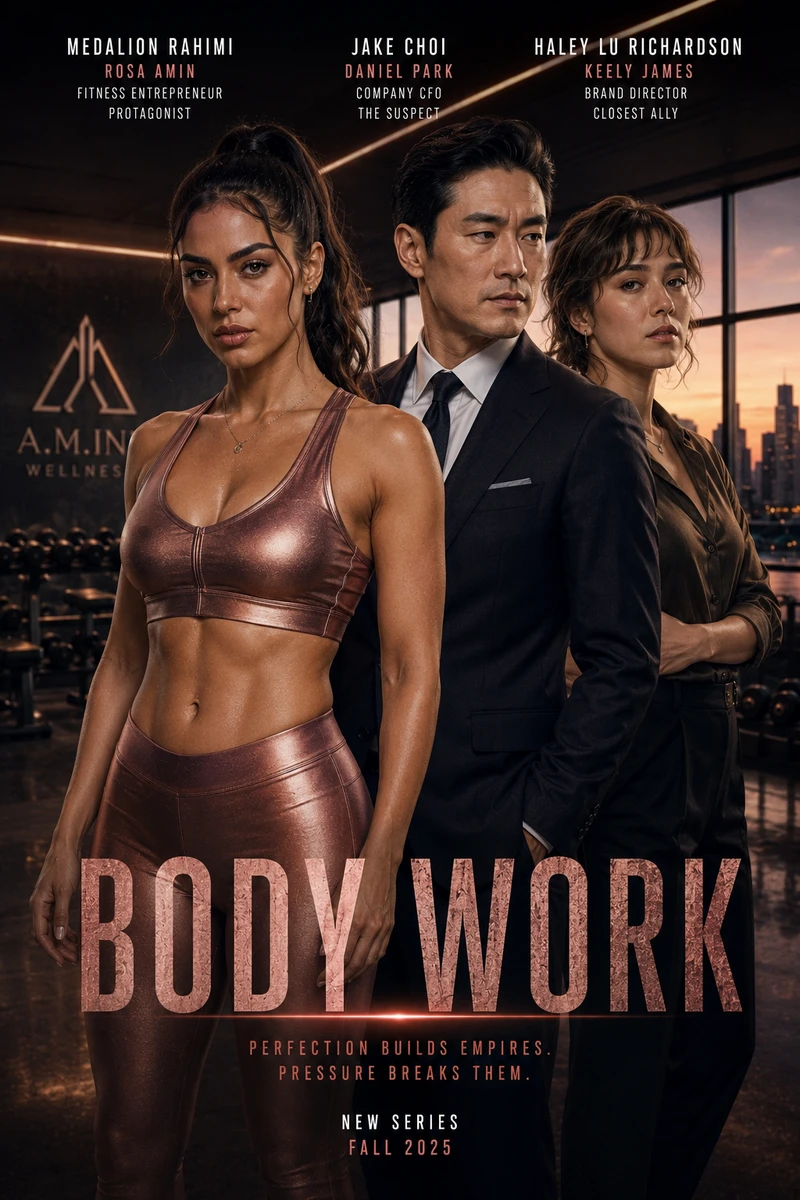
Body Work
She built a fitness empire on her body, her brand, and her honesty. When someone inside her company started leaking her medical records, she realized her most intimate data was also her most dangerous vulnerability. Rosa Amin, 34, is the founder of BODYWORK — a fitness and wellness brand that began as a YouTube channel eight years ago and has grown into a company worth four hundred million dollars, encompassing an app, a clothing line, three physical studios, and a supplement range. She built it on a specific promise: radical transparency about her own fitness journey, including her body dysmorphia diagnosis, her steroid use and recovery, and the specific compromises she made in her twenties pursuing extreme fitness aesthetics. Her audience's trust is built on that honesty. When someone begins leaking her private medical records — information beyond what she has voluntarily shared — Rosa must find the source while managing her company's public reputation, her investors' alarm, and the specific vulnerability of having built an empire on her own body's story. Three seasons track the leak investigation, the discovery that someone inside her inner circle is the source, and the reckoning about what she owes her audience versus what she owes herself. S1E1 — The Brand BODYWORK at full operation. Rosa's morning — content creation, training, management meeting — all in the rose gold set. The first leaked record appearing online at midnight. S2E6 — The Source The leak source narrowed to three people. Rosa's decision about how to proceed — legally, publicly, personally. S3E10 — The Statement Series finale: Rosa's public statement about everything that happened. The rose gold set, the same studio she has been filming from for eight years, the camera she has always faced. What she says and what she keeps.
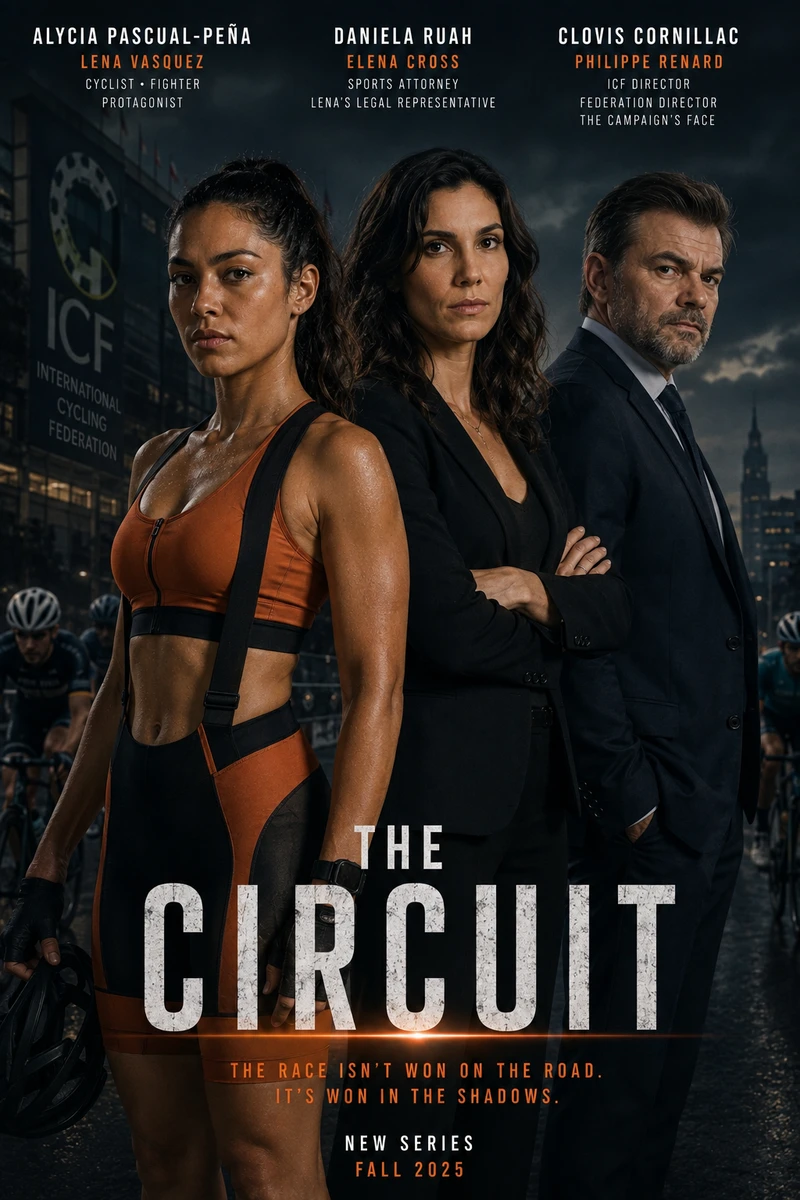
The Circuit
She is the fastest amateur cyclist in America. When she started winning races on the professional circuit that the sport's governing body said she shouldn't be entering, someone started trying to make her stop. Lena Vasquez, 27, is a self-trained amateur cyclist who began competing in professional open-category road races two years ago and has been winning them at a rate that the professional cycling world finds both extraordinary and inconvenient. She has no team, no sponsor, no governing body registration — she simply shows up in the burnt-orange kit and finishes first. When the International Cycling Federation begins a formal investigation into her participation eligibility, Lena quickly discovers that the investigation is not procedural but targeted — someone with significant power inside the professional cycling world wants her specifically removed from the sport before she can compete in its most significant events. Three seasons track her legal fight, her continued racing, and her investigation into who is behind the campaign to exclude her and what they are protecting. S1E1 — The Finish Line Lena winning her fourteenth open-category race. The ICF letter arriving the following morning. Her face reading it, still in the burnt-orange kit. S2E5 — The Files Lena and Elena discovering the specific mechanism of who is directing the investigation. The sponsor network behind the ICF's campaign. S3E8 — The Race Series finale: The open-category race that the ICF has been trying to prevent Lena from entering. The legal status cleared at midnight. The race at dawn. The burnt-orange kit crossing the line.
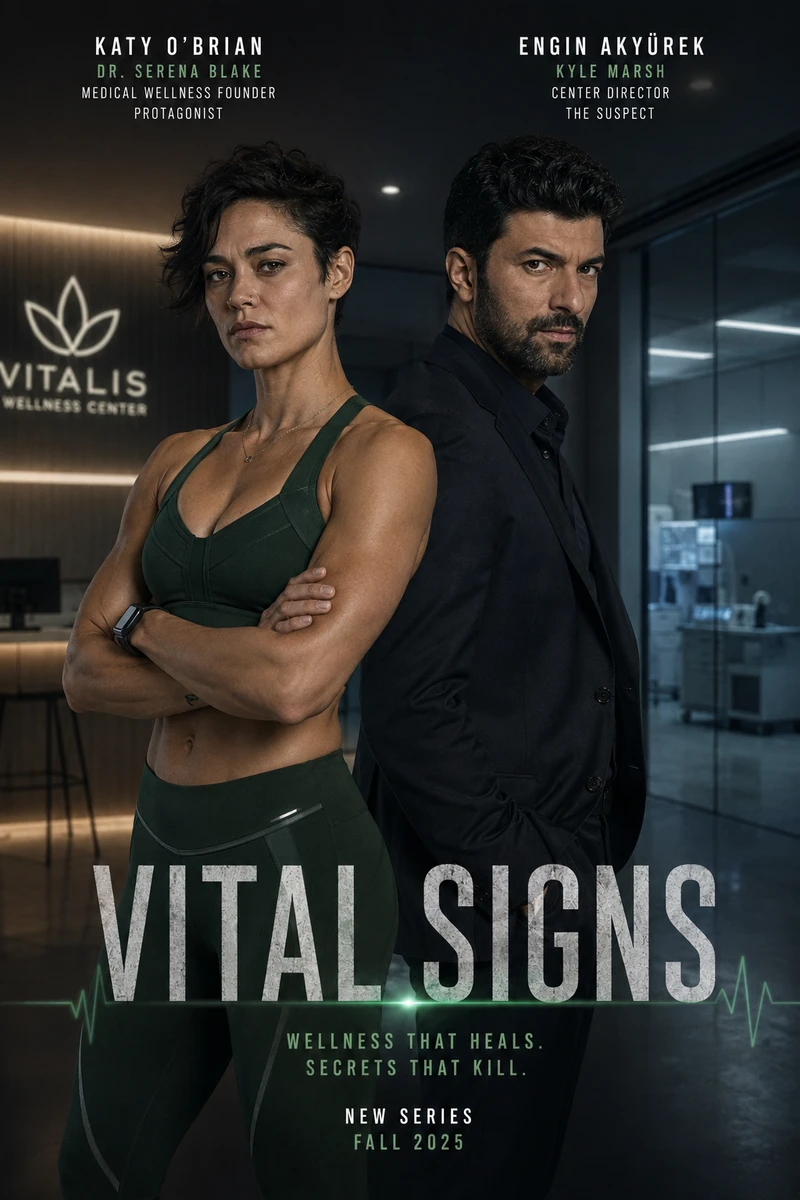
Vital Signs
She built the country's most prestigious medical wellness center. The supplements her clients take are proprietary. The results are extraordinary. Three clients have died — healthier than they have ever been. Dr. Serena Blake, 37, is the founder and chief medical officer of VITAL — a medically supervised wellness center in Scottsdale, Arizona, that sits at the intersection of preventive medicine, elite fitness, and longevity science. Her clients are among the wealthiest people in America, paying six figures annually for an evidence-based wellness protocol that has produced extraordinary results. Three of them died in fourteen months — of causes that the autopsies describe as cardiac events but that Serena's own medical knowledge tells her are inconsistent with the health metrics she was seeing. When she begins her own investigation — from inside the institution she built — she discovers that someone has been modifying the proprietary supplements without her knowledge. Two seasons track Serena investigating her own center while maintaining the practice, protecting her remaining clients, and trying to understand who has access to her protocols. S1E1 — The Protocol VITAL in full operation. The third client death reported. Serena's first examination of the data. The specific anomaly in the supplement records. S2E6 — The Convergence Serena and Detective Fuentes comparing their separate investigations. Everything both of them have found, laid on the same table. S2E10 — The Antidote Series finale: The modification source identified. The remaining clients protected. Serena's last session at VITAL in the forest green set — her decision about whether it continues.

Iron & Salt
She is an undefeated MMA fighter. Her gym is funded by a man whose money she has started to have questions about. Her questions have answers. The answers are dangerous. Deja Okafor, 29, is undefeated in mixed martial arts — twelve wins, no losses, a fighting style that combines Muay Thai, Brazilian jiu-jitsu, and a specific capacity for controlled aggression that her coaches call 'the Okafor problem' (she is too good at finding her opponent's structural weakness before they know it exists). Her gym, IRON & SALT, was built with financing from Elias Krane — a sports investment figure whose money came from somewhere she stopped asking about at nineteen. At twenty-nine, she has started asking again. Three seasons follow Deja's investigation of Krane's network from inside the gym that his money built — training for a world title fight while simultaneously dismantling the financial architecture that made her career possible. S1E1 — The Record Deja training. The twelfth win. The party in the gym afterward. Krane's toast. Deja's eyes during it. S2E7 — The Wire Deja begins cooperating with Agent Hassan — inside the gym, inside Krane's events, wearing a wire under the slate-blue compression set. Every training session now both workout and operation. S3E10 — The Fight Series finale: The world title fight and the Krane case reaching their simultaneous conclusions. Deja in the octagon. The FBI outside the arena. The result of both on the same night.
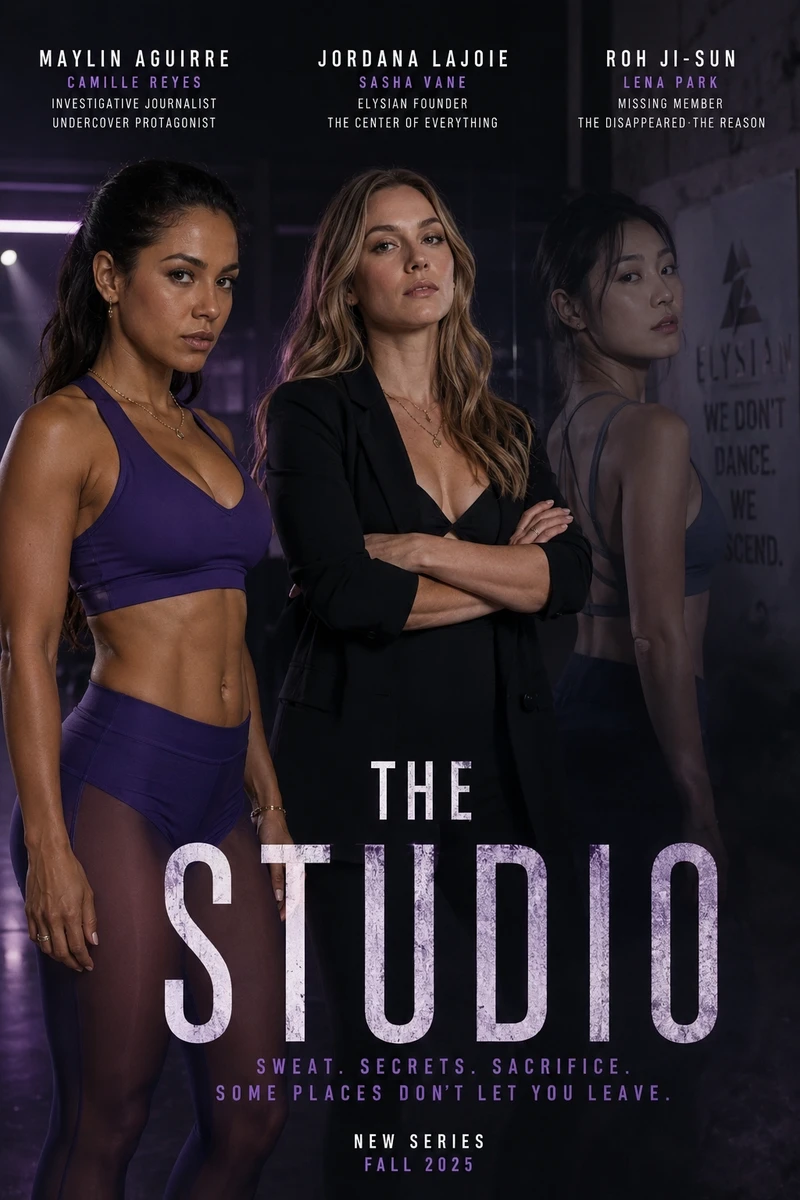
The Studio
She is the most followed fitness instructor in the world. Twenty million people do her workouts every morning. The ones who attend in person never quite leave. The Studio follows investigative journalist Camille Reyes, 30, who goes undercover at ELYSIAN — a luxury fitness studio in Los Angeles that began as a boutique spin and dance class and has become, over seven years, something the twelve thousand people who attend it in person are unable to easily describe or leave. Camille's investigation begins as a lifestyle piece about the wellness industry and becomes something much more serious when a former ELYSIAN member disappears and the studio's founder, Sasha Vane, seems unconcerned. Three seasons track Camille going deeper inside ELYSIAN — achieving the inner circle of membership, understanding the specific mechanics of how the studio creates psychological dependency, and trying to get out with both her story and herself intact. S1E1 — The Intake Camille's first class at ELYSIAN. The specific physical and psychological experience of a session. The instructor's eyes finding her across a room of forty. S2E6 — The Inner Circle Camille achieving ELYSIAN's inner membership tier. What she finds there and what it costs to find it. S3E10 — The Exit Series finale: Camille getting out. What she takes with her — the story, and the specific changes three years inside a cult-adjacent fitness studio make to a person who went in to observe.

Apex
She is the world's most elite personal trainer. Her clients include two senators, a Supreme Court justice, and the man who is trying to kill her. She trains them all the same way: until they cannot hide anything. Mara Cole, 33, runs APEX — a private, invitation-only training facility in Washington DC whose clients include the city's most powerful people. She is the most sought-after personal trainer in America: her methods are brutal, effective, and grounded in the specific science of what physical stress does to psychological defenses. Her clients tell her things they would not tell their therapists, their spouses, or their confessors — because at the end of a Mara Cole training session, there is no energy left to perform. Three of her clients are dead in eighteen months. The deaths look like accidents. The police see no pattern. Mara sees the pattern — and realizes she is the connection between every victim. Four seasons follow Mara's investigation, conducted entirely from inside her training sessions, as she uses the specific tool she has — the forced vulnerability of extreme physical exertion — to find who is killing her clients and why she is still alive. S1E1 — The Session APEX in operation. Mara training four clients in sequence. The first death reported — ruled accidental. Mara looking at the file. S2E5 — The Pattern Mara presents her pattern theory to Shaw with the client files spread across her office floor. His face when he realizes she is right. S3E8 — The Reveal The Architect's identity. Every earlier scene with them recontextualized. Mara's face when she understands who she has been training. S4E10 — The Last Session Series finale: Mara and the Architect in APEX's main training floor. No weapons. No allies. Just two people who know exactly what the other is capable of.
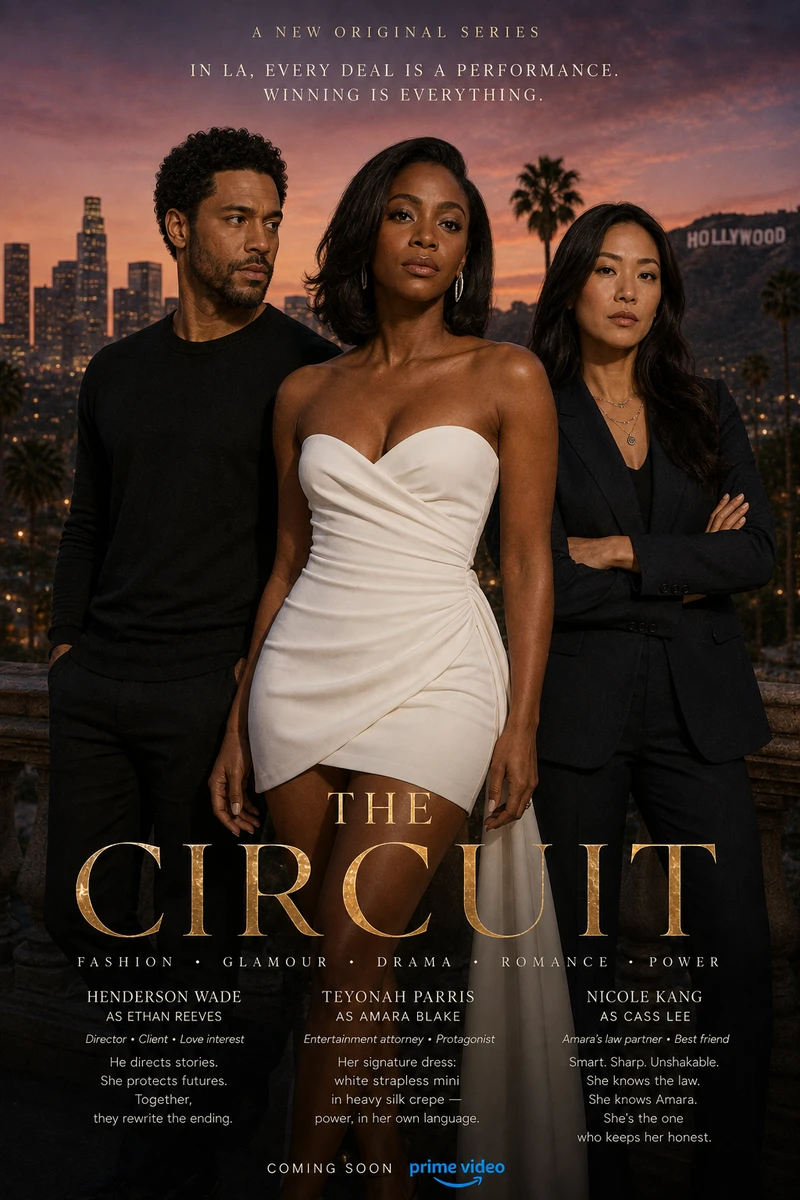
The Circuit
She is Hollywood's most powerful entertainment attorney. Her clients are the most famous people in the world. Her personal life exists in whatever space the job leaves — which is never enough and always exactly what she chose. Hollywood's entertainment law world — the specific universe of contract negotiations, talent deals, studio politics, and the specific power of the people who structure the industry's financial architecture — is the world of The Circuit. Amara Blake, 38, is the founding partner of Blake Associates, a boutique entertainment law firm that represents some of Hollywood's most significant talent. She negotiates contracts that restructure studio deals, advises clients through career crises, and moves through the industry's most powerful spaces with the specific authority of someone who understands what everyone else is worth. Three seasons track Amara across her firm's expansion, a major studio merger that requires her to choose between two client loyalties, and the specific challenge of building a personal life in the margins of a career that leaves none. The romance with director Ethan Reeves — a client she should not be dating and cannot stop thinking about — is the series' most ethically complex personal thread. S1E1 — The Negotiation Amara at the negotiating table. Her client. The studio. The specific language of a deal being made. The white mini, the first morning of award season. S2E6 — The Conflict The studio merger. The two client loyalties. Amara at her desk at midnight in the white mini from the evening's ceremony. S3E10 — The Firm Series finale: Blake Associates' ten-year anniversary. Amara's speech. The white mini — new fabrication, same silhouette, completely deliberate. Ethan in the back of the room.

La Dolce Vita
She designed her first collection at twenty-two in a Milan apartment with one sewing machine. At thirty, she has her own house on Via Montenapoleone. The dress she is wearing to the front row tonight will be copied by forty brands by Monday. Milan Fashion Week — the most concentrated glamour event in the European fashion calendar — is the recurring setting of La Dolce Vita, a three-season series following independent Italian fashion designer Valentina Russo, 30, across three consecutive Fashion Weeks and the twelve months between each. Valentina's house is independent, Milan-based, critically acclaimed, and perpetually financially precarious — she operates on the specific edge between artistic integrity and commercial viability that defines the most interesting fashion in the world. Three seasons track three collections: Season 1 (the breakthrough), Season 2 (the crisis), Season 3 (the reinvention). The romance with architect-turned-set-designer Alessandro Ferretti, who designs the set for her Season 1 show, develops across all three seasons with the specific pace of two people whose creative collaboration precedes and shapes their personal connection. S1E1 — The Collection Six weeks before Fashion Week. The atelier. Valentina in the emerald mini reviewing the samples. Alessandro arriving to discuss the set. S2E4 — The Crisis The second collection's central challenge. A fabric delivery fails. A sample breaks. Valentina in the atelier at 3 AM in the emerald mini — the only thing she put on that morning that still fits. S3E8 — The Show Series finale: Valentina's third show. Alessandro's set. The clothes in the space they were designed for. The party after. The emerald mini.
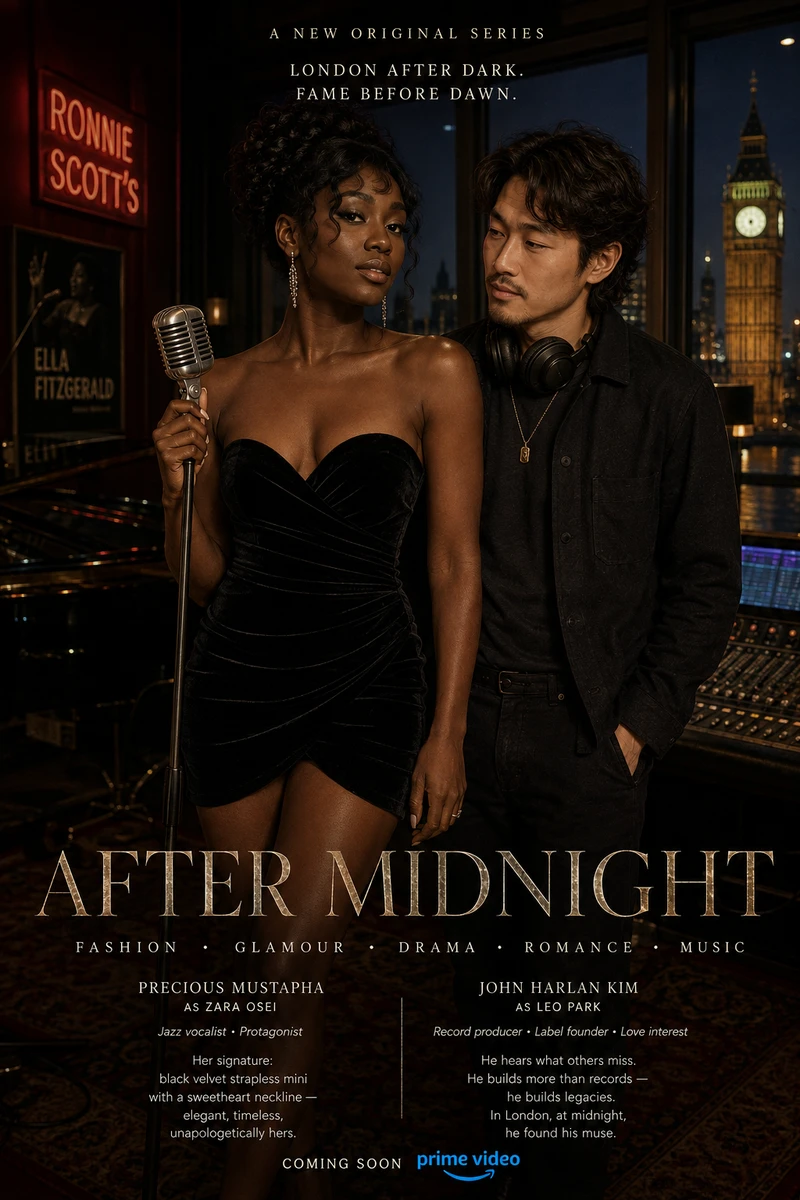
After Midnight
She was London's most talked-about jazz vocalist for three years without releasing a single. When her debut album finally dropped, nobody was prepared for what it actually was. London's contemporary jazz and neo-soul scene is the world of After Midnight — the specific universe of late-night venues, recording studios in Peckham, and the specific British cultural moment where jazz, grime, and electronic music are in extraordinary conversation. Zara Osei, 29, has been performing in London's jazz clubs since she was nineteen and has refused every record deal offered to her for a decade because none of them understood what she was making. When she finally signs with an independent label run by someone who does understand — producer and label founder Leo Park — the creative partnership that produces the album also produces something more personal. Two seasons track the album's creation, its release and reception, and the specific complexity of a creative and romantic partnership between two people who are simultaneously each other's best work. S1E1 — The Session Zara and Leo's first recording session. The first track. The moment they both understand what this album is going to be. S1E8 — The Release The album released at midnight. Zara in the black velvet mini listening to the first reviews come in. S2E10 — The After Series finale: The second album beginning. Zara and Leo's relationship finding its form. The black velvet mini, hung on a door in a new recording studio.