4,823 stories
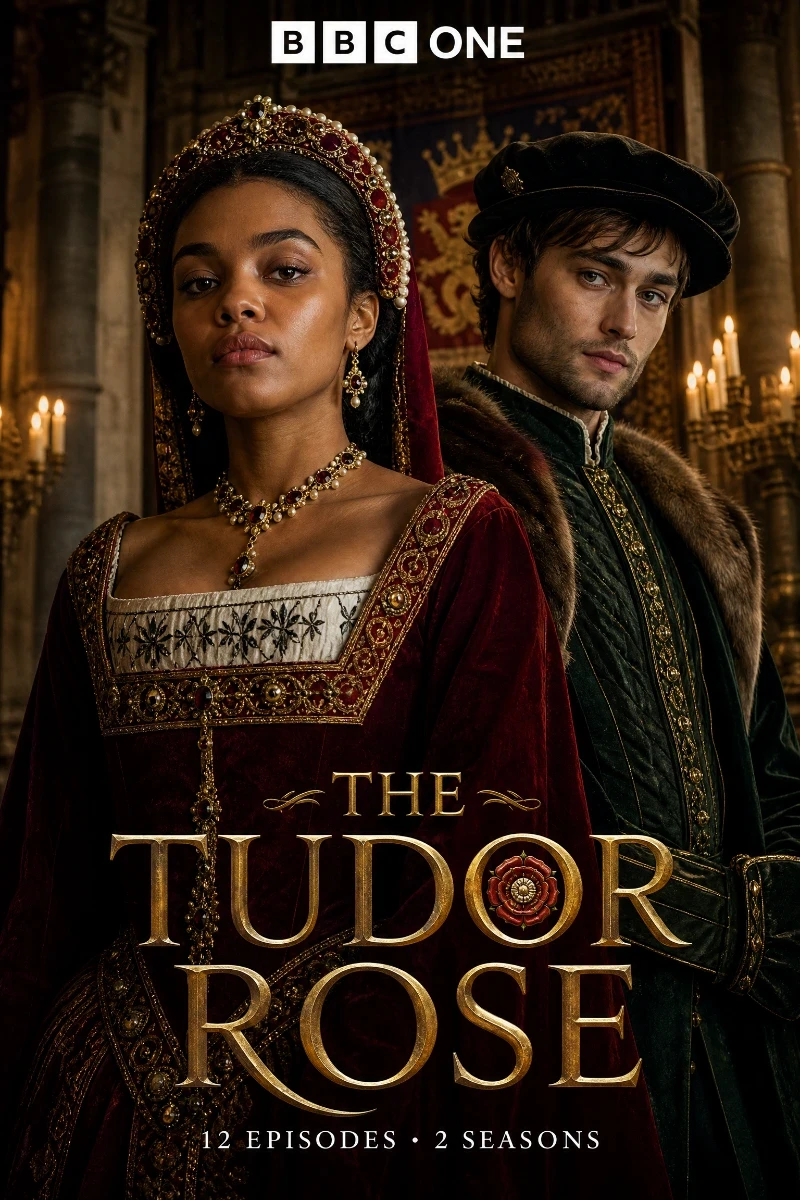
The Tudor Rose
She was raised in the court of Henry VII. She survived Henry VIII. That alone was extraordinary. Set across the tumultuous transition from Henry VII's reign to the early years of Henry VIII — roughly 1509–1521 — The Tudor Rose follows Eleanor Beaufort, 22, a Black woman raised as a royal ward in the Tudor court, bearing the name of one of the great houses of the Wars of the Roses in recognition of her standing. She has been raised with the full formation of a Tudor royal woman: she speaks Latin, French, and Spanish, plays the virginal, embroiders with unusual skill, and has been shaped by the court of the first unified English monarchy. Henry VII chose her personally as a ward, an act both political (demonstrating the crown's reach across its empire) and genuinely paternal. She is wholly English, wholly Tudor in every dimension of her identity. When Henry VIII ascends the throne — magnificent, dangerous, brilliant — Eleanor must navigate the new king's court while managing an arranged marriage to Sir Thomas Wyndham, a capable but initially unremarkable courtier who grows into something far more significant under the pressure of loving a woman of extraordinary intelligence in a court that finds her presence both fascinating and unsettling. S1E1 — The New King Henry VIII's accession. The court transforming overnight. Eleanor assessing the new order with the precision of someone who has survived the previous one. S1E7 — Thomas's Question Sir Thomas Wyndham asks Eleanor a direct question about what she actually thinks about the court. Nobody has asked her before. Her answer changes both their lives. S2E12 — The Tudor Rose Series finale: The Field of the Cloth of Gold's aftermath. Eleanor's role in its diplomatic preparation — unofficial, unacknowledged. Thomas standing in her study watching her work.
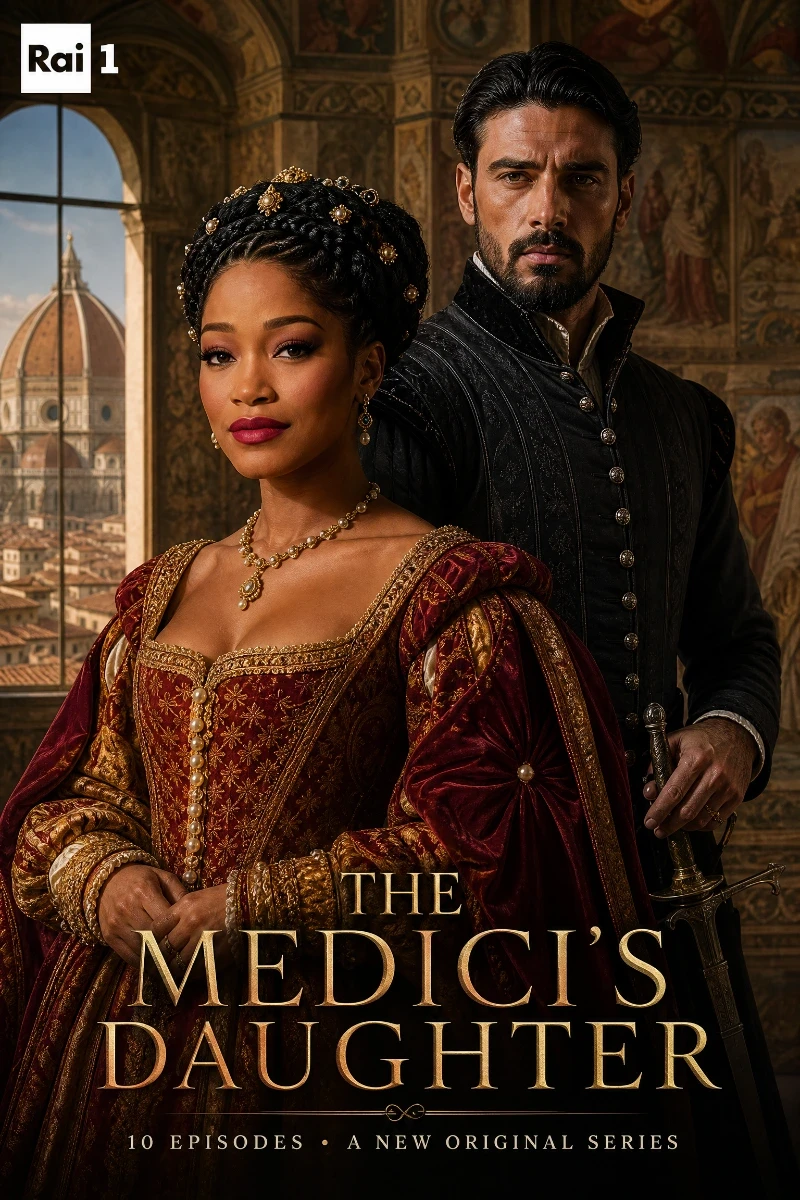
The Medici's Daughter
She was raised in the most powerful family in Florence. The city made her extraordinary and then refused to know what to do with her. Set in Laurentian Florence at the apex of the Italian Renaissance, The Medici's Daughter follows Caterina de' Medici — not the historical queen of France, a fictional member of the extended Medici family — 25, a Black woman raised in the Medici household as a ward and recognized member of the family's extended patronage network. She has been raised with the full intellectual formation of a Medici education: Latin, Greek, Platonic philosophy, art, music, architecture. She is the Medici in every cultural dimension. Her arranged marriage to Giovanni Trotti, a diplomat of the Sforza court in Milan, creates the series' central engine: a woman shaped by the most extraordinary cultural court in Europe navigating the politics of another powerful Italian dynasty. Two seasons follow her marriage, her intellectual life in both Florence and Milan, and her eventual role as a significant behind-the-scenes patron of the arts in her own right. S1E1 — Il Giardino dei Medici Caterina in the Medici gardens. The Platonic Academy in session. Her marriage arrangement announced by Lorenzo with genuine apology in his eyes. S1E6 — Milano Caterina in the Sforza court. Her first salon — speaking Latin, Greek, and Tuscan Italian in the same evening. Milan realizing what Florence sent them. S2E10 — Il Mecenatismo (The Patronage) Series finale: Caterina commissioning her own artistic works — under Giovanni's name, at first, and then openly under her own. The final scene is her name, in her hand, at the bottom of a contract.

La Estrella de Al-Andalus
He was raised in the Umayyad Caliphate's most magnificent court. His arrangement in marriage to a Castilian noblewoman will require him to cross every border he knows. Set in Córdoba at the height of the Umayyad Caliphate of Al-Andalus (~970 AD) — arguably the most culturally advanced civilization in Western Europe at the time, a city of libraries, physicians, poets, and architectural wonders — La Estrella de Al-Andalus follows Mansur ibn Tariq, 27, a Black man raised in the court of Caliph Al-Hakam II as a royal ward and eventual court diplomat. His full name reflects his complete identity within Andalusian Islamic culture: he speaks Arabic and the Romance vernacular, participates in the extraordinary intellectual life of the Córdoba court, and is one of the Caliph's most trusted diplomatic voices for relations with the Christian kingdoms of the north. When a treaty with the Kingdom of León requires a diplomatic marriage, Mansur is sent north with a proposal — and finds himself arranging not another man's marriage but his own, to Inés de León, a Leonese princess who has been educated in the unusual tradition of her learned grandmother and approaches the cross-cultural marriage with curiosity rather than dread. Two seasons track their marriage across the cultural boundary between Al-Andalus and Christian Iberia. S1E1 — La Biblioteca (The Library) Córdoba in its full magnificence. Mansur in the Caliphal library. The diplomatic mission north announced. S1E6 — El Primer Invierno (The First Winter) Mansur in León. His first winter in the Christian north. Inés showing him her Arabic manuscripts. Their first genuine conversation. S2E12 — Dos Mundos (Two Worlds) Series finale: The treaty secured. Both cultural worlds transformed by the marriage between them. Mansur and Inés in Córdoba together — she in the library.

Porphyra
She was born in the purple of the Roman imperial household. The empire will never know what to do with her. Set in the early Principate under Emperor Claudius (~45 AD), Porphyra follows Aurelia Claudiana, 24, a Black woman raised within the imperial household itself — brought to Rome as an infant from the province of Mauretania when Emperor Claudius expanded his personal retinue of educated provincials and chose specific children to be raised as part of the imperial family's extended household. Aurelia has been given the full education and standing of an imperial ward: she speaks Latin and Greek, has been tutored by the finest minds of Rome, participates in the intellectual life of the Palatine Hill, and bears the name Claudiana in recognition of her standing. She is arranged to marry Marcus Aemilius Scaurus, a senator of old Republican family who initially approaches the marriage with the patrician's belief that he is managing something unusual and discovers instead a woman whose mind reshapes every conversation she enters. Two seasons track the marriage, the political turbulence of Claudius's reign, the constant threat of Messalina and then Agrippina's court politics, and Aurelia's emergence as one of Rome's most significant female political minds — all without ever holding an official position. S1E1 — The Palatine Aurelia's world on the Palatine Hill. The marriage arrangement. Her first meeting with Marcus, who immediately underestimates her, and the look on his face when she corrects his Greek. S1E7 — Messalina's Game Messalina's political intrigues force Aurelia into a choice between imperial loyalty and her husband's safety. S2E10 — The Principate's Promise Series finale: Claudius's reign in its final phase. Aurelia's political legacy — unofficial, unacknowledged, and permanent. Marcus's public acknowledgment of who she is.

Gossip Girl (2026-2031)
The series focuses on a group of privileged teenagers who attend a prestigious high school on the Upper East Side of Manhattan in New York City. Their private lives are constantly commented upon by an unknown blogger under the pseudonym "Gossip Girl". Gossip Girl chronicles the scandals and intimate details of the characters' lives during high school, college and in the years that follow. All of their ups and downs are available for the public to read about. Throughout this time, the characters strive to unveil Gossip Girl's true identity while covertly engaging in disastrous schemes.

Troy (2027)
In 1184 BC, King Agamemnon unites the Greek kingdoms. Achilles, a mighty warrior, fights for Agamemnon but is sickened by his vicious leadership. Meanwhile, Prince Hector of Troy and his brother Paris forge a peace treaty with Menelaus, King of Sparta. Paris begins an affair with Menelaus's wife, Queen Helen, and he smuggles her aboard his homebound vessel. Angered, Menelaus meets Agamemnon, his elder brother, and asks him to help take Troy. Agamemnon agrees, as conquering Troy would give him control of the Aegean Sea. Agamemnon sends Odysseus, King of Ithaca, to persuade Achilles to join them. Conflicted, Achilles seeks guidance from his mother, Thetis, who tells him that if he remains in Larissa, he will live a peaceful life, while going to Troy will bring him eternal glory. Inspired by her words and the promise of lasting fame, Achilles chooses to join the war.

Friends (2026-2036)
Reboot of Friends

The Vienna Waltz
Set in Vienna during the Congress of Vienna (1814-1815) — the extraordinary gathering of European powers that redraws the continent's map following Napoleon's defeat — The Vienna Waltz follows two protagonists whose stories converge at the Congress's center. Isabella von Hartmann, 26, is a Black woman raised by the wealthy Viennese von Hartmann family (aristocratic bankers who financed both sides of the Napoleonic wars and now profit from the peace). She is entirely Austrian in language, culture, and sensibility — she speaks German and French, plays the piano at concert level, and manages her family's social calendar for the Congress with extraordinary skill. The von Hartmanns have positioned Isabella to marry diplomatically; she has other ideas. Her connection to Alexandre Dupont, a French diplomat and musician of mixed heritage from the Haitian aristocracy of Saint-Domingue, is the series' central romance — two people of color navigating the most powerful assembly of European aristocracy in a generation, finding each other in the musical salons and private dinners that surround the formal negotiations. Episode 1 — Der Kongress tanzt (The Congress Dances) Vienna in the full glitter of the Congress. Isabella managing the von Hartmann salon. Alexandre Dupont's arrival. Their first conversation, in French, over a Haydn sonata. Episode 5 — Das Konzert (The Concert) Isabella and Alexandre performing together in private — she on piano, he on violin. The Congress's diplomats in the audience do not understand what they are watching. The other musicians do. Episode 10 — Der Walzer (The Waltz) Series finale: The Congress concludes. Europe is divided. Isabella and Alexandre face a choice about whether their personal map can exist independently of the one being drawn around them. The final scene is a waltz — private, after the guests have gone, in the empty salon.

The Florentine
Set in Laurentian Florence at the height of the Italian Renaissance under Lorenzo de' Medici — the Magnificent — The Florentine follows Leonora di Bartolomeo, 26, a Black woman raised by the Bartolomeo family, one of the Medici's most trusted banking and scholarly households. Leonora is entirely Florentine in language, culture, and sensibility — she speaks the Tuscan dialect that is crystallizing into literary Italian, reads Latin and Greek, participates in the Platonic Academy that Lorenzo has assembled, and is one of the finest painters of her generation. She paints under the name of her male cousin Giacomo, with his knowing cooperation — the art world of Renaissance Florence has no framework for a woman of her ability, particularly a Black woman, and the arrangement is both painful necessity and practical solution. When Lorenzo commissions what will become one of the most important painting cycles of the era, Leonora's work will be at its center, anonymously. Her marriage to Matteo Ricci, a Medici scholar and diplomat, brings into her orbit a man who suspects the truth about who is really painting the Giacomo works — and who, when he understands completely, makes a choice that is the series' central moral question. S1E1 — Il Nome di Giacomo (The Name of Giacomo) Leonora painting in the workshop. The public fiction of Giacomo's work. Lorenzo's commission arrives. The marriage to Matteo is announced. S1E7 — Il Segreto (The Secret) Matteo confronts Leonora with what he knows. Her response — neither denial nor apology — is the series' pivot. S2E12 — Il Capolavoro (The Masterpiece) Series finale: The commission completed. The question of signature — whose name goes on the work. The decision made and its consequences.

The Canterbury Rose
Set in 12th-century England during the turbulent reign of Henry II — the Plantagenet king whose conflict with Thomas Becket is reshaping the relationship between crown and church — The Canterbury Rose follows Edmund de Vere, 27, a Black man raised by the powerful Norman family of Vere, one of the most influential noble houses of the Anglo-Norman aristocracy. Edmund is entirely of the Anglo-Norman world: he speaks Norman French and English, has been educated in the ecclesiastical tradition, and has chosen a career in the emerging royal legal system rather than the sword-path his family expected. When Henry II begins his great legal reforms — the Assize of Clarendon — Edmund is among the young lawyers and scholars implementing the new royal justice in circuit courts. He is also betrothed to Mathilde de Clare, a noblewoman of the powerful Clare family, in a marriage that is political, mutually respectful, and gradually becomes the series' central love story as two people who chose their own paths discover that the paths converge. Episode 1 — The Circuit Edmund on the royal justice circuit in the English countryside, administering the new Assize of Clarendon. The marriage arrangement arrives by messenger. He reads it on horseback. Episode 5 — The Library at Clare Edmund and Mathilde reading the same legal text together without having planned to. The scene in which they realize they are the same kind of mind. Episode 10 — The Canterbury Road Series finale: The Becket crisis comes to a head. Edmund and Mathilde make a legal and moral choice that costs them their proximity to royal favor and earns something more valuable.

The Northern Fire
Set in 9th-century Scandinavia at the height of the Viking Age, The Northern Fire follows Astrid, 25, a Black woman raised from infancy by Jarl Gunnar of the powerful Norse clan of Vestfold. She is entirely Norse in every dimension: she speaks Old Norse, participates in the Norse religious tradition, is a trained völva (seeress) of exceptional power, and is considered a full and honored member of the Jarl's household. Her völva gifts — the ability to read the runes, enter trance-sight, and interpret fate — make her one of the most respected and most feared women in the North. When the Jarl arranges her marriage to Einar, a Norwegian chieftain from the north whose lands need Gunnar's military alliance, Astrid approaches the marriage as she approaches every challenge: with the specific precision of someone who has always had to earn trust that others receive as birthright. Einar, a man formed by the northern cold and by tremendous personal loss, finds in Astrid the first person since his wife's death who makes the runes worth reading. S1E1 — Runir (The Runes) Astrid reading the runes for the Jarl's hall. The arrangement with Einar is announced. Her first rune-reading for herself in years shows her something she does not share. S1E7 — Einar's Question Einar asks Astrid to contact his dead wife through völva-sight. She does. What his wife communicates is not what he expected and not what Astrid expected either. S2E12 — Norðstjarna (The North Star) Series finale: After two seasons of war, loss, and the particular patience of two people learning each other's language of love, Astrid and Einar's final scene is entirely private, entirely quiet, and the series' most powerful moment.

The Companion
Set during Alexander the Great's eastern campaigns (~330 BC), The Companion follows Marcus, 28, a Black man raised by a Macedonian military family — the Agrianes clan who served Philip II and continued with Alexander — as a Companion cavalry officer. Marcus is entirely Macedonian in language, culture, and identity, bearing a Greek name in the Macedonian tradition, speaking Macedonian Greek, trained in the cavalry tactics of Alexander's elite force. He is one of a diverse multinational force that Alexander's campaigns assembled. During the conquest of Persia, Marcus encounters Daria, a Persian noblewoman from the ancient city of Persepolis — a woman whose world is being absorbed by the very army Marcus serves. Their relationship is one of the most politically fraught possible kinds: love between conqueror and conquered, honest on both sides in ways that the historical moment makes almost impossible. The series is a meditation on war, love, and what loyalty means when the empire you serve is also the catastrophe of someone you love. Episode 1 — Persepolis The army enters Persepolis. Marcus encounters Daria in the library — she is removing scrolls before the soldiers reach them. He helps her. Neither knows what this means yet. Episode 5 — The Language Marcus learning Persian. Daria teaching him. The intimacy of language instruction in the middle of a war. Episode 10 — The Covenant Series finale: Marcus choosing, at personal cost to his military standing, to protect Daria's family. What he gives up and what he gains are equal and opposite.

The Athenian
Set in Classical Athens at the height of Periclean democracy (~440 BC), The Athenian follows Zoe, 24, a Black woman raised by Sophokles the philosopher — not the playwright, a fictional Athenian thinker of his circle — as his intellectual heir. She is wholly Athenian: she speaks the Attic dialect, participates in the philosophical dialogues of the Agora through her father's household, is educated beyond any woman the city officially acknowledges, and has been formed by the most rigorous intellectual culture in the ancient world. The specific paradox of her existence is the drama's engine: Athens is the birthplace of democracy for its male citizens and deeply restrictive of women's public roles. Zoe navigates this with the precision of someone who has read Solon's laws and disagrees with them. Her marriage to Nikias, a moderate democratic politician, creates a partnership that neither anticipated — he married for alliance, finds a co-thinker he cannot manage without. Episode 1 — The Agora's Edge Zoe listening at the edge of the philosophical dialogues she is not officially permitted to join. Everyone in the circle knows she is there. Everyone pretends not to. Episode 5 — Nikias's Problem Nikias realizes that his wife is better at politics than he is. His response to this — after the initial crisis of ego — is the series' turning point. Episode 10 — The Symposium Series finale: Zoe speaks in a mixed symposium for the first time — made possible through Nikias's political cover. What she says changes the conversation in the room.

The Iron Hills
Set in Iron Age Britain among the Celtic hill-fort cultures of ~300 BC, The Iron Hills follows Caelan, 26, a Black man raised by Chieftain Brennan of the Catuvellauni tribe — found as an infant during a raid and brought into the chieftain's family with full tribal acceptance. Caelan is entirely of the Celtic world: he speaks the Brittonic tongue, knows every battle oath, participates in the Druidic festivals, and is considered one of the finest warriors and most respected voices in the tribal council. When Brennan dies, Caelan does not inherit — tribal law gives the leadership to a blood nephew — but the real threat comes from a Roman scouting party probing Britain's southern defenses. Caelan must build a confederation of rival tribes against the Roman threat while navigating his complicated relationship with Saoirse, a chieftain's daughter from a rival tribe whose marriage to Caelan would seal the alliance but who approaches the arrangement with justified suspicion of his motives. Episode 1 — Brennan's Hill The chieftain's death. The hill-fort in mourning. Caelan understanding what must be built and that he must build it without the title. Episode 6 — Saoirse's Price The negotiation for the marriage alliance. Saoirse's conditions are not what Caelan expected. He agrees. Episode 10 — The Confederation Series finale: The tribes united, the Roman scouts turned back — for now. Caelan and Saoirse on the hill-fort wall at night. The series' last line is hers.

The Bronze Shore
She was brought to the palace as an infant. She grew into its most brilliant diplomat. Now the sea-raiders have come for everything she loves. Set on the island of Thera (present-day Santorini) during the apex of Minoan-influenced Aegean Bronze Age civilization, The Bronze Shore follows Kalantha, 22, a Black woman raised from infancy by the Arkhon of Thera — the island's wealthiest and most powerful trading family. She is entirely of the Aegean world: she speaks the palace language, venerates the Goddess, manages the Arkhon's trading records in the Linear A script, and has been raised as a daughter of the sea-palace. When Mycenaean raiders begin pressuring the island's trade routes, Kalantha is sent as her father's diplomatic emissary to the Mycenaean warleader Leontos — a soldier who speaks in force but listens to intelligence. The series is a political romance about two people negotiating between violence and civilization, set against one of the ancient world's most extraordinary cultural moments. Episode 1 — The Sea-Palace Kalantha managing the trading accounts as raiders' ships appear on the horizon. The series establishes its world fully before introducing the conflict. Episode 5 — The Negotiation Kalantha and Leontos in formal diplomatic session. Their intellectual sparring is the series' first romantic charge. Episode 8 — The Pact Series finale: A treaty that prevents war. Kalantha's authorship is known to both sides. What she and Leontos say in private after the pact is signed is the series' ending.

Hilal Altında
Set in the magnificent, politically turbulent court of Suleiman the Magnificent — arguably the apex of Ottoman civilization — Hilal Altında follows two protagonists across interwoven storylines that eventually converge. Kerem Dönmez, 30, a Black man raised by the Dönmez family (Ottoman court advisors for four generations), serves as one of Suleiman's most trusted diplomatic strategists — the man who drafts the letters that move empires. He is entirely Ottoman in every dimension: his scholarship, his poetry, his political philosophy, his identity. When Kerem is given in arranged marriage to Elif Aslan, the daughter of a Janissary commander, he encounters a woman of formidable intelligence and completely different experience — raised in the military household of the Ottoman elite, practical where he is philosophical, strategic where he is theoretical. Season one is their marriage finding its language. Season two is them operating together in the most complex political environment of their era: Suleiman's court, where the stakes of every interaction are civilizational. A second storyline follows Nil Dönmez, 23, Kerem's adoptive sister — also Black, also raised fully Turkish — whose own arranged marriage to a Venetian merchant navigating trade relations with the Ottomans creates a cross-cultural love story that the show handles with the complexity it deserves.

İpek ve Demir
Set in the glittering Ottoman Renaissance of the 15th century — the period immediately following Sultan Mehmed II's conquest of Constantinople and his extraordinary project to transform the city into the new Islamic center of civilization — İpek ve Demir follows Zehra Karaçay, 26, a Black woman raised by the Karaçay family, one of the oldest and most distinguished administrative families of the Ottoman court. Zehra is a woman of the Ottoman Renaissance at its most magnificent: she speaks Ottoman Turkish, Arabic, Persian, and Greek, is a poet and calligrapher of genuine accomplishment, and manages the Karaçay household's significant charitable endowments with intelligence and compassion. She is entirely, profoundly Ottoman in every facet of her identity — her full Turkish name reflecting her family's love for her. Her arranged marriage to Sinan Yıldırım, the court's most brilliant young architect commissioned by Sultan Mehmed to design mosques and public buildings for the new Constantinople, creates an extraordinary partnership: Zehra's scholarship and administrative brilliance with Sinan's architectural vision. Three seasons track their marriage from formal arrangement through intellectual partnership through genuine love, against the backdrop of one of the most culturally extraordinary moments in world history.

Altın Kılıç
Set at the turbulent founding period of the Ottoman state under Osman Gazi, when the small Anatolian principality is asserting itself against both the declining Seljuk Sultanate and Byzantine territories, Altın Kılıç follows Tarık Çelik, 27, a Black man raised by the Çelik family — one of the founding clans of the nascent Ottoman beylik — as a warrior, commander, and loyal member of Osman Bey's inner circle. Tarık is entirely Turkish, his identity forged in the same fires as every Çelik before him — the horse, the sword, the faith, the yurt, the brotherhood of the frontier. His name is Tarık, meaning one who knocks at the door, who arrives like a star — and he has spent his life arriving at the front of every battle he has fought. When Tarık is assigned to protect a diplomatic mission traveling through the Byzantine frontier, he meets Asena — a Turkish woman from a scholarly family in Bursa who is accompanying her father, a scholar and physician, on the mission. Asena is witty, educated beyond her era, and entirely unimpressed by military valor as a personality. Their marriage — arranged as part of a broader alliance between the Çelik warrior clan and the scholarly Esen family — is initially a collision of two people who have exactly the same strength and none of the same vocabulary. The series follows their marriage across its first years, including Tarık's campaigns, Asena's transformation from reluctant bride to the most important strategic advisor her husband has, and the larger political drama of a principality becoming an empire.

Gece Yıldızı
Set in the heart of the Seljuk Sultanate of Rûm in 12th-century Anatolia, Gece Yıldızı follows Yıldız Arslan, 24, a Black woman raised from infancy by the Arslan family — one of the Sultan's most trusted military houses — in the magnificent city of Konya. She is fully and completely Turkish in every dimension: her language, her faith, her values, her identity. She speaks Arabic and Persian in addition to Turkish, excels in the poetry of the court, and manages the Arslan estate with the authority of a woman who was raised to lead. Her adoptive father Emir Tuğrul Arslan is one of the most respected commanders in the Sultanate, and Yıldız has grown up in the full warmth of his family and their society. When the Sultan arranges for Yıldız to marry Kaan Doğan, the son of a rival military house with whom a strategic alliance is needed, Yıldız must navigate a marriage that begins as politics and becomes something far more complex — real, consuming, and requiring her to negotiate who she is within the most intimate of relationships. Simultaneously, a Byzantine military threat at the western border pulls Kaan to war, and Yıldız discovers she is more than a court wife — she is an administrator, a strategist, and eventually a diplomat who travels to the Byzantine court herself in a breathtaking season two arc.

Vermillion
She forged a masterpiece. The forgery was more honest than the original. The most formally ambitious of the five films, Vermillion is an art-world psychological drama about the nature of authenticity, authorship, and the specific dishonesty of the art market. Lola Vega, 27, is one of the most accomplished art forgers in the world — not for money, though the money is substantial, but because she is genuinely interested in the philosophical question of whether the copy is the work. Her specialty is a specific period: mid-20th century Mexican muralism, and her copies are so perfectly executed that three museums currently hold works they believe are originals that are hers. When a major retrospective of the painter whose work she has forged is organized — the first comprehensive scholarly examination of his catalog — Lola is contracted (under a false identity) as an authentication consultant. She is being asked to verify work that includes her own forgeries alongside genuine pieces, which she approaches with the specific pleasure of a chess problem. The film complicates when Lola encounters Rafael, the painter's elderly surviving son, who knows the catalog perfectly and who begins to suspect something that is both correct and not quite right. The film is about art and authenticity but more precisely about a woman who has hidden her genuine talent inside someone else's work for so long that she has stopped asking why.