El Salvador (/ɛl ˈsælvədɔːr/ (listen); Spanish: [el salβaˈðoɾ] (listen), meaning "The Saviour"), officially the Republic of El Salvador (Spanish: República de El Salvador), is a country in Central America. It is bordered on the northeast by Honduras, on the northwest by Guatemala, and on the south by the Pacific Ocean. El Salvador's capital and largest city is San Salvador. The country's population in 2021 is estimated to be 6.8 million.[15] Among the Mesoamerican nations that historically controlled the region are the Lenca[16] (after 600 AD),[17] the Mayans,[18] and then the Cuzcatlecs.[19] Archaeological monuments also suggest an early Olmec presence around the first millennium BC.[20] In the beginning of the 16th century, the Spanish Empire conquered the Central American territory, incorporating it into the Viceroyalty of New Spain ruled from Mexico City. However the Viceroyalty of Mexico had little to no influence in the daily affairs of the isthmus, which was colonized in 1524. In 1609, the area was declared the Captaincy General of Guatemala by the Spanish, which included the territory that would become El Salvador until its independence from Spain in 1821. It was forcibly incorporated into the First Mexican Empire, then seceded, joining the Federal Republic of Central America in 1823. When the federation dissolved in 1841, El Salvador became a sovereign state, then formed a short-lived union with Honduras and Nicaragua called the Greater Republic of Central America, which lasted from 1895 to 1898.[21][22][23] From the late 19th to the mid-20th century, El Salvador endured chronic political and economic instability characterized by coups, revolts, and a succession of authoritarian rulers. Persistent socioeconomic inequality and civil unrest culminated in the Salvadoran Civil War from 1979 to 1992, fought between the military-led government backed by the United States, and a coalition of left-wing guerrilla groups. The conflict ended with the Chapultepec Peace Accords. This negotiated settlement established a multiparty constitutional republic, which remains in place to this day. During the civil war, large numbers of Salvadorans emigrated to the United States. By 2008, they were one of the largest immigrant groups in the US.[24] El Salvador's economy has historically been dominated by agriculture, beginning with the Spanish taking control of the indigenous cacao crop in the 16th century, with production centered in Izalco, along with balsam from the ranges of La Libertad and Ahuachapan. This was followed by a boom in use of the indigo plant in the 19th century, mainly for its use as a dye.[25][26] Thereafter the focus shifted to coffee, which by the early 20th century accounted for 90% of export earnings.[27][28] El Salvador has since reduced its dependence on coffee and embarked on diversifying its economy by opening up trade and financial links and expanding the manufacturing sector.[29] The colón, the currency of El Salvador since 1892, was replaced by the United States dollar in 2001.[30] El Salvador ranks 124th among 189 countries in the Human Development Index.[31] Despite high rates of poverty and gang-related violent crime, as of 2019 economic improvements had led to El Salvador experiencing the lowest level of income inequality among countries in Latin America and the Caribbean.[32] Among 77 countries included in a 2021 study, El Salvador had one of the least complex economies for doing business.[33]
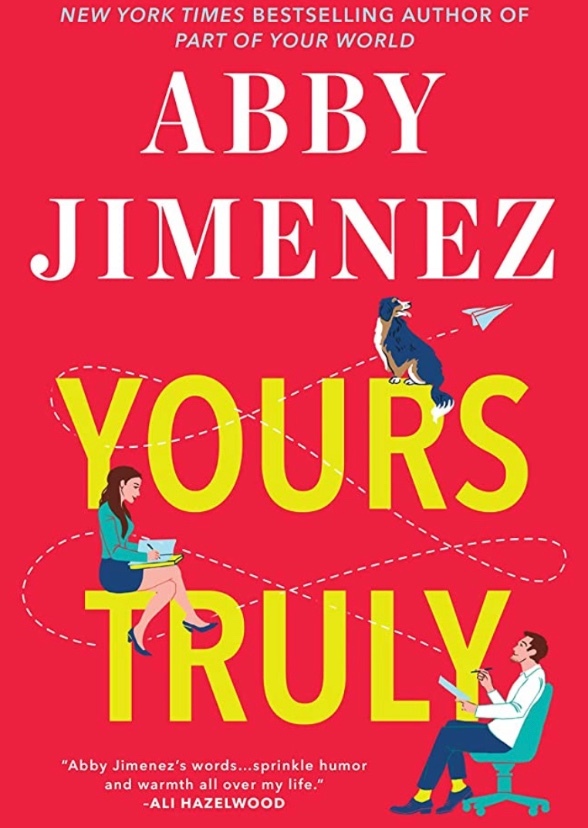
Dr. Briana Ortiz’s life is seriously flatlining. Her divorce is just about finalized, her brother’s running out of time to find a kidney donor, and that promotion she wants? Oh, that’s probably going to the new man-doctor who’s already registering eighty-friggin’-seven on Briana’s “pain in my ass” scale. But just when all systems are set to hate, Dr. Jacob Maddox completely flips the game . . . by sending Briana a letter. And it’s a really good letter. Like the kind that proves that Jacob isn’t actually Satan. Worse, he might be this fantastically funny and subversively likeable guy who’s terrible at first impressions. Because suddenly he and Bri are exchanging letters, sharing lunch dates in her “sob closet,” and discussing the merits of freakishly tiny horses. But when Jacob decides to give Briana the best gift imaginable—a kidney for her brother—she wonders just how she can resist this quietly sexy new doctor . . . especially when he calls in a favor she can’t refuse.