Age: 62
male
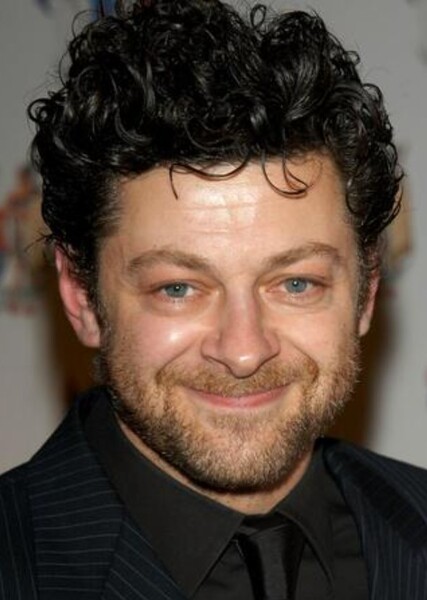
Andrew Clement Serkis (born 20 April 1964) is an English actor and filmmaker. He is best known for his motion capture roles comprising motion capture acting, animation and voice work for computer-generated characters such as Gollum in The Lord of the Rings film trilogy (2001–2003) and The Hobbit: An Unexpected Journey (2012), King Kong in the eponymous 2005 film, Caesar in the Planet of the Apes reboot series (2011–2017), Captain Haddock / Sir Francis Haddock in Steven Spielberg's The Adventures of Tintin (2011), Baloo in his self-directed film Mowgli: Legend of the Jungle (2018) and Supreme Leader Snoke in the Star Wars sequel trilogy films The Force Awakens (2015) and The Last Jedi (2017), also portraying Kino Loy in the Star Wars Disney+ series Andor (2022). Serkis's film work in motion capture has been critically acclaimed. He has received an Empire Award and two Saturn Awards for his motion-capture acting. He earned a BAFTA and a Golden Globe nomination for his portrayal of serial killer Ian Brady in the British television film Longford (2006). He was nominated for a BAFTA for his portrayal of new wave and punk rock musician Ian Dury in the biopic Sex & Drugs & Rock & Roll (2010). In 2020, Serkis received the BAFTA Award for Outstanding British Contribution to Cinema. In 2021, he won a Daytime Emmy Award for The Letter for the King (2020). Serkis portrayed Ulysses Klaue in the Marvel Cinematic Universe (MCU) films Avengers: Age of Ultron (2015) and Black Panther (2018), as well as the Disney+ series What If...? (2021). He also played Alfred Pennyworth in The Batman (2022). Serkis has his own production company and motion-capture workshop, The Imaginarium, in London, which he used for Mowgli: Legend of the Jungle. He made his directorial debut with Imaginarium's 2017 film Breathe and also directed Venom: Let There Be Carnage (2021). Description above from the Wikipedia article Andy Serkis, licensed under CC-BY-SA, full list of contributors on Wikipedia.
Andy Serkis

Mortimer Toynbee
for Mortimer Toynbee in X-Men: Re-imagined
Suggested by bencasting
My attempt to reorganise X-Men films into a more cohesive timeline. X-Men (2000): Growing fear of mutants. Focus on the X-men’s found-family dynamic across generations. Rogue given more character development. Clash with Magneto & the Brotherhood stopping his increasingly extreme plan. X-Men: Mankind (2003): Wolverine’s past emerges through flashbacks. The cruelty of William Stryker’s Weapon X program forces the X-Men and Magneto into a reluctant alliance, while Jean Grey’s powers are pushed to the limit saving the team. X-Men: Phoenix Rising (2007): Jean, believed dead, returns with the Phoenix Force, amplifying her anger at humans, Charles & Magneto. She causes destruction, struggles morally, and ultimately chooses to take control of the power, manifesting as the Phoenix in the sky and removing herself from the world. Sentinel program quietly advances. X-Men: First Class (2010): Nathaniel Essex as architect pulling strings from the shadows. More time with Erik hunting Nazis. More comic-accurate Emma Frost; Darwin survives; Havok swapped to fix continuity. X-Men: Days of Future Past (2013): Mostly the same but with enough focus and better lines for characters to give them time to shine. X-Men: Bloodlines (2023): Set against the fall of the iron curtain – Mr. Sinister is abducting unregistered mutants across Europe. Setting traps for the x-men, to divide and capture Scott & Jean to harness their DNA. Jean’s powers surge during a showdown beneath Berlin, destroying Sinister’s archives, forcing his retreat. X-Men: Apocalypse (2025): Jeans power surge & Sinister’s failure awakens Apocalypse. Seeing his “pawn” could not control the X-Men or Jean’s cosmic power, Apocalypse corrupts 4 Horsemen to reshape the modern world. Guided by future Charles via the astral plane, Jean learns to control her Phoenix energy. The team overcome Apocalypse, entombing him & preventing his conquest.


