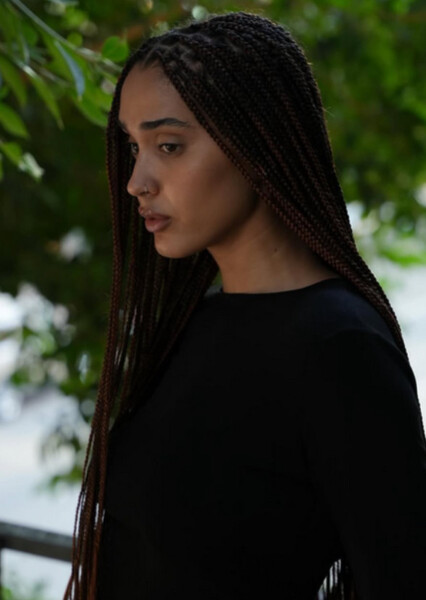
Age: 37
female
Zoë Isabella Kravitz (born December 1, 1988) is an American actress, singer, and model. The daughter of actor-musician Lenny Kravitz and actress Lisa Bonet, she made her acting debut in the romantic comedy film No Reservations (2007), and had her breakthrough portraying Angel Salvadore in the superhero film X-Men: First Class (2011), which earned her nominations for a Teen Choice Award and a Scream Award. She rose to prominence playing Christina in The Divergent Series (2014–2016) and Leta Lestrange in the Fantastic Beasts film series (2016–2018). Kravitz earned acclaim for her lead roles in the HBO drama series Big Little Lies (2017–2019), which earned her a Screen Actors Guild Award nomination, and the Hulu romantic comedy series High Fidelity (2020), for which she won a Black Reel Award and received a nomination for a Satellite Award. She voiced Catwoman in The Lego Batman Movie (2017), and will reprise the role in Matt Reeves' DC film The Batman (2022); she additionally provided the voice of Mary Jane Watson in Spider-Man: Into the Spider-Verse (2018). She appeared as Toast the Knowing in Mad Max: Fury Road (2015), and has starred in numerous independent films, including Dope (2015), Adam Green's Aladdin (2016), and Gemini (2017). In addition to acting, Kravitz works as a fashion model and musician. As of 2017, she is the face of YSL Beauté. Kravitz has also starred in campaigns for Tiffany & Co., Vera Wang, Balenciaga, Alexander Wang, Coach New York, Tumi, and Calvin Klein. She fronts the band Lolawolf and released the albums Calm Down in 2014 and Tenderness in 2020.
Zoë Kravitz

Storm
for Storm in X-Men Part One: Uprising / X-Men Part Two: The Iron Law / X-Men Part Three: Aftermath
Suggested by sergeykirievskiy
Part One: In a near-present world where mutants have only recently become publicly known, society begins to fracture under fear, misinformation, and rising violence. Professor Charles Xavier forms the X-Men not as traditional superheroes, but as a crisis-response team designed to prevent catastrophe and stabilize an increasingly volatile world. Meanwhile, Magneto and the Brotherhood of Mutants conclude that coexistence is already a failed idea. Their actions begin as calculated strikes against systems they see as oppressive, but the movement fractures as younger radicals push it toward uncontrolled violence, while Mystique operates in the shadows, accelerating conflict through manipulation, infiltration, and political sabotage. Part Two: As governments enforce sweeping mutant control measures under the guise of security, society quietly shifts into surveillance and detainment. The X-Men become a covert rescue force operating in an increasingly authoritarian world. Rogue and Gambit navigate an expanding underground network of mutant resistance, while Magneto’s ideology hardens and the Brotherhood fractures under rising extremism. Mystique escalates covert manipulation across both human and mutant institutions.The introduction of the Sentinel program marks a turning point, evolving from protection into systematic persecution. Part Three: As mutant-human tensions reach a fragile plateau after the Sentinel crisis, the world is not yet at peace—but at the edge of it. During this uncertain transition, evidence surfaces pointing to Mister Sinister, a geneticist who has been quietly observing and subtly influencing key moments of escalation—not as a direct controller, but as an analyst studying how conflict shapes evolution. His discovery reframes years of history, forcing both humans and mutants to confront an uncomfortable truth: the cycles of fear and retaliation were not imposed from above, but amplified from within.