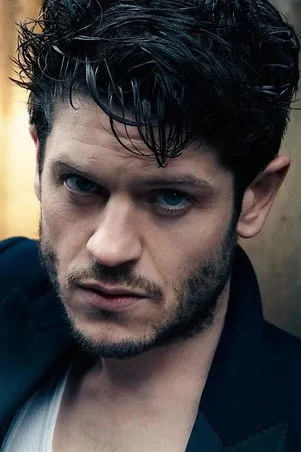
Age: 56
male
Colman Jason Domingo (born November 28, 1969) is an American actor, playwright, and director. Prominent on both screen and stage since the 2010s, Domingo has received various accolades, including a Primetime Emmy Award, and nominations for an Academy Award and two Tony Awards. Time magazine named him one of the 100 most influential people in the world in 2024. Domingo's early Broadway roles include the 2005 play Well and the 2008 musical Passing Strange. He gained acclaim for his role as Mr. Bones in the Broadway musical The Scottsboro Boys (2011), for which he was nominated for the Tony Award for Best Featured Actor in a Musical. He reprised the role in the 2014 West End production, receiving a nomination for the Laurence Olivier Award for Best Performance in a Supporting Role in a Musical. In 2018, he wrote the book for the Broadway musical Summer: The Donna Summer Musical. After early roles in various incarnations of the Law & Order series and as part of the main cast for The Big Gay Sketch Show, Domingo had his breakthrough playing Victor Strand in the AMC series Fear the Walking Dead (2015–2023). He gained wider acclaim for his recurring role as the recovering drug addict Ali on the HBO series Euphoria (2019–present), winning the Primetime Emmy Award for Outstanding Guest Actor in a Drama Series in 2022. Domingo received consecutive nominations in 2024 and 2025 for the Academy Award for Best Actor for his portrayals of civil rights activist Bayard Rustin in the biopic Rustin and a prison inmate in the drama Sing Sing. His other notable film appearances include roles in Lincoln (2012), The Butler (2013), Selma (2014), If Beale Street Could Talk (2018), Ma Rainey's Black Bottom (2020), Zola (2021), and The Color Purple (2023). Description above from the Wikipedia article Colman Domingo, licensed under CC-BY-SA, full list of contributors on Wikipedia.
Colman Domingo

Mr. Sinister
for Mr. Sinister in X-Men Part One: Uprising / X-Men Part Two: The Iron Law / X-Men Part Three: Aftermath
Suggested by sergeykirievskiy

Part One: In a near-present world where mutants have only recently become publicly known, society begins to fracture under fear, misinformation, and rising violence. Professor Charles Xavier forms the X-Men not as traditional superheroes, but as a crisis-response team designed to prevent catastrophe and stabilize an increasingly volatile world. Meanwhile, Magneto and the Brotherhood of Mutants conclude that coexistence is already a failed idea. Their actions begin as calculated strikes against systems they see as oppressive, but the movement fractures as younger radicals push it toward uncontrolled violence, while Mystique operates in the shadows, accelerating conflict through manipulation, infiltration, and political sabotage. Part Two: As governments enforce sweeping mutant control measures under the guise of security, society quietly shifts into surveillance and detainment. The X-Men become a covert rescue force operating in an increasingly authoritarian world. Rogue and Gambit navigate an expanding underground network of mutant resistance, while Magneto’s ideology hardens and the Brotherhood fractures under rising extremism. Mystique escalates covert manipulation across both human and mutant institutions.The introduction of the Sentinel program marks a turning point, evolving from protection into systematic persecution. Part Three: As mutant-human tensions reach a fragile plateau after the Sentinel crisis, the world is not yet at peace—but at the edge of it. During this uncertain transition, evidence surfaces pointing to Mister Sinister, a geneticist who has been quietly observing and subtly influencing key moments of escalation—not as a direct controller, but as an analyst studying how conflict shapes evolution. His discovery reframes years of history, forcing both humans and mutants to confront an uncomfortable truth: the cycles of fear and retaliation were not imposed from above, but amplified from within.