Age: 63
male
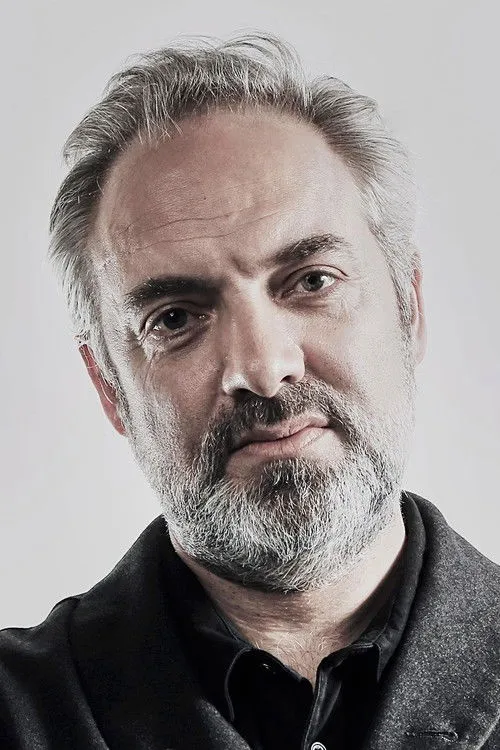
Alejandro González Iñárritu is a Mexican filmmaker. He is primarily known for making modern psychological drama films about the human condition. His projects have garnered critical acclaim and numerous accolades, including five Academy Awards, Special Achievement Awards, Golden Globe Awards, BAFTA Awards, and Directors Guild of America Awards. His most notable films include Amores Perros (2000), 21 Grams (2003), Babel (2006), Biutiful (2010), Birdman (2014), The Revenant (2015), and Bardo (2022). Amores Perros (2000), and Biutiful (2010) each received nominations for the Academy Award for Best International Feature Film. He earned critical and commercial success for his films 21 Grams(2003) and Babel (2006). For Birdman (2014), he won three Academy Awards for Best Picture, Best Director, and Best Original Screenplay. The following year, he was awarded Best Director for The Revenant (2015), making him the third director to win back-to-back after John Ford and Joseph L. Mankiewicz. Iñárritu was later awarded a Special Achievement Academy Award for his virtual reality installation Carne y Arena (2017). Iñárritu became the first Mexican filmmaker to be nominated as director or producer in the Academy Awards' history and the first to win for Best Original Screenplay and Best Picture. He was the first Mexican filmmaker to receive the Best Director Award at Cannes, and the first to win a DGA Award for Outstanding Directing. In 2019, Iñárritu became the first Latin American to serve as jury president for the 72nd Cannes Film Festival. Iñárritu and Mexican filmmakers Alfonso Cuarón and Guillermo del Toro are known in the film industry as "The Three Amigos." Description above from the Wikipedia article Alejandro González Iñárritu, licensed under CC-BY-SA, full list of contributors on Wikipedia.
Alejandro González Iñárritu

Director
for Director in X-Men Part One: Uprising / X-Men Part Two: The Iron Law / X-Men Part Three: Aftermath
Suggested by sergeykirievskiy

Part One: In a near-present world where mutants have only recently become publicly known, society begins to fracture under fear, misinformation, and rising violence. Professor Charles Xavier forms the X-Men not as traditional superheroes, but as a crisis-response team designed to prevent catastrophe and stabilize an increasingly volatile world. Meanwhile, Magneto and the Brotherhood of Mutants conclude that coexistence is already a failed idea. Their actions begin as calculated strikes against systems they see as oppressive, but the movement fractures as younger radicals push it toward uncontrolled violence, while Mystique operates in the shadows, accelerating conflict through manipulation, infiltration, and political sabotage. Part Two: As governments enforce sweeping mutant control measures under the guise of security, society quietly shifts into surveillance and detainment. The X-Men become a covert rescue force operating in an increasingly authoritarian world. Rogue and Gambit navigate an expanding underground network of mutant resistance, while Magneto’s ideology hardens and the Brotherhood fractures under rising extremism. Mystique escalates covert manipulation across both human and mutant institutions.The introduction of the Sentinel program marks a turning point, evolving from protection into systematic persecution. Part Three: As mutant-human tensions reach a fragile plateau after the Sentinel crisis, the world is not yet at peace—but at the edge of it. During this uncertain transition, evidence surfaces pointing to Mister Sinister, a geneticist who has been quietly observing and subtly influencing key moments of escalation—not as a direct controller, but as an analyst studying how conflict shapes evolution. His discovery reframes years of history, forcing both humans and mutants to confront an uncomfortable truth: the cycles of fear and retaliation were not imposed from above, but amplified from within.