Age: 47
male
Jeremy Strong (born December 25, 1978) is an American actor. Known for his intense method acting style in roles across both stage and screen, he has received various accolades, including a Primetime Emmy Award, a Tony Award and a Golden Globe Award, and nominations for an Academy Award and BAFTA Award. In 2022, Strong was featured on Time's list of the 100 most influential people in the world. A graduate of Yale University, Strong continued his acting studies at the Royal Academy of Dramatic Art in London and the Steppenwolf Theatre Company in Chicago. His first off-Broadway performance was as a distraught soldier in the John Patrick Shanley play Defiance in 2006, with his Broadway debut being in the role of Richard Rich in the 2008 revival of the Robert Bolt play A Man for All Seasons. His film debut came that same year with the comedy Humboldt County. He played minor roles in the 2012 films Lincoln and Zero Dark Thirty before receiving early recognition for Parkland (2013) and The Big Short (2015). Strong gained international recognition with his portrayal of Kendall Roy in the HBO drama series Succession (2018–2023), which won him the Primetime Emmy Award for Outstanding Lead Actor in a Drama Series. Strong went on to feature in the films The Gentlemen (2019), The Trial of the Chicago 7 (2020), and Armageddon Time (2022). In 2024, he returned to Broadway to play a conscientious doctor in a small town in the revival of the Henrik Ibsen play An Enemy of the People, where he earned a Tony Award for Best Actor in a Play. That same year, Strong received praise for his portrayal of Roy Cohn in The Apprentice, which earned him nominations for the BAFTA, Golden Globe and the Academy Award for Best Supporting Actor. Description above from the Wikipedia article Jeremy Strong, licensed under CC-BY-SA, full list of contributors on Wikipedia.
Jeremy Strong
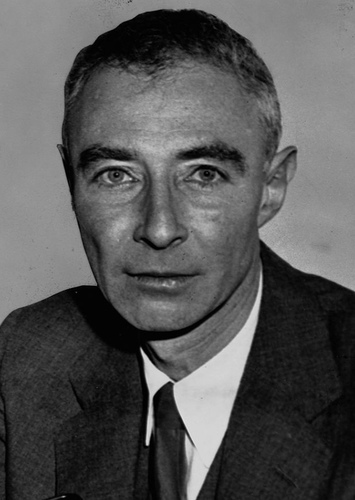
J. Robert Oppenheimer
for J. Robert Oppenheimer in World War II: The War in the Pacific
Suggested by zaeemhussain1

The Pacific War, sometimes called the Asia-Pacific War, was the scene of World War II, which took place in East Asia, the Pacific Ocean, the Indian Ocean, and Oceania. Geographically, it was the largest theater of the war, including the huge war rampage in the Pacific, the war in the Southwest Pacific, the Second Sino-Japanese War, and the Soviet-Japanese War. The Second Sino-Japanese War between the Empire of Japan and the Republic of China had been ongoing since July 7, 1937, with hostilities extending as far back as September 19, 1931, with the Japanese invasion of Manchuria. The Pacific War itself began on December 7 (December 8 Japanese time) 1941, when the Japanese simultaneously attacked United States military bases in Hawaii, Wake Island, Guam, and the Philippines and invaded Thailand and the British colonies of Malaya, Singapore and Hong Kong. In the Pacific War, the Allies opposed Japan, aided by Thailand and to a lesser extent by Axis allies. The fighting consisted of some of the largest naval battles in history and incredibly fierce battles and war crimes across Asia and the Pacific Islands resulting in huge loss of life. The war culminated in massive Allied air raids on Japan, including the dropping of atomic bombs on Hiroshima and Nagasaki, accompanied by a declaration of war by the Soviet Union and the invasion of Manchuria and other territories on August 9, 1945, causing the Japanese to announce their intention to surrender on August 15, 1945.