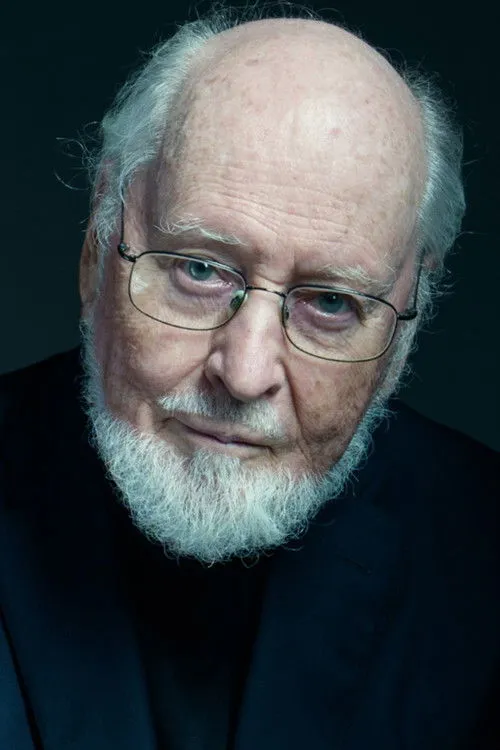
Died at 73
male
James Roy Horner (August 14, 1953–June 22, 2015) was an American film composer and conductor. He worked on more than 160 film and television productions between 1978 and 2015. He was known for the integration of choral and electronic elements alongside traditional orchestrations and for his use of motifs associated with Celtic music. Horner won two Academy Awards for his musical composition to James Cameron's Titanic (1997), which became the best-selling orchestral film soundtrack of all time. He also wrote the score for the highest-grossing film of all time, Cameron's Avatar (2009). Horner's other Oscar-nominated scores were for Aliens (1986), An American Tail (1986), Field of Dreams (1989), Apollo 13 (1995), Braveheart (1995), A Beautiful Mind (2001), and House of Sand and Fog (2003). Horner's other notable scores include Star Trek II: The Wrath of Khan (1982), Willow (1988), The Land Before Time (1988), Glory (1989), The Rocketeer (1991), Legends of the Fall (1994), Jumanji (1995), Casper (1995), Balto (1995), The Mask of Zorro (1998), Deep Impact (1998), The Perfect Storm (2000), How the Grinch Stole Christmas (2000), Troy (2004), The New World (2005), The Legend of Zorro (2005), Apocalypto (2006), The Karate Kid (2010), and The Amazing Spider-Man (2012). Horner collaborated on multiple projects with directors including James Cameron, Don Bluth, Ron Howard, Joe Johnston, Edward Zwick, Walter Hill, Mel Gibson, Vadim Perelman, Jean-Jacques Annaud, Nicholas Meyer, Wolfgang Petersen, Martin Campbell, Phil Nibbelink, and Simon Wells; producers including Steven Spielberg, George Lucas, David Kirschner, Brian Grazer, Jon Landau, and Lawrence Gordon; and songwriters including Will Jennings, Barry Mann, and Cynthia Weil. Adding to his two Academy Awards wins, Horner also won six Grammy Awards, two Golden Globes, and was nominated for three BAFTA Awards. Horner, who was an avid pilot, was killed in a single-fatality crash while flying his Short Tucano turboprop aircraft. He was 61 years old. The scores for his final three films, Southpaw (2015), The 33 (2015), and The Magnificent Seven (2016), were all completed and released posthumously. Description above from the Wikipedia article James Horner, licensed under CC-BY-SA, full list of contributors on Wikipedia.
James Horner

Composer
for Composer in World War II: The War in the Pacific
Suggested by darksith

The Pacific War, sometimes called the Asia-Pacific War, was the scene of World War II, which took place in East Asia, the Pacific Ocean, the Indian Ocean, and Oceania. Geographically, it was the largest theater of the war, including the huge war rampage in the Pacific, the war in the Southwest Pacific, the Second Sino-Japanese War, and the Soviet-Japanese War. The Second Sino-Japanese War between the Empire of Japan and the Republic of China had been ongoing since July 7, 1937, with hostilities extending as far back as September 19, 1931, with the Japanese invasion of Manchuria. The Pacific War itself began on December 7 (December 8 Japanese time) 1941, when the Japanese simultaneously attacked United States military bases in Hawaii, Wake Island, Guam, and the Philippines and invaded Thailand and the British colonies of Malaya, Singapore and Hong Kong. In the Pacific War, the Allies opposed Japan, aided by Thailand and to a lesser extent by Axis allies. The fighting consisted of some of the largest naval battles in history and incredibly fierce battles and war crimes across Asia and the Pacific Islands resulting in huge loss of life. The war culminated in massive Allied air raids on Japan, including the dropping of atomic bombs on Hiroshima and Nagasaki, accompanied by a declaration of war by the Soviet Union and the invasion of Manchuria and other territories on August 9, 1945, causing the Japanese to announce their intention to surrender on August 15, 1945.