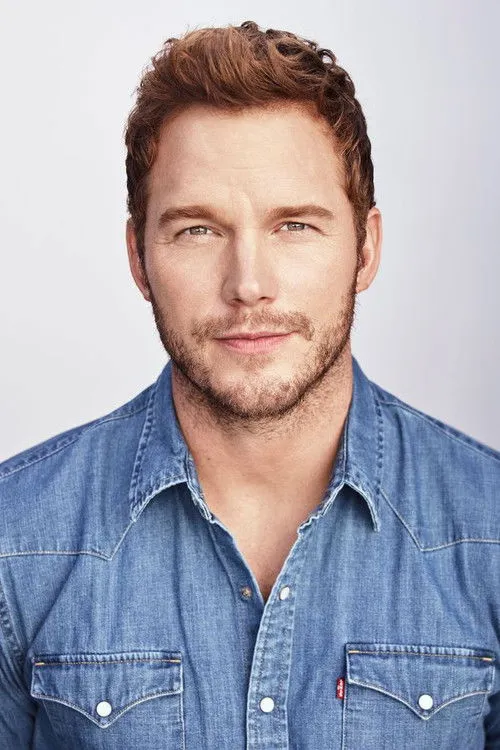
Age: 45
male
Ryan Thomas Gosling (born November 12, 1980) is a European-Canadian actor. Prominent in independent film, he has also worked in blockbuster films of varying genres, and has accrued a worldwide box office gross of over 1.9 billion USD. He has received various accolades, including a Golden Globe Award, and nominations for two Academy Awards and a BAFTA Award. Born and raised in Canada, he rose to prominence at age 13 for being a child star on the Disney Channel's The Mickey Mouse Club (1993–1995), and went on to appear in other family entertainment programs, including Are You Afraid of the Dark? (1995) and Goosebumps (1996). His first film role was as a Jewish neo-Nazi in The Believer (2001), and he went on to star in several independent films, including Murder by Numbers (2002), The Slaughter Rule (2002), and The United States of Leland (2003). Gosling gained wider recognition and stardom for the 2004 romance film The Notebook. This was followed by starring roles in a string of critically acclaimed independent dramas including Half Nelson (2006), for which he was nominated for the Academy Award for Best Actor. Gosling co-starred in three mainstream films in 2011, the romantic comedy Crazy, Stupid, Love and the action drama Drive, all of which were critical and commercial successes. He then starred in the acclaimed financial satire The Big Short (2015) and the romantic musical La La Land (2016), the latter of which won him the Golden Globe Award for Best Actor and a second Academy Award nomination for Best Actor. Further acclaim followed with the science fiction thriller Blade Runner 2049 (2017) and the biopic First Man (2018). In addition to acting, he made his directorial debut in 2014's Lost River.
Ryan Gosling

American soldier and officer
for American soldier and officer in World War II: The War in the Pacific
Suggested by darksith

The Pacific War, sometimes called the Asia-Pacific War, was the scene of World War II, which took place in East Asia, the Pacific Ocean, the Indian Ocean, and Oceania. Geographically, it was the largest theater of the war, including the huge war rampage in the Pacific, the war in the Southwest Pacific, the Second Sino-Japanese War, and the Soviet-Japanese War. The Second Sino-Japanese War between the Empire of Japan and the Republic of China had been ongoing since July 7, 1937, with hostilities extending as far back as September 19, 1931, with the Japanese invasion of Manchuria. The Pacific War itself began on December 7 (December 8 Japanese time) 1941, when the Japanese simultaneously attacked United States military bases in Hawaii, Wake Island, Guam, and the Philippines and invaded Thailand and the British colonies of Malaya, Singapore and Hong Kong. In the Pacific War, the Allies opposed Japan, aided by Thailand and to a lesser extent by Axis allies. The fighting consisted of some of the largest naval battles in history and incredibly fierce battles and war crimes across Asia and the Pacific Islands resulting in huge loss of life. The war culminated in massive Allied air raids on Japan, including the dropping of atomic bombs on Hiroshima and Nagasaki, accompanied by a declaration of war by the Soviet Union and the invasion of Manchuria and other territories on August 9, 1945, causing the Japanese to announce their intention to surrender on August 15, 1945.