Age: 79
male
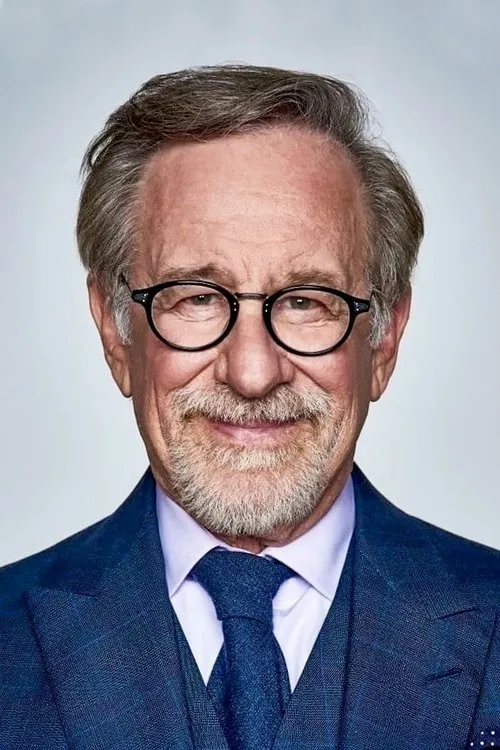
Steven Allan Spielberg KBE (born December 18, 1946) is an American filmmaker. A major figure of the New Hollywood era and pioneer of the modern blockbuster, Spielberg is widely regarded as one of the greatest and most influential filmmakers in the history of cinema and is the highest-grossing film director of all time. Among other accolades, he has received three Academy Awards, four Golden Globe Awards and three BAFTA Awards, as well as the AFI Life Achievement Award in 1995, an honorary knighthood in 2001, the Kennedy Center Honors in 2006, the Cecil B. DeMille Award in 2009, the Presidential Medal of Freedom in 2015, and the National Medal of Arts in 2023. According to Forbes, he is the wealthiest celebrity. Spielberg was born in Cincinnati, Ohio, and grew up in Phoenix, Arizona. He moved to California and studied film in college. After directing several episodes for television, including Night Gallery and Columbo, he directed the television film Duel (1971), which Barry Diller approved. He made his theatrical debut with The Sugarland Express (1974), also beginning his decades-long collaboration with composer John Williams, with whom he has worked for all but five of his theatrical releases. He became a household name with the summer blockbuster Jaws (1975). He continued directing acclaimed escapist box-office hits with Close Encounters of the Third Kind (1977), E.T. the Extra-Terrestrial (1982), and the original Indiana Jones trilogy (1981–1989). He also explored drama in The Color Purple (1985) and Empire of the Sun (1987). In 1993, Spielberg directed back-to-back hits with the science fiction thriller Jurassic Park, the highest-grossing film at the time, and the epic historical drama Schindler's List, which has often been ranked among the greatest films ever made. He won the Academy Award for Best Director for the latter as well as for the World War II epic Saving Private Ryan (1998). Spielberg has since directed the science fiction films A.I. Artificial Intelligence (2001), Minority Report (2002), War of the Worlds (2005) and Ready Player One (2018); the historical dramas Amistad (1997), Munich (2005), War Horse (2011), Lincoln (2012), Bridge of Spies (2015) and The Post (2017); the comedies Catch Me If You Can (2002) and The Terminal (2004); the animated film The Adventures of Tintin (2011); the musical West Side Story (2021); and the family drama The Fabelmans (2022). Spielberg co-founded Amblin Entertainment and DreamWorks Pictures, and he has served as a producer for many successful films and television series, among them Poltergeist (1982), Gremlins (1984), Back to the Future (1985), An American Tail (1986), Who Framed Roger Rabbit (1988), Animaniacs (1993), Freakazoid! (1995), Twister (1996), Band of Brothers (2001) and Transformers (2007). Several of Spielberg's works are considered among the greatest films in history, and some are among the highest-grossing films of all time. Seven of his films have been inducted into the National Film Registry by the Library of Congress as being "culturally, historically or aesthetically significant". In 2013, Time listed him among the 100 most influential people. In 2023, Spielberg was the recipient of the first-ever Time 100 Impact Award in the US. Description above from the Wikipedia article Steven Spielberg, licensed under CC-BY-SA, full list of contributors on Wikipedia.
Steven Spielberg

Writer
for Writer in World War II: The War in the Europe
Suggested by deadalusae

World War II was the most devastating and bloody military conflict in human history. It ran from 1939 to 1945 and was attended by most of the world's countries. In total, the this conflict has claimed more than 70 million victims on lives. 2025 marks 80 years since the end of this devastating war. Let us therefore recall the events that took place during it. The heroism of the allies who fought on all fronts for freedom against the Axis countries. It all began on 1 September 1939, when Nazi Germany invaded Poland. The fall of France followed. The Battle of Britain and the invasion of the Soviet Union in 1941. For Europe, everything looked hopeless because the Nazis occupied almost all of Europe. But then the Battle of Staligrad came and the war turned. The Soviets had defended Moscow, and after the Battle of Kursk it was clear that the eastern front was lost to the for Germans. In 1944, the Western Front was open. Allied forces made a successful landing in Normandy. The Americans, Soviets, British, and other allies gradually liberated Europe from the German occupiers, revealing their heinous crimes. In the end, the last decisive battle for Berlin took place, and Nazi Germany was defeated, ending World War II in Europe. These historical events included a number of personal stories of ordinary soldiers and civilians who were fully experiencing the horrors of World War II.